Subscribe to our newsletter

Health & Fitness    
Nigeria’s Life Expectancy At 54 years, Below Global Average~ Report
The 2024 State of the Nation Report reveals that while life expectancy in Nigeria is improving, it remains below the global average at 54.6 years. According to the report, released in Abuja on Tuesday by the News Agency of Nigeria (NAN), life expectancy for women stands at 54.9 years, while for men, it is 54.3 years, highlighting persistent health challenges. In contrast, the global average life expectancy is 73.3 years, with women expected to live up to 76 years and men 70.7 years. The World Health Organization (WHO) defines life expectancy as "the average number of years a newborn could expect to live if exposed to prevailing age- and sex-specific mortality rates at birth within a given year, country, or region." The report noted that the slight gender gap in life expectancy aligns with global trends, where women typically outlive men. Despite improvements, Nigeria’s life expectancy remains below the world average, emphasizing the need for sustained investment in healthcare and public health initiatives. "Communicable diseases such as malaria, HIV/AIDS, and tuberculosis significantly contribute to the disease burden, negatively affecting overall health outcomes and life expectancy," the report stated. Citing the Nigeria Demographic and Health Survey (NDHS 2023/2024), the report highlighted that while the fertility rate has gradually declined to 4.8 children per woman, it remains one of the highest globally. The fertility rate is higher in rural areas (5.6) compared to urban areas (3.9), reflecting disparities in access to education and healthcare. The report also noted Nigeria’s rapid urbanization, with 54 per cent of the population now residing in cities, driven by the pursuit of better economic opportunities and essential services. However, this shift has led to challenges such as infrastructure strain, pollution, and the rise of informal settlements, particularly in fast-growing cities like Abuja. Economically, Nigeria recorded notable growth, with Gross Domestic Product (GDP) reaching N60.9 trillion in 2024 and a growth rate of 3.19 per cent, up from 2.98 per cent in 2023. Despite this progress, the report stressed that economic benefits remain unevenly distributed, with 63 per cent of Nigerians living in multidimensional poverty, facing difficulties in health, education, and living conditions. Gender and age disparities persist, with women, especially in rural areas, experiencing higher poverty levels, limited healthcare access, and lower educational attainment than men. The report also highlighted that unemployment among young people aged 15 to 24 remains high at 8.4 per cent, with young women disproportionately affected.
3/11/2025, 1:59:17 PM
views 3354
12 States Recorded 505 Lassa Fever Cases, 95 Deaths~ NCDC
The Nigeria Centre for Disease Control and Prevention (NCDC) confirmed 506 Lassa fever cases out of 2,492 suspected cases, with 95 deaths recorded as of February 23, 2025. According to the Week 8 situation report, the hemorrhagic fever has spread across 12 states and 70 local government areas, with a Case Fatality Ratio of 18.8%. The confirmed cases were reported in Ondo (160), Bauchi (122), Edo (88), Taraba (80), Ebonyi (15), Kogi (14), Gombe (11), Plateau (7), Benue (5), Nasarawa (2), Delta (1), and Cross River (1). Lassa fever, a seasonal disease in Nigeria, is a zoonotic viral illness primarily transmitted by the common African rat, also known as the Mastomys rat species. The report partly read, “In week eight, the number of new confirmed cases increased from 38 in epi week seven, of 2025 to 54. These were reported in Bauchi, Ondo, Edo, Taraba, Ebonyi, Plateau, Benue, and Kogi states. “Cumulatively in week 8, 2025, 95 deaths have been reported with a case fatality rate of 18.8 per cent, which is the same CFR for the same period in 2024 (18.8 per cent). “In total for 2025, 12 states have recorded at least one confirmed case across 70 Local Government Areas. 73 per cent of all confirmed Lassa fever cases were reported from these three states (Ondo, Bauchi and Edo) while 27 per cent were reported from nine states with confirmed Lassa fever cases.” The NCDC report noted that of the 73 per cent confirmed cases, Ondo reported 32 per cent, Bauchi 24 per cent, and Edo 17 per cent. It revealed that the predominant age group affected is 21-30 years (Range: 1 to 94 years, Median Age: 30 years), and the male-to-female ratio for confirmed cases is 1:0.8. It said the number of suspected cases decreased compared to that reported for the same period in 2024. “One new healthcare worker was affected in the reporting week eight. “National Lassa fever multi-partner, multi-sectoral Incident Management System activated to coordinate the response activities at all levels.”
3/6/2025, 10:19:36 AM
views 3378
NAFDAC Seizes 50 Trailers Of Fake Drugs, Recovers Weapons In Onitsha
The National Agency for Food and Drug Administration and Control (NAFDAC) has seized 50 trailer loads of counterfeit drugs and recovered firearms, machetes, and other weapons at the Niger Bridge Head drug market in Onitsha, Anambra State. The operation is part of an ongoing crackdown on fake and substandard medicines. NAFDAC has maintained a presence at the Onitsha Bridge Head market since February 10, 2025, as part of a nationwide effort to eliminate counterfeit drugs. NAFDAC Director-General, Professor Mojisola Christianah Adeyeye, expressed shock at the discovery of weapons, suggesting a possible assassination attempt on Dr. Martins Iluyomade, the agency’s South-East Director, who frequently conducts debriefings at the site. Represented by Iluyomade, Adeyeye disclosed that NAFDAC’s security team had thwarted two break-in attempts by hoodlums targeting the storage facilities for confiscated drugs. Two suspects have been arrested in connection with the incidents. She assured the public that the operation would continue uninterrupted, emphasizing that it is a national mission to protect public health rather than an attack on any group or individual. “With the swift action of our security team, we recovered daggers, machetes, two guns, and rifles. Several individuals attempting to break in have been apprehended and are providing valuable information,” she stated. Adeyeye praised market leaders for their cooperation and announced that some sections of the market would reopen this week as the agency transitions to the next phase of enforcement. The seized counterfeit drugs have been moved to a secure location for further action.
3/5/2025, 3:59:04 PM
views 14717
NAFDAC Alerts Nigerians On Circulation Of Substandard Insulin Syringes
The National Agency for Food and Drug Administration and Control (NAFDAC) has raised concerns over the illegal distribution and sale of a falsified medical product, Knowit Insulin Syringe 40 IU 29G x 1/2, in Nigeria. In a statement published on its website on Monday, NAFDAC highlighted warnings from the Association of Community Pharmacists of Nigeria about the continued use of outdated 40 IU/ML insulin syringes, despite the availability of the standard 100 IU/ML version. The agency explained that while 40 IU/ML syringes were previously approved for administering Lente animal insulins—formerly available in both 40 IU/ML and 100 IU/ML strengths—animal insulins have been phased out in favor of standardised human insulins at 100 IU/ML. As a result, the 40 IU/ML syringe is now obsolete. NAFDAC emphasized that this syringe is no longer registered, warning that its use with modern insulin formulations could cause severe dosing errors, posing life-threatening risks to diabetic patients. The statement reads: “The National Agency for Food and Drug Administration and Control (NAFDAC) is alerting the public about the illegal circulation and marketing of the substandard and falsified Knowit Insulin Syringe 40 IU 29G x 1/2 in Nigeria. “The Association of Community Pharmacists of Nigeria has raised concerns about the ongoing use of 40 IU/ML insulin syringes despite the availability of 100 IU/ML insulin syringes. “The 40 IU/ML insulin syringe was previously approved alongside the 100 IU/ML variant for administering Lente animal insulins, as they were available in both strengths. “However, with the discontinuation of animal insulins and the advent of human insulins — now standardised at 100 IU/ML—the 40 IU/ML insulin syringe is no longer applicable and is no longer registered by NAFDAC. Its use could result in dosing errors, with serious adverse consequences for diabetic patients. “Using a 40 IU/ML syringe to administer 100 IU/ML insulin exposes patients to a high risk of dosing errors, as the calculations required to adjust for this mismatch cannot be reliably performed by most patients.” NAFDAC stressed that insulin dosing errors are life-threatening and could cause severe complications for diabetic patients. NAFDAC has instructed its zonal directors and state coordinators to carry out surveillance and eliminate substandard and falsified products from the market. The agency also urged importers, distributors, retailers, healthcare professionals, and caregivers to remain vigilant throughout the supply chain to prevent the entry, distribution, sale, and use of such unsafe medical products.
3/4/2025, 8:22:38 AM
views 5649
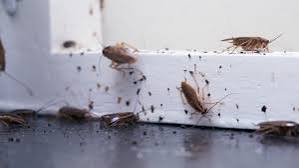
Cockroach Infested Kitchens Spread Infections Expert
Public health and food safety experts have revealed that cockroach-infested homes, especially kitchens, serve as breeding grounds for infections and foodborne diseases. They identified salmonellosis and typhoid fever as common foodborne illnesses linked to cockroach contamination. Beyond foodborne diseases, the experts warned that cockroaches can trigger allergic reactions in individuals with respiratory conditions. The World Health Organisation reports that consuming unsafe food contaminated with harmful bacteria, viruses, parasites, or chemicals can cause over 200 diseases, ranging from diarrhoea to cancer. The WHO also highlights that unsafe food perpetuates a cycle of disease and malnutrition, particularly affecting infants, young children, the elderly, and the sick. According to the organisation, children under five bear 40% of the global foodborne disease burden, resulting in 125,000 deaths annually. “Foodborne diseases impede socioeconomic development by straining health care systems and harming national economies, tourism and trade. “An estimated 600 million – almost one in 10 people in the world – fall ill after eating contaminated food and 420,000 die every year, resulting in the loss of 33 million healthy life years. “Foodborne illnesses are usually infectious or toxic and caused by bacteria, viruses, parasites or chemical substances entering the body through contaminated food. Many foodborne diseases may lead to long-lasting disability and death,” WHO stated. In an exclusive interview with our correspondent, Dr. Mojirola Fasiku, a Consultant Public Health Physician at the University of Ilorin Teaching Hospital, warned that uncovered food and leftovers attract cockroaches. She explained that the health risks associated with cockroaches stem from their contamination of food and kitchen surfaces, which can lead to infections and foodborne diseases. Dr. Fasiku noted that cockroaches pick up microorganisms as they move through unsanitary areas such as toilets and feces. She added that these microorganisms can also be found in their droppings, saliva, and on their legs. “Cockroaches may cause foodborne diseases, and because of how they shed their bodies, they can trigger allergies or asthma in individuals with respiratory conditions, such as those who are allergic or asthmatic,” the consultant said. Fasiku added, “They can contribute to food poisoning. When they come into contact with food, they may introduce disease-causing organisms. Some of the foodborne illnesses linked to cockroaches include salmonellosis and typhoid fever. However, cockroaches do not generate diseases on their own—they simply transmit them from one place to another.” On how long bacteria from cockroach droppings or saliva remain on kitchen surfaces, the public health physician said, “There isn’t a lot of research on this, but some reports suggest that it depends on the type of bacteria they carry. “Once bacteria are present in their saliva or on their legs, they may persist on surfaces for several hours to several days. Different organisms have varying survival capacities—some live longer, while others die quickly. Environmental conditions, such as temperature and humidity, also play a role, as bacteria thrive in humid environments.” She, however, advised homeowners to take preventive measures to avoid cockroach infestations in their kitchens and homes. “One key factor is hygiene. Homeowners should keep their kitchens clean by wiping surfaces and sweeping floors. Sometimes, people place a dustbin in the kitchen but leave it uncovered, which attracts cockroaches and allows them to contaminate food. “Additionally, dirty dishes should not be left overnight. Washing dishes promptly is important, as kitchen surfaces can harbor bacteria. Proper food storage is also essential—whether food is cooked or uncooked, it should always be covered. Perishable foods should be refrigerated. “Another important factor is hand hygiene. Even if cockroaches are not visible, they may have contaminated surfaces. People frequently touch surfaces and then touch their eyes, nose, or food, which can lead to contamination. Therefore, washing hands before preparing food is essential,” the consultant said. The Punch
3/4/2025, 8:07:02 AM
views 7045
Install WAFFITV