Infantino Apologises To FIFA Council Amid Calls To Prove Leadership Fitness
FIFA President Gianni Infantino has apologised to the organisation’s Council over his abandoned plan to transfer part of FIFA’s commercial rights to private investors, but senior officials insist he must disclose all relevant documents and address outstanding questions to prove he remains fit to lead world football.
The FIFA Council met in Zurich on Thursday for the first time since details of the controversial FIFA Forward Enterprise (FFE) proposal emerged.
The proposal, which Infantino withdrew within days of its disclosure, would have transferred a share of FIFA’s commercial rights to a private investment firm.
During a three-and-a-half-hour meeting, council members also questioned Infantino over the suspension of US striker Folarin Balogun’s red-card ban, the FIFA Peace Prize and funding arrangements for national football associations.
Football Association chair and FIFA vice-president Debbie Hewitt said several important issues remained unresolved despite what she described as the most open and direct Council meeting she had attended.
Hewitt said members had not received the documents they specifically requested concerning FFE, adding that Infantino must provide explanations if he hopes to retain their confidence.
“One of the disappointing things is that we didn’t get answers to anything that we had specifically requested — for example, getting the papers from FFE,” she said.
According to Hewitt, she questioned why the documents had not been provided but was asked to submit her concerns in writing.
She warned that Infantino’s failure to address the questions could undermine his suitability for the presidency.
“I think the man has to answer those questions and if he doesn’t answer those questions now, he’s not fit to be FIFA president — and that was what was shared in the meeting,” Hewitt said.
She added that repeated requests for the FFE documents had gone unanswered, including a fresh appeal during Thursday’s meeting.
Hewitt said the Council needed clarification on the circumstances surrounding the FFE proposal, the Balogun disciplinary decision and the award of the FIFA Peace Prize.
She explained that the responses would influence her personal assessment of whether Infantino should continue as president and whether those involved in the FFE proposal could be trusted.
Without access to the relevant records, she argued, it would be difficult to determine what happened and whether changes in conduct were necessary.
Hewitt acknowledged that Infantino had shown some remorse during his apology but said Council members were equally direct in expressing their concerns.
She noted that his apology appeared to focus primarily on failing to consult the Council before proceeding with the proposal.
“If you regret it that deeply, share it with us,” she added.
UEFA maintains pressure on Infantino
UEFA, European football’s governing body, has been among Infantino’s strongest critics and has repeatedly called for him to step aside.
The organisation has prepared criminal legal proceedings against the FIFA president and filed claims in three US courts seeking the release of documents connected to the FFE proposal.
Hewitt said she hoped Infantino would voluntarily disclose the records, allowing Council members to establish what happened and determine whether further legal action was warranted.
She described the release of the documents as a crucial step towards deciding what, if any, criminal proceedings should follow.
Asked whether UEFA’s position on Infantino had changed, Hewitt said there was no shift in her assessment beyond the fact that the president had apologised.
She stressed that she had received no new information that would cause her to reconsider her position.
Opposition yet to find a strong challenger
Infantino is expected to seek a third term as FIFA president in March, but no major challenger has emerged to mount a credible campaign against him.
Former Tottenham Hotspur and Switzerland defender Ramon Vega has declared his intention to contest the election. However, he is considered unlikely to secure the required five letters of support from member associations needed to become a serious candidate.
Some senior figures in European football have reportedly encouraged former Arsenal manager Arsène Wenger to enter the race.
However, uncertainty remains over whether Wenger would be willing to leave his role as FIFA’s global head of football development to challenge Infantino.
Hewitt acknowledged that UEFA and other opponents of the incumbent president must identify a candidate before the November 18 nomination deadline.
She also argued that a competitive election would benefit FIFA, noting that Infantino was re-elected unopposed in both 2019 and 2023.
According to Hewitt, the next president should prioritise football, unite the international game and demonstrate the determination to implement meaningful reforms.
She emphasised that FIFA’s 211 member associations should have the freedom to choose their preferred candidate through a democratic process.
Balogun case raises disciplinary concerns
The decision to suspend Balogun’s automatic red-card ban at the World Cup was another major issue raised during Thursday’s meeting.
The suspension followed a request from US President Donald Trump for the decision to be reviewed.
BBC Sport understands that a proposal was presented to the Council to amend FIFA’s disciplinary code and prevent similar situations in the future.
Under the proposed change, the disciplinary committee would no longer be permitted to suspend an automatic one-match ban resulting from a red card.
Hewitt described the incident as one of the most serious concerns, warning that decisions influenced by factors outside football could damage the sport’s credibility.
She said the controversy surrounding Balogun and the FFE proposal had placed football’s reputation at considerable risk.
“Once behaviour starts to influence what happens on the pitch, then I think it’s a dark day for football,” she said, adding that several Council members shared the concern.
FIFA Peace Prize award faces investigation
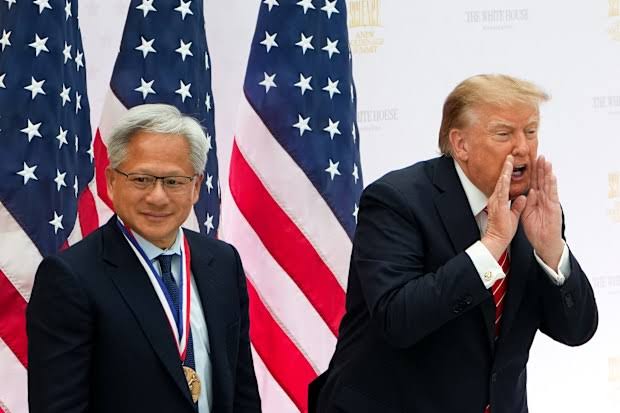
The FIFA Peace Prize, presented to US President Donald Trump, was also discussed during the meeting.
Hewitt said concerns extended beyond the award itself to Infantino’s interactions with prominent figures and dignitaries, arguing that national football associations must remain at the centre of FIFA’s priorities.
She said several Council members believed the president should not place political leaders, celebrities or other high-profile personalities above the interests of the organisation’s 211 member associations.
The circumstances surrounding the Peace Prize will now be examined by FIFA’s social committee.
The committee is expected to investigate how the award was conceived, whether it should have been introduced, how the decision to honour Trump was reached and whether the award should be withdrawn or reformed.
Its findings will be presented to the Council in December, after which members will decide on the next course of action.
Hewitt said Thursday’s meeting marked a turning point, insisting that FIFA must establish the facts surrounding past decisions before it can move forward and restore confidence in its leadership.
15/10/2026, 17:31:14
views 4382
2685