Subscribe to our newsletter

Nigeria’s Inflation Rate Rises For Third Consecutive Month
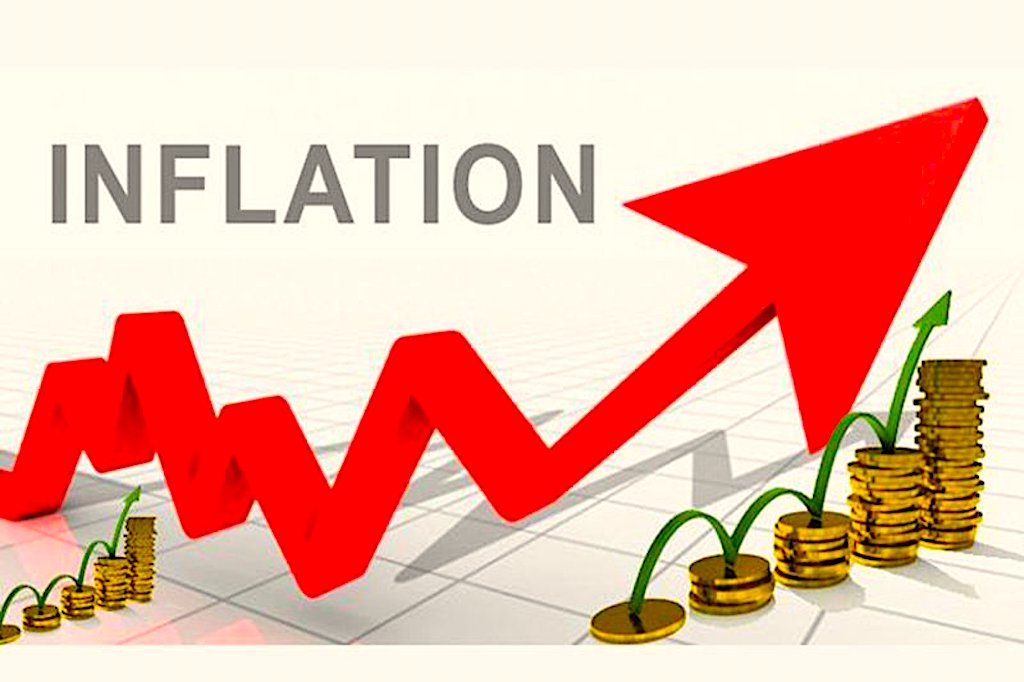
Nigeria’s inflation rate increased for the third consecutive month, rising to 15.93 per cent in May 2026 from 15.69 per cent recorded in April, according to the latest Consumer Price Index (CPI) and inflation report released by the National Bureau of Statistics (NBS) on Monday. The report showed that headline inflation rose by 1.75 per cent on a month-on-month basis in May. However, this was 0.39 percentage points lower than the 2.13 per cent recorded in April 2026. Food inflation also climbed during the period, reaching 16.96 per cent in May, compared to 16.06 per cent in the previous month. On a year-on-year basis, headline inflation stood at 15.93 per cent in May 2026, representing an increase from the 15.69 per cent recorded in April. Nevertheless, it remained significantly lower than the 26.06 per cent recorded in May 2025. The NBS stated that food inflation on a month-on-month basis was 2.98 per cent in May 2026, a decline of 0.65 percentage points from the 3.63 per cent recorded in April. “On a year-on-year basis, the food inflation rate was 16.96 per cent, compared to 24.55 per cent recorded in the corresponding period of May 2025,” the bureau noted. The latest figures indicate a continued upward trend in inflation after declines recorded in March and April. Meanwhile, the Central Bank of Nigeria (CBN), at its 305th Monetary Policy Committee meeting, retained the benchmark interest rate at 26.50 per cent in a bid to sustain its inflation-control measures.
6/15/2026, 5:26:19 PM
views 5883
Crude Oil Prices Fall As US–Iran Peace Deal Boosts Global Equities
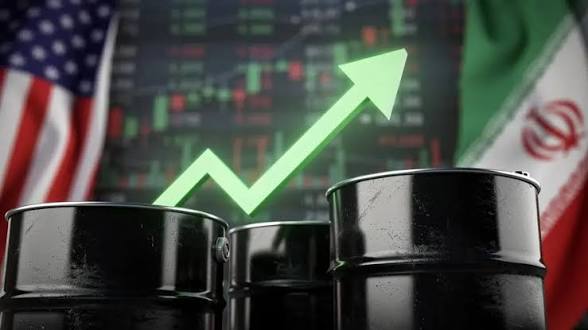
Global oil prices plunged while stock markets rallied on Monday after the United States and Iran announced a breakthrough agreement to end their conflict and reopen the Strait of Hormuz, easing fears of prolonged disruptions to global energy supplies. Both countries confirmed a ceasefire arrangement brokered by Pakistan, with a formal signing ceremony scheduled for June 19 in Switzerland. The agreement is expected to bring an end to three months of hostilities that had driven up energy costs and heightened concerns about a fresh wave of global inflation. The Strait of Hormuz, one of the world's most critical shipping routes, handles nearly 20 per cent of global crude oil exports. Iran effectively shut down access to the waterway shortly after military strikes involving the United States and Israel triggered the conflict. Announcing the development on Sunday, US President Donald Trump said the agreement with Iran had been finalised. “The Deal with the Islamic Republic of Iran is now complete,” Trump wrote on social media while celebrating his 80th birthday. “I hereby fully authorise the toll-free opening of the Strait of Hormuz,” he added. “Ships of the World, start your engines. Let the oil flow!” Iran’s Deputy Foreign Minister, Kazem Gharibabadi, also confirmed the breakthrough, stating that the deal would bring an “immediate end” to the war. He added that negotiations on a comprehensive and permanent settlement would commence within the next two months. However, key details of the agreement have not yet been made public. The deal follows several weeks of tense negotiations and repeated warnings from Trump about the possibility of renewed military action. The announcement triggered a sharp reaction in energy markets, with crude oil prices falling by as much as five per cent. West Texas Intermediate crude dropped toward $83.30 per barrel. The decline continued a broader retreat from the highs recorded at the start of the conflict, when benchmark oil prices surged above $110 per barrel amid fears of supply disruptions. Lower energy prices also helped calm concerns that rising inflation could force major central banks to resume interest rate hikes. Last week's US economic data, which showed stronger-than-expected consumer inflation in May alongside robust job growth, had increased expectations that the Federal Reserve might tighten monetary policy before the end of the year.
6/15/2026, 10:25:56 AM
views 6157
Revenue: IMF Urges Nigeria to Tax Fuel, Telecom Services
The International Monetary Fund (IMF) has advised Nigeria to consider imposing taxes on fuel products and telecommunications services as part of efforts to strengthen government revenue, expand fiscal capacity, and support development programmes and social welfare initiatives. The recommendation was contained in the IMF’s 2026 Article IV Consultation Report on Nigeria, which noted that despite recent reforms to the country's tax system, additional measures would be required in the medium term to improve revenue generation. According to the Fund, options for increasing revenue include raising the Value Added Tax (VAT) rate, extending VAT to fuel products, reducing tax incentives and exemptions, particularly within the extractive sector, and introducing excise duties on telecommunications services. The IMF stressed, however, that any new tax measures should be implemented carefully, taking into consideration the country's growing poverty rate and worsening food security challenges. It emphasized the need for a functional and adequately funded cash transfer system to cushion vulnerable households before introducing additional taxes. The proposal is expected to generate public debate due to the sensitive nature of fuel and telecommunications costs in Nigeria. Past attempts by the Federal Government to introduce a five per cent excise duty on telecom services were met with strong opposition from industry operators, consumers, and advocacy groups, leading to the suspension and eventual withdrawal of the policy. Telecom operators had argued that the industry was already facing multiple taxation, high energy costs, foreign exchange challenges, and infrastructure deficits, warning that any additional levy would likely result in higher call and data tariffs for subscribers. Similarly, proposals relating to fuel taxation have historically faced resistance from labour unions and business groups, especially following the removal of fuel subsidies, which contributed to increased transportation and food costs nationwide. The IMF maintained that stronger revenue mobilisation would be necessary to sustain government spending plans and provide support for vulnerable citizens. The report estimated that proposed revenue-enhancing tax policies could generate additional revenue equivalent to 3.9 per cent of Nigeria’s Gross Domestic Product (GDP) within three years. It identified a two-percentage-point increase in VAT as the largest contributor, with the potential to generate 0.8 per cent of GDP in additional revenue. The Fund also projected that eliminating pioneer status incentives and revising free zone regulations could yield 0.7 per cent of GDP, while reforms to capital gains tax and adjustments to personal income tax structures could each contribute 0.6 per cent. In addition, a top-up tax on multinational corporations and large businesses was projected to generate 0.5 per cent of GDP, while the rationalisation of investment allowances could add another 0.4 per cent. The report noted that the category classified as "other measures," including telecom excise duties and a possible carbon tax on fuel, could contribute an additional 0.4 per cent of GDP in revenue. Beyond policy changes, the IMF highlighted the significant revenue potential of improved tax administration. It estimated that reforms aimed at strengthening compliance and reducing informality could generate an additional 3.1 per cent of GDP. Measures such as electronic invoicing, fiscalisation, and enhanced verification of tax deductions were projected to contribute 1.5 per cent of GDP, while expanding taxpayer registration and integrating tax databases could provide a further 1.6 per cent. The Fund acknowledged that some recently enacted tax reforms in Nigeria would temporarily reduce government revenue because they were designed to provide relief to households and small businesses. According to the report, these revenue-reducing measures could lower revenue by 2.4 per cent of GDP. Expanded VAT input credits, additional zero-rated items, and broader exemptions on essential goods were expected to account for 1.7 percentage points of the decline. Lower corporate income tax obligations for smaller businesses were projected to reduce revenue by 0.4 per cent of GDP, while lower personal income tax rates and expanded exemptions for low-income earners could account for another 0.3 percentage-point reduction. Overall, the IMF projected that the combined effect of tax increases, administrative reforms, and revenue-reducing measures would result in a net revenue gain equivalent to 4.6 per cent of GDP over the medium term. The Fund concluded that strengthening domestic revenue mobilisation remains critical as Nigeria continues to face fiscal pressures despite ongoing economic reforms.
6/14/2026, 8:41:22 AM
views 3303
Elon Musk Becomes The World’s First Trillionaire
Elon Musk has become the first individual in history to exceed a net worth of $1 trillion, at least on paper, following the pricing of SpaceX's highly anticipated initial public offering (IPO) at $135 per share. Before the IPO, Musk's fortune was estimated at approximately $813 billion, already cementing his position as the world's richest person. According to Forbes, his wealth was more than twice that of the second-richest individual, Google co-founder Larry Page, whose net worth is estimated at $288 billion. The official pricing of SpaceX shares at $135 each boosted Musk's net worth beyond the $1 trillion mark. The company's stock, trading under the ticker symbol "SPCX," is expected to debut on the Nasdaq Composite when markets open at 9:30 a.m. on Friday. Musk's wealth could increase further if SpaceX shares rise above the IPO price. However, any significant decline in the stock's value could push his fortune back below the trillion-dollar threshold. The achievement underscores an unprecedented level of personal wealth in modern history. A fortune of $1 trillion is comparable to the annual economic output of some of the world's largest nations. World Bank data shows that only 19 countries currently have gross domestic products exceeding $1 trillion, including the United States and the Netherlands. The milestone has also reignited discussions about global wealth inequality. Nabil Ahmed, Senior Director of Economic Justice at Oxfam America, described Musk's growing fortune as a reflection of the widening gap between the ultra-wealthy and the broader population. "Elon Musk's rise to trillionaire status marks a new pinnacle of oligarchy," Ahmed said. The SpaceX IPO is also expected to generate significant wealth for thousands of employees and investors. Reports indicate that roughly 4,400 SpaceX workers could attain millionaire status once trading begins. Despite the broader wealth creation, Musk remains the principal beneficiary due to his substantial stake in the company. According to SpaceX's IPO filing, Musk owns approximately 4.8 billion shares, representing about 42 percent of the company. He also holds an additional 350 million stock options that can be exercised at $8.39 per share, further strengthening his financial position as the company enters the public market.
6/13/2026, 6:59:08 AM
views 2133
FG Yet To Pay N3.3tn Power Sector Debt Approved By Tinubu – GenCos
The Association of Power Generation Companies (GenCos) has raised concerns over the Federal Government’s failure to disburse the N3.3 trillion approved by President Bola Ahmed Tinubu for settling debts in the power sector. The Chief Executive Officer of the Association of Power Generation Companies, Dr. Joy Ogaji, made the disclosure during a recent webinar. Recall that in April 2026, the President’s Special Adviser on Information and Strategy, Bayo Onanuga, announced that President Tinubu had approved a N3.3 trillion debt settlement package for the electricity sector. However, Ogaji said the actual debt owed to GenCos remains disputed, describing the government’s debt calculations as a “moving target.” According to her, although the Federal Government approved N3.3 trillion to cover liabilities accumulated between February 2015 and March 2025, power generation companies maintain that the outstanding debt is closer to N7 trillion. She further explained that a separate N501 billion bond, raised between December and January to offset a negotiated N827.16 billion portion of the debt, has also yet to be settled. Ogaji noted that only five generating companies operating 14 power plants — Geregu, Ibom Power, FIPL, NDPHC and Mabon Energy — agreed to the arrangement because it required other operators to accept a reduction of nearly 50 per cent of the amount owed to them. “The last one was N3.3tn before they appointed a new special adviser on power. Now, let me tell you that from that N3.3 trillion or N2.8 trillion, to date, we have not received a dime. Nothing has been received by the GenCos,” she stated.
6/10/2026, 11:35:16 AM
views 8529
Nigeria’s Foreign Debt To Hit $72.6bn After 2027 Polls – IMF
Nigeria’s public external debt is expected to increase by $20.7 billion by 2027, the year scheduled for the country’s next general elections, according to projections contained in the International Monetary Fund’s latest assessment of the Nigerian economy. The projection was contained in the IMF’s 2026 Article IV Consultation Report on Nigeria, released on Tuesday. The report estimates that public external debt will rise from $51.9 billion in 2025 to $72.6 billion by 2027. The anticipated increase represents a 39.9 per cent jump within two years, raising concerns about Nigeria’s growing debt profile despite recent gains in macroeconomic stability. The IMF noted that Nigeria is expected to hold its next presidential election in January 2027 and cautioned that mounting expenditure linked to poverty alleviation, food insecurity and election-related activities could put additional pressure on government finances. “Spending pressures from elevated poverty and food insecurity, including in the run-up to the elections, could widen fiscal deficit and increase financing needs,” the Fund stated. According to the IMF’s Balance of Payments forecasts, public external debt is projected to rise from $51.9 billion in 2025 to $66.5 billion in 2026 before reaching $72.6 billion in 2027. The forecast is largely consistent with figures from the Debt Management Office, which reported that Nigeria’s public external debt stood at $51.86 billion as of December 31, 2025. If the IMF projections materialise, Nigeria’s public external debt stock will have expanded by approximately $20.74 billion between the end of 2025 and 2027. The report also projected an increase in the country’s overall external debt, covering both public and private sector obligations. Total external debt is expected to grow from $109.3 billion in 2025 to $119.3 billion in 2026 and further to $132 billion in 2027. This would translate to a cumulative increase of $22.7 billion over the two-year period, with about $12.7 billion of the rise occurring in 2027 alone. The IMF further warned that public external debt would remain high relative to both economic output and export earnings. Public external debt is forecast to rise from 17.9 per cent of Gross Domestic Product in 2025 to 18.7 per cent by 2027. Relative to exports of goods and services, the debt burden is projected to increase from 82.9 per cent to 104.3 per cent during the same period. Debt servicing obligations are also expected to worsen. Public external debt service payments are projected to account for 8.1 per cent of exports in 2025, decline temporarily to 5.0 per cent in 2026, and then increase to 8.8 per cent in 2027. In addition, interest payments on public debt are expected to climb from $2 billion in 2025 to $3 billion by 2027. At the Federal Government level, debt servicing is projected to continue consuming a significant share of revenue. The IMF estimated that interest payments accounted for 53.2 per cent of Federal Government revenue in 2025 and projected the figure to rise slightly to 53.7 per cent in 2026 before easing marginally to 52.4 per cent in 2027.
6/10/2026, 7:32:38 AM
views 8294
Nigeria’s Economic Reforms Working, But Poverty Increasing – IMF
The International Monetary Fund (IMF) on Tuesday stated that recent economic reforms introduced by the Nigerian government have helped strengthen the nation’s economy, although it cautioned that over 60 per cent of Nigerians are now living below the poverty line. Since assuming office more than three years ago, President Bola Tinubu has implemented a series of major reforms, including the removal of the long-standing fuel subsidy that kept petrol prices artificially low, the liberalisation of the naira exchange rate, and a broad overhaul of the country’s tax framework. Although economists have largely welcomed the reforms as necessary and overdue, poverty levels have continued to rise, with an estimated 63 per cent of Nigerians living in poverty by the end of 2025. The IMF also noted that over 27 million Nigerians experienced food insecurity during the year. In a statement issued after its annual assessment of the Nigerian economy, the Fund said, “Strong reforms over the past three years have yielded improved macroeconomic outcomes and built resilience.” However, it added that “conditions for many Nigerians remain difficult.” Poverty has steadily worsened in Africa’s most populous nation in recent years. The World Bank previously reported that about 61 per cent of Nigerians were living in poverty, compared to 40 per cent in 2019. The World Bank further observed that roughly three-quarters of the increase in poverty occurred before 2023, when Tinubu took office. The IMF also identified widespread insecurity, particularly in northern Nigeria where much of the country’s food production takes place, as a major threat to livelihoods and economic activity. According to the latest official data, inflation climbed to 15.7 per cent in April, marking a five-month high. Analysts linked the increase partly to rising fuel costs driven by the ongoing conflict in the Middle East. Despite the challenges, Nigeria’s economy is projected to grow by 4.1 per cent in 2026, following an estimated growth rate of four per cent in 2025. The IMF warned that while higher prices for food, fertiliser and fuel could increase government revenues due to Nigeria’s status as Africa’s largest oil producer, they could also place additional pressure on vulnerable households, worsening poverty and food insecurity. Nigeria is expected to hold general elections in January, with President Tinubu seeking a second term in office.
6/9/2026, 5:36:53 PM
views 8420
Install WAFFITV