Subscribe to our newsletter

NNPC’s 2026 Revenue Hits N28.5trn, Jumps 21 Percent In August
The Nigerian National Petroleum Company Limited (NNPC) generated a total revenue of N28.54 trillion between January and August 2026, with its August revenue increasing by 21.1 per cent to N3.74 trillion from N3.087 trillion recorded in July. The company’s August 2026 Monthly Report Summary showed that profit after tax rose by 54.5 per cent to N431 billion in August, compared with N279 billion in the previous month. An analysis of NNPC’s monthly reports showed that the company recorded revenues of N2.571 trillion in January, N2.680 trillion in February and N2.774 trillion in March before experiencing a significant increase to N4.971 trillion in April. Revenue stood at N4.335 trillion in May and N4.389 trillion in June before declining to N3.087 trillion in July. The figure, however, recovered to N3.737 trillion in August. The company’s profit after tax followed a similar pattern, standing at N385 billion in January, N236 billion in February, N276 billion in March, N481 billion in April, N462 billion in May and N535 billion in June. Profit subsequently dropped to N279 billion in July before rebounding to N431 billion in August, bringing NNPC’s cumulative profit after tax for the first eight months of 2026 to N2.985 trillion. The report also showed that NNPC remitted N1.574 trillion to the government in August as statutory payments, bringing its cumulative payments for the year to N9.487 trillion. On production, the company recorded average crude oil and condensate output of 1.69 million barrels per day in August, slightly above the 1.68 million barrels per day achieved in July. Natural gas production also increased to 7,680 million standard cubic feet per day in August, compared with 7,489 million standard cubic feet per day in July. However, the August output remained below the 7,841 million standard cubic feet per day recorded in June, the highest figure in the 12-month production chart. Gas sales rose from 4,581 million standard cubic feet per day in July to 4,737 million standard cubic feet per day in August. Crude oil and condensate sales similarly increased to 24.56 million barrels from 22.53 million barrels recorded in the preceding month. NNPC further reported 100 per cent availability of its upstream pipelines, while the Obiafu-Obrikom-Oben (OB3) gas pipeline project had reached full completion. The company added that work on the Ajaokuta-Kaduna-Kano (AKK) gas pipeline project was 95 per cent complete.
10/14/2026, 7:33:10 AM
views 7361
Poverty: IMF Tasks FG on Cash Transfers, Revenue Collection
The International Monetary Fund (IMF) has called on the Nigerian government to introduce targeted cash transfers and temporary income support for vulnerable households to ease the burden of rising living costs, reduce poverty and strengthen food security. The Fund said the measures should be complemented by improved public spending efficiency and stronger revenue mobilisation to enable the Federal Government to achieve fiscal consolidation and place public debt on a sustainable downward trajectory without increasing the hardship faced by ordinary Nigerians. Chief of the IMF Research Department’s World Economic Studies Division, Deniz Igan, made the recommendations during a press briefing on the Fund’s World Economic Outlook at the ongoing IMF/World Bank Annual Meetings in Thailand. Igan observed that despite Nigeria’s economic growth and position as an energy-exporting country, the cost of living remained high, leaving many citizens struggling to afford basic necessities. “Although economic growth has held up in Nigeria, given that it is an energy exporter, living costs are still very high, and we are very mindful that the population is suffering,” she said. She explained that the pressure on households had been intensified by rising prices of essential commodities, particularly food and energy, which account for a significant share of household expenditure. According to her, the IMF’s fiscal policy analysis highlights the challenges countries face as increasing prices of essential goods continue to put pressure on household budgets. “In our chapter on fiscal policy, we also examine the pressures countries are facing from the rising cost of living, particularly increases in the prices of essential goods, which account for a significant proportion of the consumption basket,” Igan said. She stressed that governments should prioritise temporary and targeted assistance for the most vulnerable households to cushion the effects of inflation and rising prices. “This should be accompanied by a credible medium-term fiscal framework. That framework should focus on improving the quality of public expenditure and strengthening revenue collection,” she added. Addressing the broader challenge of balancing fiscal and monetary policies, Igan said policymakers must ensure that the burden of economic stabilisation did not fall disproportionately on ordinary citizens while preserving price stability and investor confidence. She explained that central banks also faced difficult decisions when external shocks, such as rising oil prices, pushed inflation higher without a corresponding increase in consumer demand. “This is a classic case of a policy trade-off. Inflation is high, but economic activity is being constrained or reduced by the shock. This is where the central bank needs to manage the trade-off,” she said. Igan noted that such circumstances differed from demand-driven inflation, stressing that monetary authorities must carefully assess the underlying causes of rising prices before determining the appropriate policy response. “This is a different situation from what we see in economies experiencing a demand-driven shock,” she added. She maintained that central banks must remain committed to price stability and ensure inflation returns to the desired level within the appropriate policy period. “It must ensure that inflation returns to target within the policy horizon, which we typically consider to be two to three years,” Igan said. She further explained that monetary policy should remain sufficiently restrictive to bring inflation under control, while policymakers consider the potential consequences of such measures for economic growth and employment. According to her, the appropriate response would depend on the nature of the economic shock and the prevailing conditions in each country, including labour-market trends, existing inflation levels and the economy’s exposure to external pressures. For Nigeria, the IMF’s recommendations highlight the importance of combining fiscal reforms and policies aimed at maintaining price stability with targeted support for households most affected by rising living costs. The Fund’s proposed approach would require the government to improve the efficiency of public expenditure, strengthen revenue collection and provide temporary financial assistance to vulnerable Nigerians struggling with increasing economic pressures.
10/13/2026, 9:49:13 AM
views 7614
We Don’t Have Enough Crude Oil For Dangote – Oyedele
The Minister of Finance and Coordinating Minister of the Economy, Taiwo Oyedele, has said Nigeria currently lacks sufficient crude oil to meet the Dangote Petroleum Refinery’s daily requirement of 700,000 barrels. Oyedele explained that the country’s crude oil production had yet to reach a level that would enable it to satisfy the refinery’s entire demand while meeting other domestic needs and export obligations. “We (Nigeria) are still not at the point where we can give Dangote Refinery 700,000 barrels of crude oil; we don’t have enough to service Dangote Refinery,” he said. The minister made the remarks on Friday during an interview on Channels Television’s *Politics Today* programme. His comments come amid persistent concerns over Nigeria’s crude oil production capacity and the availability of crude for the Dangote Refinery, which has a nameplate processing capacity of 650,000 barrels per day, making it Africa’s largest single-train refinery. The development also follows the Federal Government’s announcement of a 30-day petrol price discount at Nigerian National Petroleum Company Limited (NNPCL) filling stations, aimed at providing temporary relief to motorists and other fuel consumers facing high petroleum product prices. The temporary measure has, however, raised questions about its potential impact on pump prices and whether it would provide meaningful relief from rising transportation costs and the broader cost-of-living crisis. The initiative has also attracted criticism from opposition figures, who have questioned its timing and sustainability, arguing that a short-term price reduction may not resolve the structural challenges affecting Nigeria’s downstream petroleum sector.
10/10/2026, 6:56:59 AM
views 9691
NNPC Ltd Extends Fuel Discount Promotion By One Week
The Nigerian National Petroleum Company Limited (NNPC Ltd) has extended its N66 discount offer on Premium Motor Spirit (PMS), commonly known as petrol, by one week, while expanding the promotion to cover Automotive Gas Oil (AGO), also known as diesel, at its retail outlets. The company announced the extension in a promotional notice posted on X, encouraging customers to visit participating NNPC retail stations to take advantage of the offer. The promotion was initially introduced as a nationwide N66 fuel discount campaign scheduled to run from October 1 to October 7 as part of activities commemorating Nigeria’s 66th Independence anniversary. According to the notice, the promotion will now run at all NNPC retail outlets until Oct. 14, 2026, with terms and conditions applying. It also encouraged customers to download the NNPC Fuel App by scanning the QR code provided or visiting onelink.to/nnpcfuelapp. “One more week. More ways to save. “The N66 discount promo on PMS has been extended by another week, and AGO is now included. Visit any participating station to take advantage. “If you missed it earlier, you have another chance to enjoy the discount till Oct. 14, 2026,” it said. The discount announcement comes as NNPC retail outlets sell fuel at different prices across Nigeria, reflecting variations in distribution and transportation costs. Lagos and Rivers have the lowest listed price at N1,355 per litre, while motorists in Abuja pay N1,370 per litre.
10/9/2026, 12:32:14 PM
views 4048
FG Plans N1,350 Petrol Cost Ceiling To Stabilise Pump Prices
The Federal Government is planning to negotiate a N1,350-per-litre ceiling on the ex-gantry cost of petrol in an effort to shield consumers from sudden changes in global crude oil prices and foreign exchange rates. Minister of Finance and Coordinating Minister of the Economy, Taiwo Oyedele, announced the plan on Thursday in Abuja during a press briefing on fuel prices and subsidy-related issues. Oyedele admitted that the proposed interventions would not completely eliminate the economic pressure facing Nigerian households but said they were designed to make petrol prices more predictable. He said the N1,350 ceiling would form part of a price-modulation mechanism aimed at preventing pump prices from responding immediately to every movement in crude prices and the exchange rate. “We are introducing price modulation. Pump prices should not have to follow every swing in global crude or exchange rate. The government is negotiating a ceiling of N1,350 a litre on the ex-gantry cost of petrol to keep pump prices stable,” he said. Under the proposed arrangement, Oyedele explained that refiners and importers would absorb any difference whenever the actual cost exceeds the ceiling and recover the shortfall later when crude prices or exchange rates become favourable. “This is neither a subsidy nor a price control; it is designed to smooth prices over time, rather than suppressing them,” Oyedele said. He said the policy was necessary because consumers were better served by relatively stable prices than by dramatic increases followed by slower reductions. “The reason is simple: N1,400 a litre today and tomorrow is better than N1,500 today and N1,300 tomorrow, because volatility itself adds to uncertainty and fuels go up sharply; they rarely come down as fast.” The minister said the ceiling would be reviewed every month, with any necessary adjustments published to promote transparency. Oyedele also announced a 30-day discount on petrol dispensed by NNPC Limited, with public transport operators to receive priority. "We are offering a discount on petrol dispensed by NNPC Limited for the next 30 days in the first instance with priority for public transporters nationwide. It’s not a subsidy; the government is saying we sell to you at a cost,” he said. The government, he added, was pursuing forward crude sales to domestic refiners, while increased crude production was expected to provide further protection against international price volatility. “We’re working with the states across the federation under the new tax laws. We are reigning in the taxes and levies that inflate fuel and logistics costs,” he added. Other measures, according to Oyedele, include increased funding for cash transfers to vulnerable households, subsidised credit for small businesses and consumers, and accelerated implementation of compressed natural gas programmes in collaboration with state governments. The measures come as the debate over petrol subsidies intensifies ahead of the 2027 general elections, with ADC presidential candidate Atiku Abubakar and NDC presidential candidate Peter Obi promising to restore the subsidy if elected.
10/8/2026, 5:07:01 PM
views 9936
Tinubu Reforms Raise Oil Output By 80 Percent — Lokpobiri
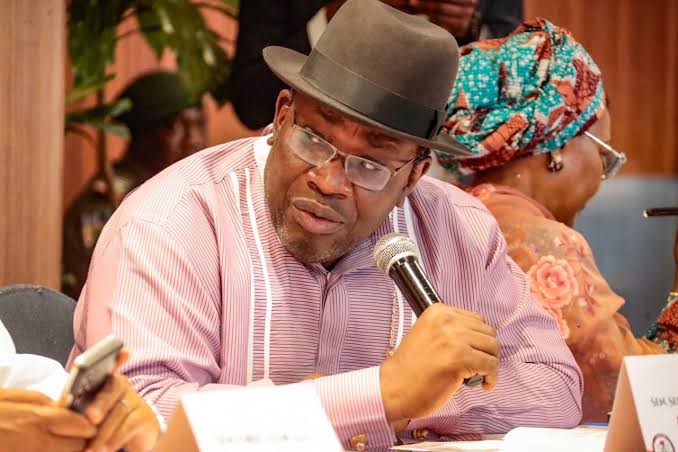
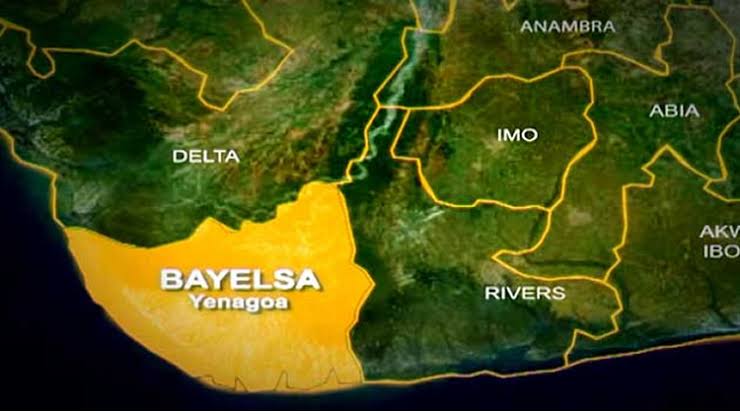
Minister of State for Petroleum Resources (Oil), Senator Heineken Lokpobiri, has said reforms implemented by President Bola Tinubu’s administration have driven Nigeria’s crude oil production up by more than 80 per cent. Lokpobiri made the disclosure in Yenagoa, Bayelsa State, during a breakfast meeting with media friends led by Elder Asu Beks. The meeting was themed, “Counting the Gains of the Oil Sector Reforms Under President Bola Tinubu.” The minister said Nigeria was producing less than one million barrels per day of crude oil and condensate when the Tinubu administration assumed office in 2023. He said production had since risen to 1.824 million barrels per day, including condensate, citing the latest weekly report of the Nigerian Upstream Regulatory Commission (NUPRC). “Condensate is not counted by OPEC. As of the last weekly report from NUPRC, we are producing 1,824,000 barrels per day inclusive of condensate. That is over 80 per cent from where we started in 2023,” he said. According to Lokpobiri, the increase was achieved through the concerted efforts of stakeholders in the oil and gas industry, under the leadership of the President. He said Nigeria previously had fewer than 10 active drilling rigs and had recorded no seismic activity for more than two decades. The minister said the number of active drilling rigs had now risen to more than 70, noting that drilling a well costs between $25 million and $30 million onshore and between $80 million and $100 million offshore. He also claimed that Nigeria, which he said recorded virtually no oil and gas investment for more than a decade before the Tinubu administration, now accounts for about 60 per cent of oil and gas investments coming into Africa. Lokpobiri attributed the increase partly to the Federal Government’s approval of Shell’s divestment to Renaissance and ExxonMobil’s divestment to Seplat. He said the approvals had helped unlock investments in major projects, including the Bonga North, Bonga South-West and Zabazaba fields. The minister also disclosed that indigenous oil companies now account for about 60 per cent of Nigeria’s crude oil production, compared with the period when international oil companies dominated the sector with about 90 per cent of output. ### Subsidy Removal On the removal of petrol subsidy, Lokpobiri described the policy as unavoidable, noting that the Federal Government had been spending about N18.4 billion daily on subsidy when the exchange rate stood at N448 to the dollar. According to him, the expenditure translated to about $15 billion annually, or roughly N21 trillion when converted at an exchange rate of N1,400 to the dollar. He added that the removal of the subsidy had increased the revenue available for distribution to the three tiers of government through the Federation Account Allocation Committee (FAAC). Lokpobiri said monthly FAAC allocations had risen from less than N600 billion to more than N2 trillion. He explained that the increased allocations had enabled 27 states that previously struggled to pay workers’ salaries to meet their obligations and fund development projects.
10/3/2026, 1:46:13 PM
views 8796
Fuel Imports: We’re Ready For Court Cases – Dangote
Africa’s richest man and President of Dangote Industries Limited, Aliko Dangote, has vowed to push back against legal challenges facing his businesses, saying he is prepared to defend his investments while remaining open to reducing his stake in the Dangote Petroleum Refinery to 25 per cent as more Africans acquire shares in the company. The Dangote Group had earlier stated that a Kenyan court order over a land dispute would not prevent the groundbreaking ceremony for its proposed 700,000-barrel-per-day refinery in Lamu on Wednesday, although some activities at the project site could be affected. Dangote spoke during a fireside chat at the Nairobi Securities Exchange, where he discussed the group’s investment plans across Africa, the proposed Lamu refinery and plans to give investors in Kenya and other African countries an opportunity to own shares in the project. The Malindi Environment and Land Court had ordered that the “status quo prevailing” on the disputed land be maintained pending a hearing scheduled for October 14. The order, issued on September 25, became public on Monday. According to Reuters, the case was instituted by 133 residents of Chandavai in Lamu County, who argue that the land designated for the refinery is part of their ancestral heritage and has been occupied and cultivated by their families for generations. The Dangote Group, in a statement, said, “The court has not halted the groundbreaking ceremony of the refinery at this stage. However, activities at the site may be affected by the ruling as both parties are required not to carry out activities until the case is heard on 14th October.” Despite the legal challenge, Dangote expressed confidence that the project would proceed. Speaking to investors, he said such disputes were not unusual for his businesses across Africa and insisted that his group was prepared to confront anyone seeking to disrupt its investments. “I’m sure some of you must have seen that one court has given an order that we shouldn’t do any construction? I said no, no. This is normal for us in Africa. In fact, this is even small,” Dangote said. He cited previous challenges faced by his businesses in other African countries, including Senegal, where one of the group’s factories was shut down for a year. “In Senegal, it’s not even the court. They stopped our factory for one year. We went up to the Supreme Court to get a judgement. So anybody who wants to cause trouble, we are ready for them,” he said. The proposed Lamu refinery is expected to process 700,000 barrels of crude oil daily and is designed along similar lines to the Dangote Refinery in Nigeria. The project is estimated to cost between $15 billion and $16 billion, with completion targeted for 2030. Dangote described Kenya as a key part of the group’s expansion plans, stressing that the company views the entire African continent as its home and intends to continue investing across the region. “We’re taking Kenya as our home. It is home here, and that’s why we’re here to invest. Anywhere in Africa is home, because we understand the issues, we understand the problems,” he said. He added that the Lamu refinery had progressed rapidly from the discussion stage to implementation, with construction equipment already deployed to the project site. According to Dangote, the refinery is expected to create substantial employment opportunities, with more than 60,000 workers potentially required during the construction phase. “We will try as much as possible to train a lot of people here because part of the project will need over 60,000 people working there,” he said. He also said the refinery would stimulate the growth of small and medium-sized enterprises in the surrounding communities, noting that the project would attract additional businesses and industries rather than operate as a standalone facility.
9/30/2026, 7:15:16 AM
views 6549
Install WAFFITV