Subscribe to our newsletter

FG Earns N12.81tn From Crude Oil Exports In Q3 – NBS
Nigeria earned approximately ₦12.81 trillion from crude oil exports in the third quarter of 2025, according to data released by the National Bureau of Statistics (NBS). Figures from the latest Foreign Trade in Goods Statistics showed that crude oil made up 56.14 per cent of Nigeria’s total exports during the period, signalling a rebound in oil export revenues within the year. Although the value of crude oil exports declined by 4.47 per cent year-on-year from ₦13.41 trillion in Q3 2024, it increased by 7.03 per cent compared with ₦11.97 trillion recorded in Q2 2025, further underscoring the petroleum sector’s dominance in foreign exchange earnings. Exports of mineral products, largely driven by crude oil and petroleum gases, were valued at ₦20.01 trillion, accounting for 87.71 per cent of total exports in Q3 2025. Other oil-related exports amounted to ₦7.01 trillion in addition to crude oil earnings of ₦12.81 trillion. This represented a sharp 51.72 per cent rise from ₦4.62 trillion in Q3 2024, although it was 9.42 per cent lower than the ₦7.74 trillion recorded in the preceding quarter. Overall trade data highlighted the continued weight of oil in Nigeria’s export structure. Total merchandise trade rose to ₦38.94 trillion in Q3 2025, reflecting an 8.71 per cent increase year-on-year and a 2.36 per cent rise from Q2 2025. Exports accounted for 58.59 per cent of total trade at ₦22.81 trillion, while imports stood at ₦16.12 trillion, representing 41.41 per cent. The trade balance remained in surplus at ₦6.69 trillion, despite a 10.36 per cent decline from the previous quarter. Major export items during the quarter included natural gas, other petroleum gases in gaseous form, and refined petroleum products such as kerosene-type jet fuel. These helped cushion weaker performances in some non-oil sectors, particularly agriculture. Europe maintained its position as Nigeria’s largest export destination, with goods valued at ₦8.71 trillion, representing 38.16 per cent of total exports, largely on the back of crude oil shipments. Asia followed with ₦6.40 trillion, or 28.07 per cent, while Africa accounted for ₦4.90 trillion, equivalent to 21.49 per cent, mainly petroleum products supplied to neighbouring countries. India emerged as Nigeria’s top single export destination in Q3 2025, importing goods worth ₦2.26 trillion. It was followed by Spain (₦1.83 trillion), France (₦1.66 trillion), the Netherlands (₦1.54 trillion) and Italy (₦1.46 trillion). Combined, these five countries accounted for 38.34 per cent of Nigeria’s total exports. Oil dominance was particularly evident in trade with Africa and the ECOWAS sub-region. Exports to Africa totalled ₦4.90 trillion, compared with imports of ₦595.00 billion. Crude petroleum oils alone were valued at ₦1.94 trillion, accounting for 39.57 per cent of exports to the continent, followed by motor spirit at ₦707.05 billion and gas oil at ₦692.08 billion. Within ECOWAS, crude oil exports were valued at ₦1.32 trillion, representing 42.14 per cent of total exports to the sub-region, reinforcing Nigeria’s status as West Africa’s leading energy supplier. However, the NBS data also pointed to weaker outcomes in non-oil exports. Agricultural exports fell by 11.69 per cent year-on-year to ₦786.62 billion, while manufactured goods exports declined by 6.03 per cent to ₦978.53 billion, highlighting Nigeria’s continued dependence on oil-driven trade.
12/16/2025, 3:48:25 PM
views 5778
Petrol battlefield: Dangote, importers locked in brutal price war
Nigeria’s downstream petroleum sector has descended into what industry players describe as a full-blown price war following the decision by the Dangote Petroleum Refinery to slash the gantry price of Premium Motor Spirit (petrol). The move has triggered massive losses for fuel importers, depot owners, and retail marketers, even as the refinery itself admits it is bleeding financially. Findings by The PUNCH show that petrol importers are on the verge of losing as much as N102.48bn monthly after the Dangote refinery reduced its gantry price from N828 per litre to N699. At the same time, the refinery is also projected to lose about N91bn in a month as a direct consequence of the price cut, underscoring the intensity of the competition currently reshaping Nigeria’s downstream oil market. While many Nigerians have welcomed the price reduction as a major relief, especially during the Yuletide season, fuel marketers running filling stations across the country say they are counting heavy losses, as they would be forced to sell existing stocks purchased at higher prices below cost. The development has exposed deep fault lines in the deregulated petroleum market, with winners and losers emerging almost simultaneously. The PUNCH reports that the Dangote refinery announced the N129 per litre reduction in petrol gantry price on Friday, cutting the ex-depot rate from N828 to N699 per litre. This came just days after the refinery assured Nigerians of sufficient fuel supply to avoid queues at filling stations during the festive period. The company also announced a 10-day credit facility for marketers, stating that the new price regime took effect from December 12. At a press briefing on Sunday, President of the Dangote Group, Aliko Dangote, vowed to enforce the new pricing regime, insisting that filling stations must sell petrol at N739 per litre nationwide from today (Tuesday). He disclosed that MRS filling stations would begin implementation immediately, with other partner stations expected to follow. Depots cut prices To remain competitive, importers and private depot owners have been compelled to slash prices to align with Dangote refinery’s rates, triggering sharp losses across the supply chain. Market checks conducted by The PUNCH using data from Petroleumprice.ng revealed that private petroleum depots in Lagos had slashed PMS prices by about 14 per cent within days of Dangote’s announcement. Several major depots in Lagos were found to be selling PMS at N710 per litre, down from an average of N828 per litre barely a week earlier. Dangote-linked marketers were selling PMS around N703 per litre, forcing nearby depots to recalibrate their prices to avoid weak sales and stock overhang. At MENJ private depots, the price of PMS dropped from N828 per litre on December 8 to N710 per litre on December 15, representing a reduction of N118. Integrated and Bovas depots also reduced PMS prices from N826 per litre to N710, a N116 drop. A.A. Rano Depot recorded the steepest cut, with prices falling from N829 to N710 per litre, amounting to a N119 reduction. At Dangote Depot, PMS was selling at N702.5 per litre, while Automotive Gas Oil sold at N916 and Liquefied Petroleum Gas at N815 per litre. Pinnacle Depot offered PMS at N710 per litre and AGO at N941. Menu and Bovas depots aligned their PMS prices at N710 per litre, while Matrix Depot sold PMS at N800 per litre. Rainoil had PMS priced at N803 per litre, with other depots focusing largely on AGO and LPG supplies. In the AGO segment, NIPCO sold at N930 per litre, Duport at N944, Ibachem at N930, while African Terminal and Gulf Treasure depots sold at N944 per litre. Bono Depot recorded the highest AGO price at N945 per litre. Overall, the adjustments reflected an average 14 per cent reduction across Lagos depots, driven largely by competitive pressure from Dangote refinery’s aggressive pricing. The losses According to data from the Nigerian Midstream and Downstream Petroleum Regulatory Authority, Nigeria consumes an average of 50 million litres of petrol daily, translating to about 1.5 billion litres monthly. The data showed that the Dangote refinery supplies about 23.52 million litres per day, equivalent to 705.6 million litres monthly, while fuel importers supply the remaining 26.48 million litres daily, amounting to 794.4 million litres monthly. A report by the Major Energies Marketers Association of Nigeria indicated that the landing cost of petrol stood at N828 per litre as of December 12, meaning that importers’ ex-depot prices were about N129 higher than Dangote’s price. Market pressure, analysts say, could force depot owners to sell petrol at the same rate as Dangote, resulting in losses of about N129 on each litre sold. Based on consumption figures, this would translate to losses of about N3.41bn daily and N102.48bn monthly for importers. Similarly, if the 705.6 million litres supplied monthly by Dangote refinery is multiplied by the N129 reduction, it means the refinery itself would lose up to N91.02bn in one month. Speaking with The PUNCH, the spokesman of the Independent Petroleum Marketers Association of Nigeria, Chinedu Ukadike, painted a grim picture for fuel importers, particularly those whose cargoes were still on the waterways. “For importers, I will wish them good luck because most of them who have imported petrol and whose cargoes are still on the waterways have not been discharged. I don’t know how they are going to manage it this time around. But I wish them good luck, and I will also recommend high blood pressure medicines for them,” Ukadike said. Ukadike disclosed that filling stations could lose over N80bn as they would be compelled to sell existing stocks below cost once cheaper products flood the market. While commending Dangote for slashing petrol prices and congratulating Nigerians for enjoying the benefits of local refining and deregulation, he said marketers had begun counting their losses. “It is a welcome development. We marketers have since been anticipating that since crude prices and the exchange rate are stabilising, we should also gain meaningfully from the Dangote refinery as the largest producer of petroleum products in Nigeria, and it has come to pass,” he said. On the downside, Ukadike said marketers who bought petrol at about N828 per litre would “continue to lick our wounds” as soon as the new product starts circulating in the market. “Marketers will lose over N80bn on this reduction. We will lose more than N80bn. And now that this reduction is there, you will see that the pump price will start dropping gradually from N900 towards N750 per litre,” he said, adding that consumers would naturally flock to stations selling cheaper fuel. Ukadike urged Dangote refinery to consider compensating marketers who bought petrol at the old rate, suggesting discounts on future purchases as a way of cushioning losses. Dangote, however, insisted that the refinery was also losing heavily each time it reduced prices. During the Sunday briefing, he disclosed that the refinery lost about N60bn in November alone after reducing gantry prices by N49. “For the marketers, I pray, and I wish they would even lose more because I’m not printing money. I’m also losing money; it’s not that I’m making money,” Dangote said. He added, “They want imports to continue. I don’t think it is right. They want to continue to dump imported petrol, so I must have a strategy of how to survive because N20bn of investment is too big to fail. We are in a situation where we will continue to play cat and mouse, and at the end of the day, somebody will give up. It is either we give up, or they will give up, and I don’t think I will give up.” The President of the Petroleum Products Retail Outlet Owners Association of Nigeria, Billy Gillis-Harry, also expressed concern over the impact of the sudden price cut on retailers holding existing stocks. He described the N129 reduction as a “big shock” to filling stations with substantial PMS volumes in their tanks. “Dangote has announced it, and we commend him for making Nigerians happy. The only concern we have is that we have members who have stocks of their last purchases that are not within that bracket. What are they going to do? How are they going to cope?” Gillis-Harry asked. He said abrupt price changes without adequate information flow create serious difficulties across the supply chain, noting that refining, transportation, and retailing are interconnected activities that require better coordination. “This is a big shock now in the system, but we congratulate him for being focused on making Nigerians happier,” he added. Energy security threat The Chief Executive Officer of Petroleumprice.ng, Jeremiah Olatide, warned that rising tension between regulators and industry players could undermine energy security and destabilise the downstream sector. He described the Dangote refinery as a “big blessing” to Nigeria’s economy, noting that its operations helped reduce PMS prices to N739 per litre during the festive period. “For me, I don’t think this is the right time for a blame game or rancour between NMDPRA and Dangote Refinery, because the regulators and those being regulated need a cordial and working relationship to achieve energy security,” Olatide said. He acknowledged the regulator’s role in ensuring a balanced energy mix, stressing that Nigeria should not rely on a single refinery despite Dangote’s scale. He warned that continued rancour would not help the downstream sector or the wider economy. Reps intervene The crisis took a political turn on Sunday when Dangote accused the Chief Executive of the Nigerian Midstream and Downstream Petroleum Regulatory Authority, Farouk Ahmed, of sabotaging the economy by granting import licences “despite enough local production.” He also challenged Ahmed to explain how he allegedly paid $5m for his four children’s secondary school education in Switzerland. Following the allegations, the House of Representatives Committee on Petroleum Resources (Downstream) intervened, summoning both Dangote and the NMDPRA leadership. Committee Chairman, Ikenga Ugochinyere, said the move was necessary to address what he described as “growing tension” threatening the stability recently achieved in the downstream sector. “We can only find sustainable solutions when we identify the critical issues leading to this tension,” Ugochinyere said. “By the time Alhaji Aliko Dangote, the NMDPRA, and other stakeholders meet with the committee, we will get the real gist of what is happening.” Despite the escalating conflict, Dangote reiterated his resolve to crash petrol prices further, insisting that transportation costs from the refinery do not exceed N15 per litre. He questioned why pump prices should rise as high as N900 per litre and accused the regulator of issuing 47 import licences to bring in more than seven billion litres of petrol in the first quarter of 2026. For now, as MRS filling stations begin selling petrol at N739 per litre and private depots continue to slash prices, Nigerians may enjoy temporary relief at the pumps. However, beneath the celebrations lies a brutal price war that has left importers, depot owners, and marketers bleeding financially, with no clear resolution in sight.
12/16/2025, 11:47:26 AM
views 2179
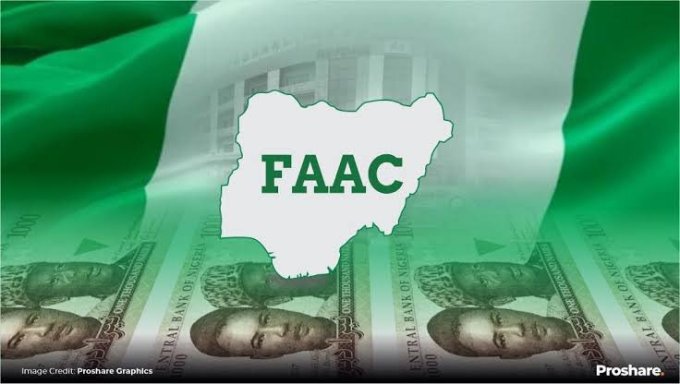
FAAC Revenue Drops As FG, States, LGs Share N1.928trn In November
The Federal Government, states and local government councils shared a total of **N1.928 trillion** as Federation Account revenue for **November 2025**. The distribution was approved at the **December 2025 meeting of the Federation Account Allocation Committee (FAAC)** held in Abuja. A communiqué issued on Monday by the spokesperson of the Office of the Accountant-General of the Federation, **Bawa Mokwa**, stated that the distributable sum comprised **N1.403 trillion** from statutory revenue, **N485.838 billion** from Value Added Tax (VAT), and **N39.646 billion** from the Electronic Money Transfer Levy (EMTL). FAAC disclosed that a gross revenue of **N2.343 trillion** accrued in November 2025. From this amount, **N84.251 billion** was deducted as the cost of collection, while **N330.625 billion** was earmarked for transfers, interventions, refunds and savings. According to the communiqué, gross statutory revenue for the month stood at **N1.736 trillion**, reflecting a drop of **N427.969 billion** from the **N2.164 trillion** recorded in October 2025. Likewise, gross VAT revenue declined to **N563.042 billion** in November, down from **N719.827 billion** in October. Out of the total distributable revenue of **N1.928 trillion**, the Federal Government received **N747.159 billion**, state governments got **N601.731 billion**, while local government councils received **N445.266 billion**. Oil-producing states also shared **N134.355 billion** as 13 per cent derivation revenue. A breakdown of the **N1.403 trillion** statutory revenue showed that the Federal Government received **N668.336 billion**, states **N338.989 billion**, and local governments **N261.346 billion**, with **N134.355 billion** set aside for derivation. From the **N485.838 billion VAT** pool, the Federal Government received **N72.876 billion**, states **N242.919 billion**, and local governments **N170.043 billion**. The **N39.646 billion EMTL** revenue was shared with the Federal Government receiving **N5.947 billion**, state governments **N19.823 billion**, and local governments **N13.876 billion**. FAAC further noted that while excise duty recorded a moderate increase in November, revenues from **Petroleum Profit Tax (PPT), Hydrocarbon Tax (HT), Companies Income Tax (CIT), Capital Gains Tax (CGT), Stamp Duties, oil and gas royalties, import duty, CET levies, VAT, EMTL and fees** experienced significant declines.
12/16/2025, 8:17:57 AM
views 6992
Nigeria’s Inflation Rate Eased To 14.45 Percent In November
Nigeria’s headline inflation rate dropped by 1.6 percentage points to 14.45 per cent in November 2025, down from 16.05 per cent in October, reaching its lowest point in five years. The National Bureau of Statistics (NBS) revealed this on Monday in its November 2025 Consumer Price Index (CPI) report. The bureau stated that headline inflation moderated to 14.45 per cent in November 2025, compared with 16.05 per cent in the preceding month. It noted that the figure reflected a month-on-month decline of 1.6 percentage points. On a year-on-year basis, the NBS said the November 2025 inflation rate was 20.15 percentage points lower than the 34.60 per cent recorded in November 2024. According to the report, this indicates a reduction in headline inflation compared with the same period last year, although the comparison was made using a different base year of November 2009 equals 100. However, the bureau reported a rise in month-on-month inflation, which stood at 1.22 per cent in November 2025, up by 0.29 percentage points from the 0.93 per cent recorded in October. “This implies that the pace of increase in the average price level in November 2025 was higher than that observed in October 2025,” the NBS explained. The report also showed an improvement in food inflation, which declined to 11.08 per cent in November 2025 from 13.12 per cent in October. On a year-on-year basis, food inflation dropped sharply to 11.08 per cent in November 2025, representing a decrease of 28.85 percentage points compared with the 39.93 per cent recorded in November 2024. The NBS attributed the sharp fall in annual food inflation largely to a change in the base year used in calculating the index.
12/15/2025, 3:22:18 PM
views 5946
Presidency dismisses opposition allegations, defends Tinubu’s reforms, EFCC independence
The Presidency has dismissed recent allegations by opposition politicians accusing President Bola Tinubu of undermining multi-party democracy and weaponising anti-corruption agencies, describing the claims as baseless and politically motivated. In a statement issued on Sunday, Special Adviser to the President on Information and Strategy, Mr. Bayo Onanuga, said the opposition figures were engaging in “subterfuge and an empty search for scapegoats” following their political setbacks. The people joining the APC are doing so of their own free will, motivated by the noticeable gains of President Bola Tinubu’s reform programme,” the statement said, adding that similar movements of politicians to the then-ruling Peoples Democratic Party (PDP) between 2000 and 2015 did not attract claims of democratic erosion. The Presidency also rejected accusations that the Economic and Financial Crimes Commission (EFCC) was being used to target political opponents, insisting that the agency operates independently within the ambit of the law. While noting that it does not speak for the EFCC, the Presidency reiterated that the anti-graft agency has a statutory mandate to investigate and prosecute financial crimes regardless of political affiliation or status. “It is curious that those who claim to want to rescue Nigeria are now waging a war against accountability and probity,” the statement said, urging individuals facing investigation to defend themselves through legal channels. The statement further emphasised that President Tinubu does not issue directives to anti-corruption agencies on whom to investigate or prosecute, noting that prosecutions are determined by the courts. Describing allegations of “weaponisation” as distractions, the Presidency argued that such narratives stem from a lack of viable campaign issues against the Tinubu administration, which it said has recorded notable successes in less than three years in office. The statement also recalled that some signatories to the opposition statement had previously been investigated or prosecuted by the EFCC before Tinubu assumed office in 2023, while others were allegedly implicated in international financial crime cases.
12/15/2025, 1:12:04 PM
views 11140
Dangote Names N739 As New Petrol Pump Price
Barring any last-minute adjustments, MRS and other marketing partners of the Dangote Petroleum Refinery are expected to begin dispensing petrol at **N739 per litre**. The development comes two days after the refinery reduced its petrol gantry price from **N828 to N699 per litre**. Speaking at a press briefing on Sunday at the Lekki refinery, the President of the Dangote Group, **Alhaji Aliko Dangote**, said he was aware that despite reductions at the gantry, some filling stations often keep pump prices high, undermining the refinery’s efforts. He disclosed that **MRS would commence sales at N739 per litre from Tuesday**, with other partners expected to follow suit. Dangote further alleged that certain officials had held meetings with some marketers, urging them to maintain high prices in a bid to frustrate the reduction, adding that he was determined to ensure compliance with the new price regime. “I was told that the marketers have met with (some officials) and were told to make sure that the price is maintained high. But this price we are going to introduce, we are going to start with MRS stations most likely on Tuesday in Lagos; that N970 per litre, you won’t see it again. We have also asked members of IPMAN to come now. We have asked anybody who can buy 10 trucks to come and buy 10 trucks at N699. “We are going to use whatever resources that we have to make sure that we crash the price down. We will get these sales; maybe it will take us a week to 10 days. But first of all, within a week to 10 days, we will be able to deliver. For this December and January, we don’t want people to sell petrol for more than N740 nationwide. Those who want to keep the price to sabotage the government, we will fight as much as we can to make sure that these prices are down. That’s not the price. If you have money to come and buy, you can pick up petrol at N699,” he said. Dangote said transporting petrol from the refinery costs no more than N15 per litre, questioning why pump prices would rise as high as N900 per litre. He also accused the Nigerian Midstream and Downstream Petroleum Regulatory Authority of issuing 47 import licences to bring in more than seven billion litres of petrol in the first quarter of 2026, a move he said was killing local investments. “Freight within Lagos is N10 or N15, maximum. So if it’s N10 to N15, everything is going to cost you N715. Why do you want to sell at N900? People should get the real price. I cannot come now and take the hit. Did we make money? No, we didn’t make money. But as we speak now, even our tanks are full because the NMDPRA has issued reckless licences. And we have to now go and complain to the government. “They normally issue licences in the middle of the month. So, they are now ready to issue licences for about 7.5 billion litres for the first quarter of 2026, despite the fact that we have guaranteed to supply enough quantity. “If you are talking about monopoly, did we stop anybody? They issued 47 licences. Let those people come and put up a refinery here, or let them go and buy even NNPC’s and operate them. If it’s profitable, they should go and do that now. NNPC was the only business that was bringing in fuel before. “Now, we are the only one and one of the few modular refineries that are producing. Those modular refineries, I can tell you for nothing that they are almost on the verge of collapse. None of them is making a dime,” he added. The billionaire businessman assured Nigerians that the N739 per litre price would be enforced, beginning with MRS stations on Tuesday. “Starting from Tuesday, MRS will start selling petrol at N739/litre. Definitely, we will enforce that low price. We will make sure that it’s implemented. If you have your truck, you can come here and buy it. We are selling at N699. The N699 includes the percentage of NMDPRA. So what actually comes out to us is about N389 or so,” he stated. Contacted for his reaction, the NMDPRA spokesman, George Ene-Ita, said, “For now, no comment.”
12/15/2025, 7:53:19 AM
views 4582
CBN Sets One~month Deadline For Dual PoS Connectivity
The Central Bank of Nigeria (CBN) has directed all financial institutions, acquirers, and payment service providers to adopt mandatory dual connectivity for Point of Sale (PoS) transactions within one month. The directive, contained in a circular dated December 11, 2025 and signed by the Director of the Payments System Supervision Department, Rakiya Yusuf, updates an earlier policy introduced in September 2024. According to the CBN, the move is designed to tackle recurring PoS downtime linked to dependence on a single transaction channel. Under the revised guideline, all acquirers, processors, and payment terminal service providers are required to maintain active connections with both the Nigeria Inter-Bank Settlement System (NIBSS) and Unified Payment Services Limited (UPSL). “This dual connectivity is intended to reduce dependence on any single aggregator and stabilise the country’s payment infrastructure. “To ensure readiness, the apex bank has mandated periodic redundancy and failover tests. NIBSS and UPSL must work with regulated institutions to confirm that systems can support uninterrupted service, with results forming part of CBN’s ongoing oversight,” the statement read. According to CBN, the circular introduces stricter reporting obligations. “NIBSS and UPSL must notify banks immediately during any downtime and submit a detailed incident report to the Payments System Supervision Department within 24 hours, outlining the cause, impact, and corrective actions taken,” the statement added
12/12/2025, 9:36:42 AM
views 4055
Install WAFFITV