Subscribe to our newsletter

FAAC: FG, States, LGCs Share Massive N2.550tn As June Revenue
The Federal Government, the 36 states and the 774 local government councils shared a total of N2.550 trillion from the Federation Account revenue generated in June 2026. This was disclosed on Wednesday by the Director of the Office of the Accountant General of the Federation, Bawa Mokwa, following the July 2026 meeting of the Federation Account Allocation Committee (FAAC) in Abuja. The distributable revenue consisted of N1.809 trillion from statutory revenue and N740.724 billion from Value Added Tax (VAT). According to a communiqué issued after the meeting, total gross revenue available in June stood at N4.500 trillion. From this amount, N160.744 billion was deducted as collection costs, while N1.789 trillion was set aside for transfers and refunds. The communiqué further revealed that gross statutory revenue for June was N3.700 trillion, representing an increase of N1.049 trillion compared to the N2.651 trillion recorded in May 2026. VAT generated N799.746 billion in June, exceeding the N743.688 billion recorded in May by N56.078 billion. Of the N2.550 trillion distributed, the Federal Government received N923.438 billion, states received N838.208 billion, while local government councils got N591.390 billion. Oil-producing states also received N197.610 billion as 13 per cent derivation revenue. From the N1.809 trillion statutory revenue allocation, the Federal Government received N849.366 billion, states got N430.810 billion, and local governments received N332.136 billion. The oil-producing states shared N197.610 billion as derivation revenue. Similarly, from the N740.724 billion VAT pool, the Federal Government received N74.072 billion, states got N407.398 billion, while local governments received N259.253 billion. FAAC also noted that revenue from Companies Income Tax (CIT), Capital Gains Tax (CGT), Stamp Duties (SDT), Petroleum Royalties, Gas Flared, Rental and Miscellaneous Oil Revenue (MOR), VAT, Import Duty and CET Levies recorded significant increases in June. However, receipts from Petroleum Profit Tax (PPT), Hydrocarbon Tax (HT), Mineral Royalties and Fees declined sharply, while excise duty posted only a marginal increase.
7/16/2026, 8:10:03 AM
views 8740
Nigeria’s Inflation Rate Slows To 15.91 Percent
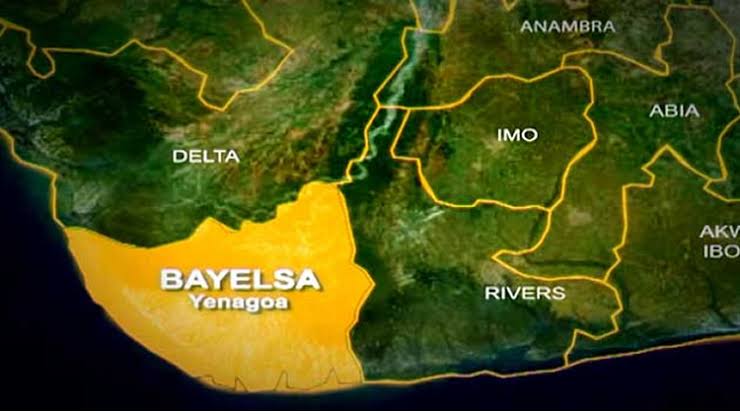
The National Bureau of Statistics (NBS) says Nigeria's headline inflation rate eased slightly to **15.91 per cent in June 2026**, down from **15.93 per cent in May**. In its latest Consumer Price Index (CPI) report released on Wednesday, the Bureau noted that while overall inflation moderated, the **food inflation rate rose to 17.52 per cent in June**, compared to **16.96 per cent in May**. According to the report, the marginal decline in headline inflation was largely driven by a reduction in core inflation, which dropped to **15.92 per cent in June** from **16.82 per cent in May**. Despite the slowdown in overall inflation, food prices continued to climb, with the food index increasing by **0.56 percentage points**. The rise was attributed to higher prices of items such as crayfish, fresh pepper, tomatoes, dried green peas, yam flour, water yam, beef, bananas, cassava flour, cowpeas, garri, Irish potatoes, and yam tubers. The NBS stated that the headline inflation rate of **15.91 per cent** in June 2026 was significantly lower than the **25.29 per cent** recorded in the corresponding period of 2025. On a month-on-month basis, headline inflation stood at **1.66 per cent** in June, compared to **1.75 per cent** in May, indicating that the pace of increase in average prices slowed during the month. For food inflation, the Bureau said the year-on-year rate reached **17.52 per cent** in June, down from **25.41 per cent** recorded in June 2025. However, on a month-on-month basis, food inflation accelerated to **3.75 per cent**, up from **2.98 per cent** in May. The report showed that **Kogi (53.02 per cent), Niger (43.83 per cent), and Benue (40.83 per cent)** recorded the highest year-on-year food inflation rates, while **Katsina (19.15 per cent), Rivers (23.81 per cent), and Imo (24.60 per cent)** posted the slowest increases. On a month-on-month basis, **Katsina (16.82 per cent), Kebbi (9.79 per cent), and Niger (8.96 per cent)** recorded the highest food inflation rates. In contrast, **Borno (-3.54 per cent), Benue (-2.36 per cent), and Bayelsa (-1.34 per cent)** recorded the slowest food inflation during the period.
7/15/2026, 4:15:58 PM
views 5222
Nigeria Meets 104 Percent Of OPEC Quota As Crude Production Hits 74~month High
Nigeria's crude oil and condensate production rose to an average of **1,735,398 barrels per day (bpd)** in June 2026, extending its growth streak to a fourth consecutive month. The figures were disclosed in a statement issued on Sunday by the spokesperson of the **Nigerian Upstream Petroleum Regulatory Commission (NUPRC)**, Eniola Akinkuotu. According to the commission, average crude oil production stood at **1.56 million bpd**, while condensate output reached **0.18 million bpd** during the month. The performance enabled Nigeria to exceed its **1.5 million bpd** crude oil production quota set by the **Organization of the Petroleum Exporting Countries (OPEC)**, achieving **104 per cent** of the target. Excluding condensates, the country's average crude oil production of **1.56 million bpd** in June marked its highest monthly output since **April 2020**, representing a **74-month high**. The report also showed that Nigeria's combined crude oil and condensate production peaked at **1.89 million bpd** during the month, underscoring the country's potential to attain the **2 million bpd** production milestone in the near future. The lowest daily production recorded in June was **1.57 million bpd**. Production has maintained a steady upward trend in recent months, increasing from **1.483 million bpd** in February to **1.546 million bpd** in March, **1.663 million bpd** in April, **1.700 million bpd** in May, and **1.735 million bpd** in June, representing a **2.2 per cent month-on-month increase**. The NUPRC attributed the improved performance to stable operations across most producing assets and the absence of major pipeline disruptions, which enhanced production uptime and crude evacuation efficiency. Although a few production assets experienced brief operational shutdowns, the commission said their impact on overall national output was negligible. It added that scheduled turnaround maintenance was successfully completed without causing significant production disruptions. The commission noted that the sustained increase in production reflects the continued efforts of operators and stakeholders to improve operational efficiency, maintain asset integrity, and enhance production reliability across Nigeria's upstream petroleum sector. A breakdown of production by terminals showed that **Bonny Terminal** led output with an average of **318.28 thousand barrels per day (kbpd)**, up from **293.88 kbpd** recorded in May. **Forcados Terminal** followed with **306.36 kbpd**, compared to **289.90 kbpd** in the previous month. **Qua Iboe Terminal** recorded an average production of **164.73 kbpd**, down from **173.36 kbpd** in May, while **Escravos Oil Terminal** posted **138.03 kbpd**, slightly higher than the **135.47 kbpd** recorded in May. **Bonga Terminal** ranked as the fifth-largest producing terminal, delivering an average of **103.66 kbpd** of crude oil, compared with **102.54 kbpd** recorded in the preceding month.
7/13/2026, 6:27:23 PM
views 9290
Oil Tops $80 As Trump Reignites Iran Tensions
Oil prices climbed to $80 per barrel after United States President Donald Trump declared that the interim ceasefire agreement with Iran had effectively collapsed. Data from Oilprice.com showed that Brent crude rose from $72 to $74 per barrel on Tuesday before surging to $80 on Wednesday. Trump on Wednesday dismissed the recently signed memorandum of understanding (MoU) with Iran as a "waste of time" following Tehran's attack on vessels navigating the Strait of Hormuz. Brent crude for September delivery jumped 7.6 per cent to $80 per barrel, while West Texas Intermediate (WTI) crude for August delivery advanced to $75.40 per barrel. Iran launched attacks on three commercial vessels transiting the Strait of Hormuz on Tuesday, prompting swift military retaliation from the United States. An LNG tanker was hit on its port side, triggering an engine room fire, while a Saudi-flagged supertanker sustained minor damage off the coast of Oman. In response, the United States Central Command (CENTCOM) carried out large-scale airstrikes on more than 80 military targets across Iran. CENTCOM said the operation involved precision-guided 5,000-pound deep-penetrator munitions targeting several coastal locations, including Qeshm Island, Sirik and the strategic port city of Bandar Abbas. The Trump administration also revoked a temporary sanctions waiver that had allowed Iran to export oil and petrochemicals, cutting off a major source of revenue for the country. Meanwhile, Iran's Khatam al-Anbiya Central Headquarters announced the formal closure of the Strait of Hormuz, warning that any international commercial vessel attempting to pass through the waterway would face direct military action. The scale of the latest military exchanges, significantly larger than previous retaliatory operations, underscored the collapse of the fragile ceasefire agreement reached in June. Reports indicated that tanker freight rates in the Gulf have surged as shipowners demand higher risk premiums, while refiners across Asia are seeking alternative crude supplies from West Africa, the United States and Latin America amid fears of a prolonged closure of the Strait of Hormuz. The renewed Middle East tensions come as Nigerians were expecting further reductions in petrol prices following the recent decline in global crude prices from about $120 to $71 per barrel. However, there are growing concerns that sustained hostilities in the region could trigger another spike in crude oil prices, potentially reversing recent gains and pushing fuel prices higher once again.
7/9/2026, 8:15:18 AM
views 6742
Standard N100 Note Remains Legal Tender — CBN
The Central Bank of Nigeria (CBN) has reaffirmed that the standard N100 banknote remains legal tender and should be accepted for all financial transactions across the country. In a statement issued yesterday by the bank's Acting Director of Corporate Communications, Mrs. Hakama Sidi-Ali, the CBN said the clarification was prompted by reports that some individuals and businesses had refused to accept the note in commercial transactions. The statement reads in full, “The attention of the Central Bank of Nigeria (CBN) has been drawn to reports of the rejection of the standard N100 banknote by some members of the public, businesses, and other stakeholders, apparently due to doubts about its continued legal tender status. “For the avoidance of doubt, the CBN hereby reiterates that both the commemorative N100 banknote and the standard N100 banknote remain legal tender in Nigeria and must be accepted for all transactions nationwide. “The commemorative N100 banknote, which was introduced to mark Nigeria’s centenary, did not replace the existing standard N100 banknote. The CBN strongly cautions individuals, businesses, financial institutions, and other economic agents against rejecting the standard N100 banknote. Such rejection constitutes a violation of the provisions of the CBN Act and undermines confidence in the national currency. “The Bank will not hesitate to apply appropriate enforcement measures against any person or entity found to be in breach. The Bank remains committed to safeguarding the integrity of the Naira, ensuring confidence in all duly issued banknotes, and promoting smooth currency circulation across the country. Accordingly, members of the public are urged to accept and transact with all banknotes legally issued by the Central Bank of Nigeria.”
7/9/2026, 7:57:50 AM
views 6622
NNPC Remits N19.5tn to Federation Account In 14 Months, Records $3.4bn Savings
The Group Chief Executive Officer of NNPC Limited, Engr. Bayo Ojulari, has revealed that the national oil company remitted **N19.5 trillion** to the Federation Account between April 2025 and June 2026, while achieving **$3.4 billion** in cost savings through contract restructuring and operational optimisation. Speaking at the 2026 Nigeria Oil and Gas Energy Week in Abuja on Tuesday, Ojulari said the company recorded significant improvements in production and operational efficiency during the period. According to him, crude oil production rose by six per cent year-on-year to **569.7 million barrels**, while gas production increased by **8.1 per cent** to **2.576 billion standard cubic feet**. He disclosed that NNPC achieved an average recovery rate of **98 per cent** across its five crude oil export terminals between April 2025 and May 2026, a sharp improvement from the operational low of about one per cent recorded at the Bonny Oil and Gas Terminal in June 2022. Ojulari also announced that Nigeria’s crude oil output had climbed to **1.71 million barrels per day**, its highest level in five years, while NNPC Exploration and Production Limited (NEPL) reached a record production of **365,000 barrels per day**. He attributed the rise in gas production to **7.5 billion standard cubic feet per day** to the completion of the River Niger crossing on the Ajaokuta-Kaduna-Kano (AKK) Gas Pipeline and the commissioning of the ANOH Gas Processing Plant. The NNPC chief further stated that the company maintained **100 per cent compliance** with Joint Venture cash call obligations throughout 2025 and up to June 2026, while sustaining efforts to help Nigeria achieve its target of producing **two million barrels of crude oil per day**. In her keynote address, the Special Adviser to the President on Energy, Olu Verheijen, said ongoing reforms in the energy sector were restoring investor confidence, with more than **$10 billion** in Final Investment Decisions (FIDs) secured over the past three years and over **$50 billion** in investments currently in the project pipeline. She explained that the Federal Government is repositioning Nigeria as a preferred destination for global energy investment through regulatory reforms, fiscal incentives and improved policy certainty. According to Verheijen, the government's target is to increase crude oil production to **three million barrels per day** and gas production to **10 billion standard cubic feet per day** before the end of the decade. She added that contracting timelines have been reduced by more than half, fiscal terms clarified, regulatory oversight streamlined and targeted incentives introduced to attract investors. She also noted that the Presidential Power Sector Financial Reforms Programme would strengthen confidence in the electricity value chain by addressing legacy debts and improving payment discipline across power generation, gas supply and financing. Verheijen further highlighted initiatives to expand domestic gas utilisation through reforms aimed at boosting LPG supply, enhancing market transparency and supporting industrialisation via gas-powered electricity, fertiliser production, petrochemicals, compressed natural gas (CNG) and liquefied natural gas (LNG) exports. Also speaking, the Minister of State for Petroleum Resources (Gas), Rt. Hon. Ekperikpe Ekpo, said the Federal Government was repositioning Nigeria’s vast natural gas resources to accelerate economic growth. He said reforms introduced through the Petroleum Industry Act (PIA) and presidential executive orders had strengthened regulatory certainty, shortened contracting timelines, introduced fiscal incentives for gas development and improved the commercial viability of deepwater gas projects, leading to renewed investor confidence and fresh Final Investment Decisions. Ekpo noted that Nigeria's **215 trillion cubic feet** of proven gas reserves—the largest in Africa—provide a solid foundation for industrialisation through power generation, fertiliser production, petrochemicals, transportation and clean cooking under the Decade of Gas initiative. He added that the government was fast-tracking strategic infrastructure projects, including the AKK and OB3 gas pipelines, expansion of gas processing facilities and the Nigeria LNG Train 7 project, which is expected to increase the country's LNG production capacity from **22 million** to **30 million tonnes per annum** upon completion.
7/8/2026, 8:03:32 AM
views 3822
Install WAFFITV