Subscribe to our newsletter

OPay Pulls $304 Million US IPO After Unnamed Regulatory Probe
Soft Bank‑backed digital payments firm OPay announced on Saturday that it has withdrawn its planned initial public offering on the New York Stock Exchange, citing a regulatory inquiry in an undisclosed foreign jurisdiction. The company said the decision was taken after discussions with its underwriters and that the probe is immaterial to its core business. The cancelled IPO was to raise up to $336 million by selling 16 million American depositary shares at $19‑$21 each, which would have valued OPay at roughly $4 billion. The shares were slated to begin trading on 30 October under the ticker OPAY at a price of $19 per ADS. OPay’s prospectus listed Citigroup, Deutsche Bank, Standard Bank and CICC as financial advisers. Soft Bank‑related entities held a 6.6 % stake in OPay ahead of the proposed listing. Founded in 2018, OPay offers mobile payments, money transfers, savings and loans in Nigeria, Indonesia, Egypt and Pakistan, serving about 50 million monthly active users as of July 2026. The company expressed confidence that the regulatory matter will be resolved soon and affirmed that it will not affect its operations, regulatory standing or customer services across its markets. However, the cancellation raises uncertainty about OPay’s previously approved plan for a secondary listing on the Nigerian Exchange, although the firm has not indicated whether the probe will impact those ambitions. OPay said its priority remains resolving the regulatory issue while continuing to serve customers in its operating markets.
11/1/2026, 1:18:15 AM
views 9130
Spanish football faces potential multi‑hundred‑million‑euro losses after China bans La Liga broadcasts
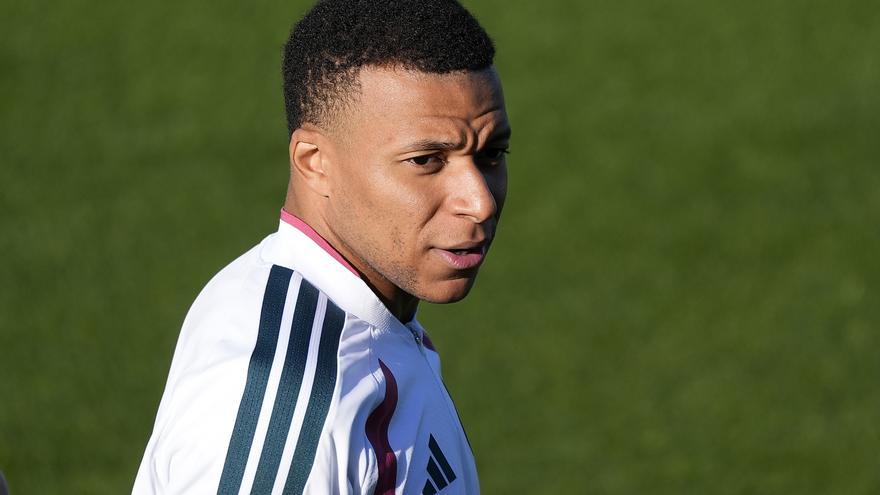
A diplomatic row between La Liga and the People’s Republic of China has escalated after French forward Kylian Mbappé made a joking reference to Mao Zedong during a pre‑Ballon d’Or interview. China Media Group (CMG) responded by suspending the open‑air transmission of La Liga matches on the state broadcaster CCTV and by pulling all advertisements featuring the player. The move threatens to cut off a significant source of revenue for Spanish football. La Liga distributes roughly €1.432 billion in net revenue each season to clubs in the first and second divisions, with about 40 % of that income coming from foreign broadcasters. China has been a strategic market for the league, especially after a 2022 dispute with Super Sports Media over a €47 million debt that ended in court. To secure Chinese exposure, La Liga had built a two‑track distribution model: an open‑air window through CMG and CCTV, and a digital rights package signed in August 2026 with China Mobile’s Migu platform. The Migu deal, covering 380 matches through 2030, is valued at €80‑120 million per year – roughly seven percent of La Liga’s total audiovisual revenue. While Migu continues to stream the games on a provisional basis, the removal of CCTV’s coverage jeopardises the overall advertising package tied to the broadcast. The controversy began when Mbappé, speaking on the programme "The Bridge," laughed about a popular meme that superimposed his face onto a portrait of Mao. The comment, intended as a light‑hearted joke, sparked outrage in China, where Mao remains an untouchable symbol for the Communist Party. CMG announced the immediate suspension of La Liga’s open‑air signal and the withdrawal of all ads featuring the French striker. Mbappé also lost endorsement deals with Chinese brands Dongpeng and Mengniu, which cited the perceived offense to Chinese sensibilities. The incident generated over 430 million views on the Chinese social network Weibo. The situation echoes the 2019 NBA controversy, when Daryl Morey’s tweet supporting Hong‑Kong protests led to a year‑and‑a‑half ban of NBA games on CCTV, costing the league more than $400 million in broadcast and sponsorship revenue. The Houston Rockets, a team with a strong following in China, saw its earnings drop by $25 million in a single year after advertisers pulled out. La Liga’s leadership moved quickly to mitigate the fallout. The league issued a public apology, stating, "We deeply regret the statements made by Kylian Mbappé that caused offense in China. We understand the damage caused and extend our sincere apologies to the Chinese people." President Javier Tebas held an emergency meeting with Chinese ambassador Yao Jing to reaffirm the partnership and protect the Migu agreement. Real Madrid, which holds 20 % of Mbappé’s image rights and derives 10‑15 % of its international merchandise revenue from China, also released a formal apology. Analysts warn that a prolonged suspension of Chinese television coverage could severely affect mid‑ and lower‑tier Spanish clubs, whose budgets rely on up to 80 % of broadcast income. The loss of the Chinese market would therefore jeopardise the financial stability of many clubs and could force a reassessment of La Liga’s international distribution strategy.
10/31/2026, 8:44:19 PM
views 6186
Turkey Azerbaijan Rift Puts US and EU‑Backed Transport and Energy Projects at Risk
Turkish President Recep Tayyip Erdogan hosted a dinner in Ankara ahead of the 13th summit of the Organization of Turkic States (OTS), but Azerbaijani President Ilham Aliyev was notably absent. While leaders of Kazakhstan, Kyrgyzstan, Uzbekistan, Turkmenistan and the Turkish Republic of Northern Cyprus attended, and U.S. President Donald Trump phoned Erdogan during the meal, Aliyev’s missing presence has drawn attention to growing Turkey‑Azerbaijan tensions and their possible impact on major U.S. and EU‑backed infrastructure initiatives. According to Azerbaijani media, Aliyev was unable to attend because he was scheduled to present awards at the closing ceremony of the inaugural FIFA U‑15 World Cup and Festival in Baku. His absence, however, coincided with a summit where Azerbaijan was handing over the rotating OTS chairmanship to Turkey, prompting analysts to question whether diplomatic friction could affect projects linking the Caspian region to Europe. Turkish political analyst Hasan Oktay, who observed the summit, described Aliyev’s absence as a loss for Azerbaijan and warned that even if the diplomatic spat does not cancel projects, it could slow bureaucratic coordination, technical consultations, financing processes and political agreements. The tension stems in part from Azerbaijan’s close ties with Israel, which contrast with Turkey’s increasingly confrontational stance toward Israel over the Gaza war. Relations have further soured after an Azerbaijani representative attended Israeli Prime Minister Benjamin Netanyahu’s United Nations address in September and after Azerbaijan declared 31 Turkish citizens persona non grata for alleged interference in its domestic affairs. Additional strain arose when Erdogan adviser Oktay Saral criticised Azerbaijani school headscarf regulations earlier this month, leading to Saral’s removal from his advisory role. Despite these disputes, diplomatic channels remain open; Turkish Foreign Minister Hakan Fidan met his Azerbaijani counterpart Jeyhun Bayramov at the summit. Azerbaijani analyst Farman Aydin, writing for the pro‑government outlet Azer NEWS, cautioned that a single missed summit does not prove a rupture in a relationship built over decades, but warned against taking the partnership for granted. The timing of the rift is critical for several high‑profile transport and energy corridors. Russia’s war in Ukraine has weakened the traditional Northern Corridor, while the U.S.–Iran conflict has exposed vulnerabilities in southern routes, heightening interest in the South‑Caucasus “Middle Corridor.” The European Union’s Global Gateway strategy reports that trade along this corridor has quadrupled since 2022, and the World Bank estimates that at least $25 billion in infrastructure investment could triple trade volumes and halve transit times by 2040. The corridor links China and Central Asia to Europe via Kazakhstan, the Caspian Sea, Azerbaijan, Georgia and Turkey. Another key initiative is the U.S.-backed TRIPP (Trump Route for International Peace and Prosperity), which seeks to connect mainland Azerbaijan with the Nakhichevan exclave through southern Armenia and onward to Turkey. The United States and Armenia released an implementation framework in January 2026 and signed a framework agreement in June, promising expanded trade, stronger supply chains and new transit links. Energy cooperation remains a cornerstone of the bilateral relationship. The Southern Gas Corridor—comprising the South Caucasus Pipeline, TANAP and TAP—delivers Azerbaijani gas through Georgia and Turkey to European markets. The Baku‑Tbilisi‑Ceyhan oil pipeline and the Baku‑Tbilisi‑Erzurum gas pipeline also underpin energy ties. Oktay believes existing pipelines are unlikely to be disrupted by the diplomatic chill, but cautions that future investments, capacity expansions and additional cooperation could suffer if political relations deteriorate. He emphasized that these projects rest on long‑term commercial agreements, international consortia and substantial investment relationships, making a temporary diplomatic rift unlikely to halt current operations but potentially affecting new ventures.
10/31/2026, 5:42:04 PM
views 3530
Google’s Search Revenue Grows 12% in Q3 2026 Amid AI Hype, Yet Monetization Remains Elusive
When Chat GPT burst onto the scene at the end of 2022, many analysts warned that traditional internet search engines could soon become obsolete. Four years later, Google reported the fastest increase in search volume it has seen in the past five years, contradicting those early forecasts. Alphabet’s third‑quarter 2026 financial results show that revenue from Google Search and related services rose 12 percent year‑over‑year to $63.35 billion. Chief Executive Sundar Pichai attributed the growth to the company’s artificial‑intelligence features, which he said are prompting users to ask more questions, including queries about purchasing products and services. Despite the higher query volume, the revenue figure fell short of analysts’ expectations, which had projected roughly $65 billion for the quarter. The shortfall reflects Google’s ongoing difficulty in converting AI‑driven searches into ad dollars as efficiently as it does with traditional search results. Google’s AI Mode, which delivers conversational answers powered by generative AI, reshapes how advertisements are displayed and how they can be monetized. Philipp Schindler, Google’s chief business officer, acknowledged that AI Mode currently generates less advertising revenue than conventional search listings, a factor that is tempering overall revenue growth. Additional pressures on the quarter’s performance came from fluctuating foreign‑exchange rates and reduced spending by some advertisers. In response, Google is gradually expanding ad placements within AI Mode and the newer AI Overviews feature, citing early experiments that have shown promising results. The situation is unusual: rather than driving users away, AI is encouraging them to search more on Google. The real challenge for the company now is not merely retaining users, but finding ways to profit from their evolving search habits as AI becomes an integral part of the experience. (Reporting by Telegrafi)
10/31/2026, 2:40:11 PM
views 6983
Julius Berger Nigeria Posts 21.5% Revenue Rise but Net Profit Falls 44% in First Nine Months
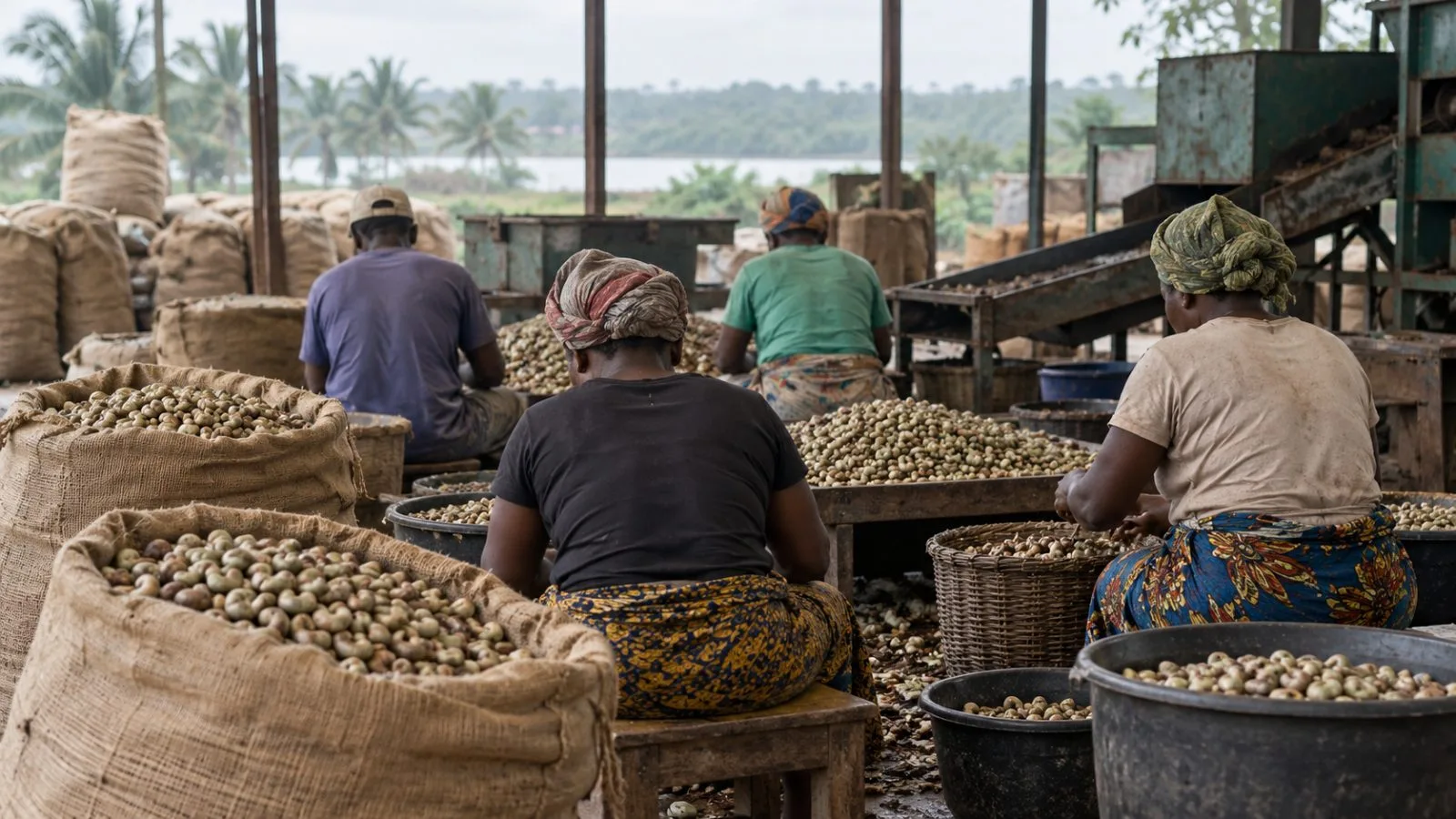
Julius Berger Nigeria Plc released its unaudited financial results for the nine‑month period ending 30 September 2026, showing a strong 21.5% increase in revenue alongside a sharp 44% decline in after‑tax earnings. Sales for the period reached ₦657.15 billion, up from ₦540.82 billion in the comparable 2025 period. Pretax income rose to ₦35.92 billion from ₦29.89 billion a year earlier, but net profit dropped to ₦10.19 billion from ₦18.25 billion. Group operating profit improved to ₦27.37 billion, compared with ₦24.22 billion in the prior year, according to statements filed with the Nigerian Exchange Limited. Civil works, building and services generated a combined operating profit of ₦53.14 billion, which was partially offset by a diversification loss of ₦25.77 billion, leaving the overall operating profit at ₦27.37 billion. Segment‑level performance showed building sales climbing to ₦162.82 billion from ₦129.44 billion, while services revenue more than doubled to ₦113.13 billion from ₦51 billion. Civil works revenue slipped slightly to ₦346.09 billion from ₦350 billion. Diversification activities generated ₦35.12 billion in revenue, up from ₦10.38 billion, but the operating loss in this segment widened dramatically from ₦6.49 billion to ₦25.77 billion. The filing notes the inclusion of a cashew‑processing venture in Epe, Lagos, and a regional construction expansion, but does not break out separate financial results for these activities. Income tax expense more than doubled, rising to ₦25.73 billion from ₦11.64 billion. Other gains and losses fell sharply to ₦4.29 billion from ₦44.99 billion, driven by a ₦2.80 billion foreign‑exchange loss versus a ₦38.25 billion gain a year earlier. Cash flow from operating activities used ₦22.46 billion, reversing the cash generation of ₦20.13 billion recorded in the previous year. Cash receipts from customers amounted to ₦544.92 billion, while payments to suppliers and employees totaled ₦545.75 billion.
10/31/2026, 2:09:41 PM
views 3119
NNPC Chairman Leads Delegation to Borno to Revive Hydrocarbon Exploration
Engineer Ahmadu Musa Kida, chairman of the Nigerian National Petroleum Corporation (NNPC) board, headed a high‑level delegation to Borno State in early October 2026 to assess and unlock the region’s hydrocarbon potential. The team met Governor Babagana Umara Zulum at the Government House in Maiduguri, where they discussed resuming oil exploration activities that had been suspended for several years. Kida emphasized NNPC’s role as a national trust, stating, “In NNPC, we believe that we are holding in trust for the Nigerian public. The ultimate stakeholders of what we do are the 200 million Nigerians.” He added that the corporation’s growth must benefit all regions, not just the traditional Niger Delta oil belt. Borno sits atop significant hydrocarbon reserves in the Chad Basin, but insecurity and logistical challenges have hampered exploration. NNPC’s Executive Vice President for Upstream Operations, Udy Ntia, described the visit as a strategic move to expand Nigeria’s resource base and strengthen energy security. Governor Zulum refuted claims that insecurity caused the suspension, assuring NNPC of adequate security for personnel and equipment. The delegation also outlined a broader energy agenda beyond oil. Olalekan Ogunleye, Executive Vice President for Gas, Power and New Energy, thanked the federal government for its commitment to improving electricity supply in the Northeast and signalled ongoing gas‑infrastructure projects that could bring reliable power to Maiduguri and surrounding areas. The visit signals NNPC’s evolution into a diversified energy company, with plans that include gas, power and solar initiatives alongside renewed oil exploration in Borno.
10/31/2026, 9:49:45 AM
views 2441
Fuel Subsidy Return Could Push Naira To N4,000/$ — Finance Minister
Nigeria’s Minister of Finance and Coordinating Minister of the Economy, Taiwo Oyedele, has warned that reinstating petrol subsidy could trigger capital flight, erode investor confidence and cause the naira to depreciate to between N3,000 and N4,000 per dollar. Oyedele gave the warning on Monday during a press briefing at the International Monetary Fund and World Bank Annual Meetings in Bangkok, Thailand, where he disclosed that investors had repeatedly expressed concerns over the possibility of the Federal Government abandoning its economic reforms ahead of the next election cycle. The minister ruled out any reversal of the reforms, cautioning that even an indication that President Bola Tinubu’s administration was considering a return to petrol subsidy could unsettle financial markets, raise borrowing costs and worsen economic hardship for households. According to him, investors in both the domestic and international markets have increasingly dismissed the opposition as lacking seriousness, based on his engagements with market participants. “In all the meetings I have had, I came to a conclusion that the markets, including the domestic market, which you can read from the capital market, and the international market, have largely written off the opposition in Nigeria as being unserious,” he said. Oyedele further warned that any suggestion of a possible return to fuel subsidy would provoke an immediate reaction from the markets, with serious implications for the economy. “If, for any reason, the President were to say we are merely considering the return of fuel subsidy, capital would react immediately. “Airfares would struggle, the naira would come under severe pressure, potentially moving towards 3,000, 3,500 or even 4,000. The very fuel people want subsidised would become far more expensive in naira terms,” he stated. The finance minister explained that the potential capital flight would not be limited to foreign investors, as wealthy Nigerians, business owners and middle-class investors could also seek refuge in the dollar to protect their assets against economic uncertainty. He warned that such a shift would increase demand for foreign exchange and intensify pressure on the naira. Oyedele also dismissed suggestions that the Nigerian National Petroleum Company Limited’s temporary reduction in petrol retail margins amounted to a return to fuel subsidy.
10/20/2026, 7:51:01 AM
views 4137
Install WAFFITV