Subscribe to our newsletter

2027: Atiku’ll Not Restore Subsidy To Produce Rich Men – Amaechi
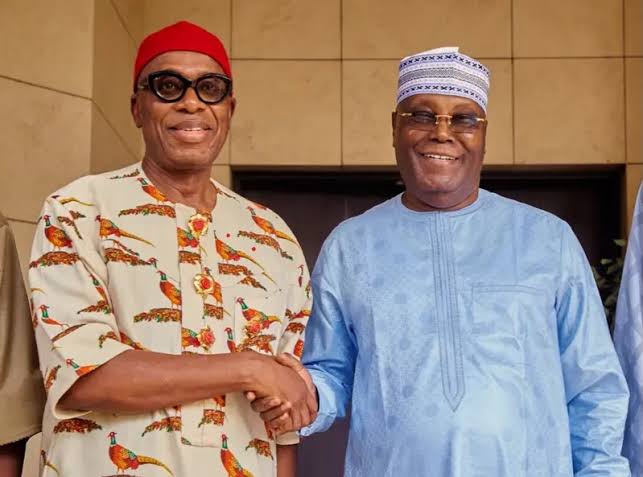
The African Democratic Congress (ADC) vice-presidential candidate, Rotimi Amaechi, has assured Nigerians that the party’s presidential candidate, Atiku Abubakar, will not introduce a fuel subsidy regime designed to benefit a few wealthy individuals if elected president in 2027. Amaechi said Atiku’s proposed policy would focus on production-based subsidies aimed at supporting owners of refineries, including modular refineries operating in Nigeria. He made this known on Thursday during a town hall meeting in Edo State, where he explained that the proposed arrangement would ensure that the benefits of fuel subsidies were directed towards domestic refining rather than individuals who exploit the system for personal gain. According to Amaechi, “We are not bringing back subsidy to produce rich men. That subsidy where rich men will go to Ghana, come back and say we have bought fuel for you, no. "Atiku will bring back production subsidy. If you don’t have a refinery in Nigeria, you will not get subsidy. We don’t have to pay for it; the government will not pay for the subsidy.” The former Minister of Transportation explained that an Atiku-led administration would introduce a pricing policy that differentiates between crude oil sold on the international market and crude supplied to domestic refiners. He said the arrangement would allow local refinery operators to purchase crude oil at a lower price than the international market rate, with the difference serving as the production subsidy. Amaechi illustrated the proposed policy with an example involving the Dangote Refinery, saying that if crude oil sold internationally for N15,000, the government could supply it to Dangote at N10,000, leaving a difference of N5,000. He added, “All the government will do is to make a policy. The price at which I sell crude on the international market will be different from the Nigerian market. We will do domestic pricing. What is domestic pricing? “If I sell crude at N15,000 on the international market, in Nigeria, I will sell to Dangote at N10,000. The difference will be N5,000. “I will then sit with Dangote and tell him to give me a subsidy of N5,000. “Once that happens, the price of fuel will come down, and the prices of every other thing will come down.” Amaechi maintained that the proposed production-based subsidy would lower petrol prices and reduce the cost of other goods and services by easing transportation and production expenses.
10/9/2026, 8:11:42 AM
views 8101
ADC Rejects INEC Warning, Vows To Publish Independently Collated Election Results
The African Democratic Congress (ADC) has rejected the Independent National Electoral Commission’s warning against the publication of privately collated election results, insisting that citizens and political parties have the right to collect, collate and share results from polling units. The party said it would deploy its agents and grassroots structures to document polling-unit results, collate the figures and publish verified information during the 2027 general elections. The ADC National Publicity Secretary, Mallam Bolaji Abdullahi, stated this in a statement on Thursday while reacting to comments by the INEC Chairman, Professor Joash Amupitan, who cautioned against the publication of unofficial election results. While acknowledging INEC’s statutory responsibility to declare official results and announce winners, the party maintained that the commission’s mandate does not prevent political parties, candidates or citizens from independently gathering and disseminating election-related information. “We are aware of our rights to freedom of expression under the Constitution. We are also aware of the limitations associated with those rights. And we hold that our rights to collate and share election results are not abrogated by any of the limitation clauses. “The ADC will share our collated results with the public. Our agents will document results, our structures will collate them, and we will communicate verified figures to the public, clearly identifying their source and status,” the statement read in part. The party stressed that its proposed collation system would not serve as a substitute for INEC’s official declaration of election results. It said the initiative was aimed at making polling-unit results accessible to the public while recognising INEC’s constitutional responsibility to determine and announce the final outcome of elections. The development comes as political parties and other stakeholders step up preparations for the 2027 general elections, with transparency in the collation and transmission of polling-unit results expected to remain a key issue. The controversy over independently collated election results has featured in recent electoral cycles, particularly as political parties, candidates, observers and citizens increasingly rely on digital platforms to document voting and share results as they emerge. The ADC maintained that electoral transparency should not be the sole responsibility of the electoral commission, arguing that political parties and citizens also have a legitimate role in documenting voting activities and results at polling units. It, however, clarified that its figures would be clearly labelled as independently collated results and would not be presented as official declarations by INEC. INEC remains the legally recognised electoral body responsible for conducting federal and state elections, collating results through the prescribed process and declaring winners. The ADC said its position was not aimed at usurping the commission’s statutory powers, but rather at affirming what it described as the constitutional rights of citizens and political parties to access, document and communicate electoral information. “The responsibility to make official declarations of results and to declare winners of elections cannot reasonably abrogate the right of citizens to collect and collate election results and to share them,” the party added.
10/8/2026, 5:15:59 PM
views 9740
ICYMI: Wike, Fubara, Rainbow Coalition Meet To Reconcile Ahead Of 2027
As part of ongoing efforts to unite political stakeholders ahead of the 2027 general elections, Minister of the Federal Capital Territory (FCT), Barrister Nyesom Wike, and members of the Rainbow Coalition on Tuesday night met with Rivers State Governor, Siminalayi Fubara, at his private residence in Port Harcourt, the state capital. The meeting was aimed at resolving differences among the various political camps and building a common front ahead of the forthcoming elections. Wike has recently embarked on tours of some local government areas in Rivers State as part of efforts to reconcile with aggrieved politicians campaigning for the re-election of President Bola Ahmed Tinubu and the emergence of Hon. Kingsley Chinda as the next governor of the state on the platform of the All Progressives Congress (APC). Sources who disclosed details of Tuesday’s meeting said some of Fubara’s close allies, including former Chief of Staff, Dr Edison Ehie; former Obio/Akpor Local Government Chairman, Ambassador Chijioke Ihunwo; former Mayor of Port Harcourt, Ezebunwo Ichemati; and several others, attended the meeting. Although Wike and Fubara declined to speak with journalists after the meeting, sources said the primary objective of the parley was to establish a united front for the 2027 elections in Rivers State, with a view to securing Chinda’s election as governor and ensuring Tinubu’s return for a second term. Also present at the meeting were prominent Wike loyalists, including Senator Magnus Abe, Chairman of the Rainbow Coalition Reconciliation Committee, and Senator George Sekibo, among others. However, the reconciliation effort reportedly attracted objections from some stakeholders. One observer argued that “there is nothing to reconcile. Wike should have known that some time would come when he will need Fubara’s support to make his candidate win the next election.” An aggrieved ally of Governor Fubara, who spoke on condition of anonymity, criticised Wike’s alleged influence over the affairs of the state. According to the source, the minister “controls the 23 council chairmen, he controls the state budget and its resources, he gags Fubara, who cannot go anywhere or visit anybody except with Wike’s permits, he controls the Assembly, Wike nominated the senators, rep members and the assembly members, and he controls federal appointments which he gives to his close allies.” The source further alleged that the state government was yet to have a full executive council because, according to him, Wike had not allowed the governor to exercise full authority in making appointments. “Today, there is no full executive council in the state because Wike has not given the governor a free hand to make appointments. What about the state of emergency that he orchestrated? What then is the reconciliation about? What are they reconciling?” he queried. Another observer, however, said the reconciliation process would only have its full meaning if Wike also reaches out to former governors and other key political stakeholders in the state.
10/7/2026, 11:58:59 AM
views 8753
2027: Reps ​‌‍‍‍‍⁠⁠‍​​‍‍‌‌‍⁠‌​Urge INEC To Disqualify Candidates Not In Submitted Party Registers
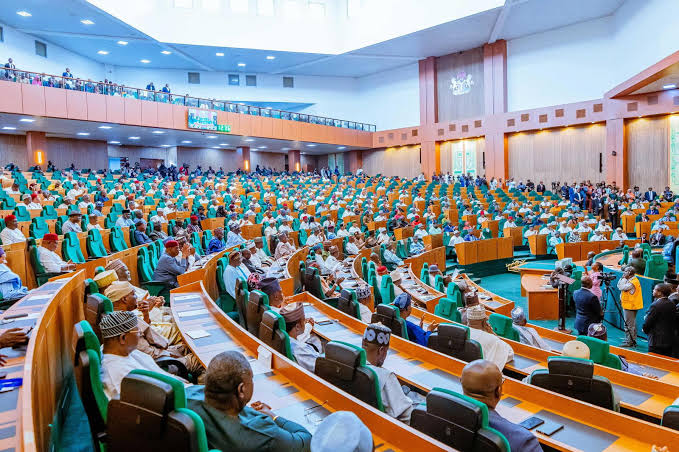
The Committee on Electoral Matters has called on the Independent National Electoral Commission, INEC, to audit the membership registers of political parties and disqualify candidates for the 2027 general elections whose names are not listed in the registers, in line with the Electoral Act 2026. Chairman of the committee, Rep. Bayo Balogun (APC), made the call in a statement on Tuesday, urging INEC to fully enforce the Supreme Court’s interpretation of Sections 77(5), 77(6) and 77(7) of the Electoral Act. Balogun said the Supreme Court’s judgment had effectively resolved the pending legal issues surrounding the interpretation, constitutionality and enforceability of the provisions. He recalled that on September 24, the apex court restored the provisions after overturning a Court of Appeal judgment that had declared them unconstitutional. According to him, the Supreme Court ruled that the provisions were not inconsistent with the 1999 Constitution. Balogun explained that Section 77(5) stipulates that only party members whose names appear in the membership register submitted to INEC are eligible to vote or contest at party primaries, congresses and conventions. He added that Section 77(6) requires political parties to use the membership register submitted to INEC for such electoral activities. The lawmaker therefore urged INEC to immediately enforce Sections 77(4) to 77(6) in the regulation, administration and monitoring of political parties and their electoral activities. He said the proposed audit should determine whether the names of candidates submitted by political parties are contained in the membership registers previously submitted to INEC in compliance with Section 77(5). Balogun described the exercise as a major test for the electoral commission, insisting that political parties and candidates found to be in violation of the law should be disqualified. He said strict enforcement of the provisions would help prevent electoral disputes and reduce litigation arising from alleged irregularities or non-compliance with Sections 77(4) to 77(6) of the Electoral Act.
10/6/2026, 11:31:19 AM
views 4710
2027: INEC Stakeholders Meeting Puts Omo~Agege, Chinda, Ochei, Others Under Scrutiny
All eyes will be on the Independent National Electoral Commission, INEC, today, Tuesday, as the commission convenes a national stakeholders’ meeting in Abuja to mark 100 days to the 2027 general elections. The meeting is expected to provide updates on the voters’ register, candidate nominations, election logistics and measures being put in place to safeguard the credibility of the polls. The gathering also comes amid growing concerns over the eligibility of several high-profile politicians who defected to new political parties ahead of the 2027 elections. Among those whose candidacies are attracting attention are the Rivers State governorship candidate of the All Progressives Congress, APC, Kingsley Chinda; Delta Central senatorial candidate of the Nigeria Democratic Congress, NDC, Ovie Omo-Agege; former Cross River State governor and Peoples Redemption Party, PRP, presidential candidate, Donald Duke; and former Delta State House of Assembly Speaker, Victor Ochei. The concerns followed a recent Supreme Court judgment which restored key provisions of the Electoral Act 2026 relating to political party membership registers and the nomination of candidates. The apex court, in a unanimous judgment delivered on September 25, upheld INEC’s appeal and restored Sections 77(5), 77(6), 77(7) and 84(2) of the Electoral Act, which had earlier been struck down by the Court of Appeal. The judgment has raised fresh questions about the eligibility of politicians who moved to new parties after their former parties had concluded, or were already conducting, their nomination processes. The controversy dates back to a Federal High Court judgment delivered in May, which invalidated parts of INEC’s timetable for the 2027 elections. The court held that INEC could not reduce the statutory periods allowed under the Electoral Act for political parties to conduct primaries and submit, withdraw or replace candidates. It also faulted the commission’s deadline for the submission of party membership registers. The ruling created uncertainty in the political process, leading to a wave of defections as politicians sought fresh platforms to contest the 2027 elections. However, the legal situation changed on July 16 when the Court of Appeal overturned the Federal High Court judgment and upheld INEC’s timetable, ruling that the commission acted within its powers in issuing the electoral guidelines. The Supreme Court subsequently went further in September by restoring the disputed provisions of the Electoral Act concerning membership registers and candidate nominations. Although INEC has not announced plans to disqualify any specific candidate at today’s meeting, its position on nominations could offer insight into the fate of candidates whose emergence followed controversial defections, waivers and party primaries. Chinda’s Rivers Battle In Rivers State, the candidacy of Kingsley Chinda, an ally of the Minister of the Federal Capital Territory, Nyesom Wike, remains one of the most closely watched. Chinda emerged as the APC governorship candidate on May 21, 2026, shortly after the Federal High Court ruling had invalidated portions of INEC’s electoral timetable. While the Supreme Court judgment did not specifically disqualify Chinda or any other candidate, questions have continued to surround the circumstances of his nomination. Supporters of the Rivers APC candidate have maintained that the apex court ruling does not automatically invalidate his candidacy. Omo-Agege’s NDC Ticket In Delta State, the candidacy of former Deputy Senate President, Ovie Omo-Agege, presents another major test. Omo-Agege contested the APC’s Delta Central senatorial primary in May but lost to Ede Dafinone. He resigned from the APC on May 22 and later joined the NDC, which granted him a waiver to participate in its Delta Central senatorial primary. He subsequently secured the ticket through a consensus arrangement. The key question is whether the restored provisions of the Electoral Act could affect his nomination, particularly regarding the party’s membership register and statutory requirements for participation in primaries. Omo-Agege is not the only politician facing such scrutiny. Victor Ochei, who also left the APC after its nomination process and joined the NDC, was granted a waiver and secured the party’s Delta North senatorial ticket. His candidacy could therefore face similar legal questions as INEC reviews the nomination process ahead of the 2027 general elections.
10/6/2026, 8:21:50 AM
views 3749
INEC Warns Politicians Against Violence, Hate Speech, Vote~Buying
The Independent National Electoral Commission, INEC, has warned politicians that no political ambition is worth the blood of Nigerians, vowing to arrest, sanction and prosecute political parties, candidates and agents involved in violence, hate speech and vote-buying ahead of the 2027 general election. INEC Chairman, Professor Joash Amupitan, SAN, issued the warning on Monday at a strategic workshop for editors organised by the Nigerian Guild of Editors, NGE, in collaboration with the electoral commission in Abuja. Amupitan cautioned political parties, candidates and campaign managers against allowing the 2027 electioneering process to degenerate into violence, intimidation and inflammatory rhetoric as campaigns intensify across the country. “As electioneering intensifies across the country, I must sound a clear note of warning to all political parties, candidates, and campaign managers: INEC will not stand by and allow political competition to devolve into violence, intimidation, or inflammatory rhetoric. “Democracy thrives on the clash of ideas, not the clash of weapons or the proliferation of hate speech,” he said. The INEC chairman disclosed that the commission had put mechanisms in place to identify and track electoral offenders. He said through the Inter-Agency Consultative Committee on Election Security, ICCES, an early-warning tracking framework had been activated to document cases of political violence, thuggery and dangerous campaign rhetoric. According to him, political parties or candidates found culpable of inciting violence, disrupting opponents’ rallies or using armed thugs would face statutory sanctions and prosecution. “Any political party or candidate implicated in inciting violence, disrupting rivals’ rallies or deploying armed thugs will face direct statutory sanctions and swift prosecution. No political office in this country is worth the blood of a single Nigerian,” Amupitan stated. Departing from his prepared speech, the INEC chairman said he had just been presented with evidence of the kind of conduct he had warned politicians against. He said, “Just before I was invited to come and speak, somebody shared with me… a person, an NDC candidate in Kano State who was campaigning yesterday with a gun in his hands, brandishing the gun, and so on and so forth.”
10/6/2026, 8:02:46 AM
views 4023
I Sleep Thinking About Tinubu’s Re~election, 2027 Easier Than 2023 – Wike
Minister of the Federal Capital Territory, Nyesom Wike, has expressed confidence that President Bola Tinubu will secure re-election in 2027, saying the task would be easier than the president’s 2023 campaign. Wike made the remarks on Monday during town hall meetings with the Rumueme and Apara kingdoms in Obio-Akpor Local Government Area of Rivers State. The former Rivers State governor said Tinubu’s re-election was constantly on his mind, stressing that he remained committed to supporting the President’s bid for a second term. He also called on Rivers residents to massively support and vote for Tinubu in the 2027 presidential election. “Each day I sleep, I am thinking about the president’s re-election. When I am eating, I think about the president’s re-election. Everything I am doing now is about the president’s re-election,” Wike said. He urged the people of Rivers State to set aside sentiments and support Tinubu, citing what he described as the president’s recognition of the state through development projects and appointments of Rivers indigenes into key positions in his administration. “Let us forget sentiment and vote for the person who has recognised the people of Rivers State with dividends of democracy and with several appointments. “I know the re-election of Tinubu in 2027 will be easier than that of 2023. We should appreciate Tinubu and ensure he gets a massive number of votes. We can do it.” Wike said the Tinubu administration had brought several developments to Rivers State, while appointing indigenes of the state into strategic positions.
10/6/2026, 7:57:42 AM
views 7137
Install WAFFITV