Subscribe to our newsletter

APC Edges Closer To Two Thirds Senate Majority As Four PDP Senators Defect
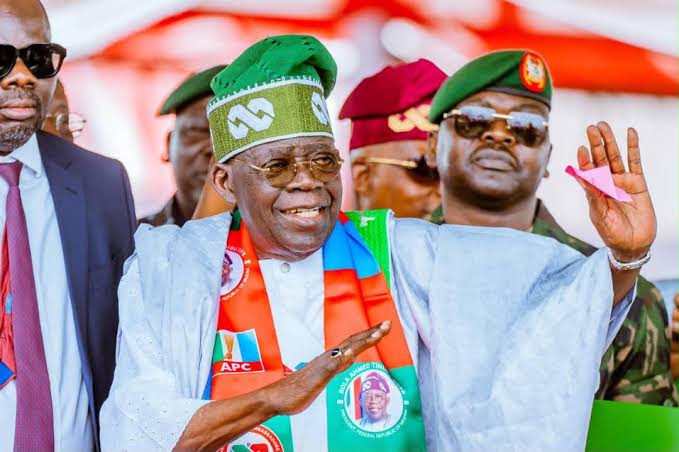
The All Progressives Congress (APC) made a major stride toward securing a two-thirds majority in the Senate following the defection of four opposition Senators from the Peoples Democratic Party (PDP) on Wednesday. During plenary, Senate President Godswill Akpabio read individual letters submitted by the defectors, who attributed their departure to persistent internal crises and “irreconcilable differences” within the PDP. The Senators who switched allegiance are Francis Fadahunsi (Osun East), Oluwole Olubiyi (Osun Central), Aniekan Bassey (Akwa Ibom North East), and Samson Ekong (Akwa Ibom South). Following the defections, the 109-member Senate now comprises: * **APC – 70 Senators** * **PDP – 28 Senators** * **Labour Party – 5 Senators** * **NNPP – 1 Senator** * **SDP – 2 Senators** * **APGA – 1 Senator** This development places the APC just three seats shy of the 73 needed to secure a two-thirds majority—an influential threshold that enables critical legislative powers such as overriding presidential vetoes, amending the Constitution, or taking decisive actions like removing the Chief Justice of Nigeria or the Governor of the Central Bank. The defections were met with celebration in the chamber, with APC National Secretary Senator Ajibola Basiru, former Minister of Labour and Employment Senator Chris Ngige, and several House of Representatives members in attendance to show support. Despite the boost, Senate Leader Opeyemi Bamidele (APC, Ekiti Central) urged party members not to view the gain as merely numerical. He stressed that the increase in APC Senators should translate into greater accountability, adherence to the party’s founding values, and commitment to fulfilling electoral promises.
7/23/2025, 4:26:19 PM
views 14836
One Year of Impact: Otuaro Transforms Amnesty Programme With Bold Reforms~ Julius Ogunro
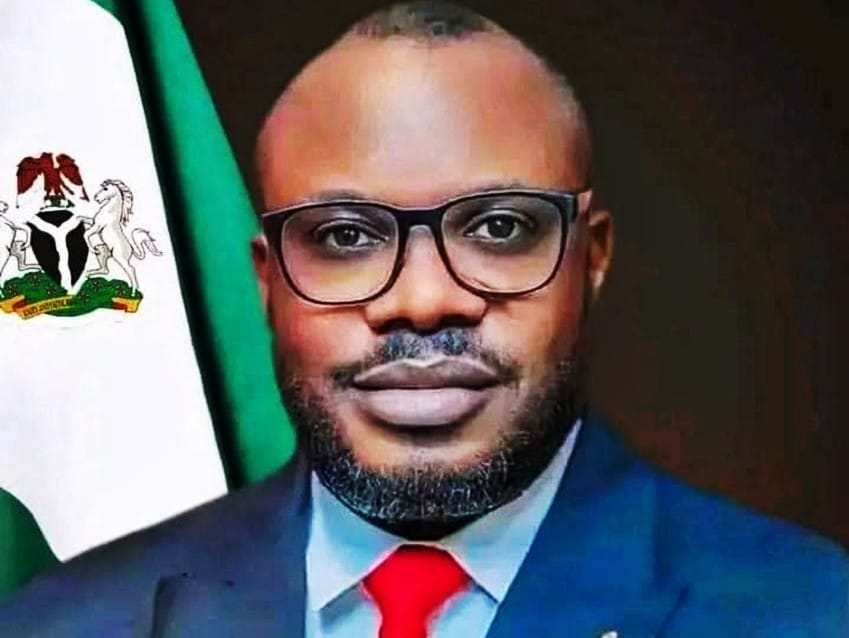
It is barely over a year since Dennis Otauro, PhD, was appointed as the Administrator of the Presidential Amnesty Programme. Still, in that short time, his impact as the region’s strong voice, advocate, and the president’s outreach arm, bringing hope and development to the Niger Delta, has grown significantly. When he was appointed in March 2024 by President Bola Tinubu, his designated beat was the Presidential Amnesty Programme (PAP), which was established in 2009 to manage the disarmament, rehabilitation, and reintegration of frustrated Niger Delta activists, some of whom had taken up arms against the government to protest the region’ economic marginalization and the degradation of its environment by oil exploration. From 2009 until March 2024, the amnesty programme was led by several administrators, who bore different titles and did their best to achieve its mandate of peace and security in the Niger Delta through the payment of stipends to ex-agitators and the provision of vocational and formal education opportunities to members of the communities impacted by the militancy. Then enter Otuaro. His vision for the Programme is bold, transformative, and inclusive. Apart from the agitators who are on the government payroll, he has refocused the amnesty programme to capture the next generation of Niger Delta leaders, expanding its frontiers to cater to the interests of a range of stakeholders, especially women and young people. His strategy centres around a broad range of initiatives designed by him and his team to foster enduring peace and prevent any resurgence of militancy in the Niger Delta region. One of these is the Programme’s intervention in expanding education opportunities, especially the scholarship scheme for undergraduates from the Niger Delta. Although Otuaro did not initiate the undergraduate scholarships scheme, which had existed for many years before his appointment, he has so reinvigorated it that the award, to use a metaphor, has been given a new lease of life. Before Otuaro, only a few hundred Niger Delta students managed to get the annual scholarships through a cumbersome process, as it was opaque and many had criticised it for being unfair and lacking integrity. Perhaps this was because the previous administrators did not consider education a top priority and viewed the scholarships as not central to their role at Amnesty. But Otuaro’s vision is different. In his first year as administrator, the undergraduate scholarship scheme has increased from a few hundred students to over 3000. Even more, the award process is now more open and inclusive, starting with a media announcement for interested Niger Delta youth to apply, with assurance that merit will play a significant role in the process. And merit did play a role in the grant of the scholarships for the current session. Many prospective students applied, did the aptitude tests, and were awarded the multi-year scholarship, which covers tuition, accommodation, and living expenses, with little or no influence from the amnesty office, a far cry from what used to happen in the past, when there were complaints that money had exchanged hands. In addition, the overseas postgraduate scholarship, suspended by the previous administrators, has been reinstated and broadened. For this current academic session, about 70 Niger Delta postgraduate students were awarded foreign scholarships to universities in the US, Canada, Britain, and other overseas countries. Otuaro made sure that the awardees are pursuing courses that are development-focused and relevant to the material needs of the Niger Delta people. Otuaro’s footprints are also visible in vocational training. With 98 delegates deployed for maritime-related skills training, including refresher courses at Joemarine Institute for Officer of the Watch (OOW) certification; 40 Niger Delta youth trained as aircraft maintenance engineers; another 39 deployed for on-the-job training at organisations like Seven Star Global Hangar and Aero Contractors; and four cadet pilots sent to South Africa for type-rating training, with successful graduation and return to Nigeria. The focus on human development and young people appears to be a genius move by the administrator of the amnesty programme, and a strategy to stop future militancy before it even happens. In the mid-1990s and early 2000s, the Niger Delta boiled as several groups took up arms against the government and oil companies to protest the neglect of the region, which is the goose that lays Nigeria’s golden egg, as nearly all the oil exploration and production take place there. Pipelines were destroyed, workers kidnapped, and oil production was significantly disrupted, leading to huge economic losses for Nigeria and the oil companies operating in the region. The militancy also led to a humanitarian crisis, with many communities suffering from the effects of oil spills, environmental degradation, and violence. The dire situation drew global attention and concern, which highlighted the need for a comprehensive approach to addressing the root causes of the conflict and promoting sustainable peace and development in the Niger Delta region. The federal government’s response was the amnesty programme in June 2009. Over three years, up to 2012, three phases of the programme were declared to reintegrate thousands of armed militants and pacify the region. It has been over a decade and a half since the first phase of the amnesty scheme began, and many of the beneficiaries are thus getting old and have probably lost the appetite for armed struggle. Yet the conditions that gave rise to the uprising still exist, despite the government’s efforts over the years. The fear is that those challenges may breed the next generation of militants, angry over the prevalence of poverty and underdevelopment of the Niger Delta. That is why Otuaro’s strong intervention in human development in the Niger Delta, through various initiatives in formal and non-formal education, is brilliant and commendable. That he has implemented the schemes openly and transparently, thus giving the son of a fisherman and the daughter of a boat-maker in the creeks a chance to make something of themselves, is nothing short of transformative, providing hope and opportunities to the overlooked voices. And he has done all this while not neglecting the original agitators on the government payroll, ensuring they are paid promptly, resolving challenges related to payment delays, offering suitable training to wean them off government handouts, and advocating for qualified beneficiaries' placement in jobs in the public service. Otuaro’s impact in just one year is visible and enduring. An asset to the current administration, he is proof that government in its purest form is not merely an idea or an institution on paper but a living presence, something that can be seen, heard, and felt in the everyday lives of the people.
7/18/2025, 9:48:16 PM
views 12169
Labour Party NEC Elects Nenadi Usman As Interim National Chairperson
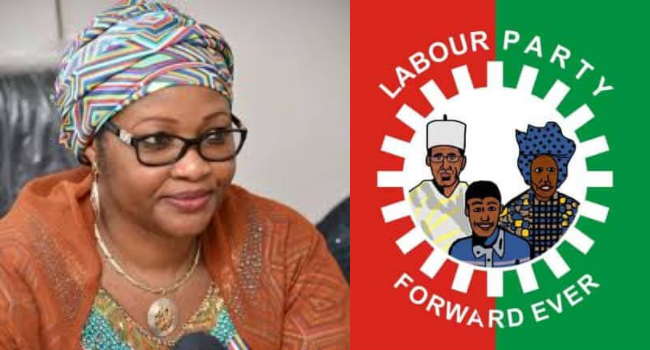
The Labour Party (LP) National Executive Committee (NEC) has appointed Senator Nenadi Usman as Interim National Chairman and Senator Darlington Nwokocha as Interim National Secretary. They will lead the newly constituted interim working committee tasked with managing party affairs until a new NEC is elected at the party’s convention. The appointments were made during the NEC meeting held on Friday in Abuja. Among other decisions reached at the meeting was the adoption of a schedule for ward, local government, state, zonal congresses, and the National Convention. The party's National Secretariat has been directed to release the guidelines and timelines for these processes to guarantee transparent and democratic elections across all levels. In attendance at the meeting were Nigeria Labour Congress (NLC) President Joe Ajaero and Abia State Governor Alex Otti — the Labour Party’s sole governor. Speaking at the event, Ajaero described the Labour Party as the political platform of the ordinary Nigerian and encouraged members not to lose hope despite the current challenges facing the party. “Anyone who is not with us and is not working with the Labour force and claims to be the party’s chairman is a daydreamer. When the day of reckoning comes, we will say we don’t know you,” the Abia governor told the gathering. He also reassured members of the party, saying “The council which formed the party is very much with them and we have not abandoned the party. I want us to be focused, not distracted. “There is a need to restructure this party, rebrand it, because that is the only way this party can work.” Meanwhile, Otti told members to do whatever it takes to make the party work. He explained that the statutory NEC meeting is coming at the instance of the Supreme Court’s judgement, which affirmed Nenadi as the national chairperson of the party. The governor also advised the Julius Abure-led faction to be humble enough and obey the apex court judgement. “As law-abiding people, we felt we should obey the Supreme Court judgement, and what we are here to do is to begin a structured process by formalizing some key committees like the interim national working committee, which will oversee all party activities till the party’s convention, when elections for a new NEC will be conducted.” He also appreciated the NLC for forming the party, but asserts that: “Now the party is bigger than the NLC”. Furthermore, he urged members of the party to be humble and work in unity for the greater good of the Labour Party.
7/18/2025, 7:46:02 PM
views 12265
2027: ‘We’re Doing Everything To Bring Peter Obi Back~ PDP
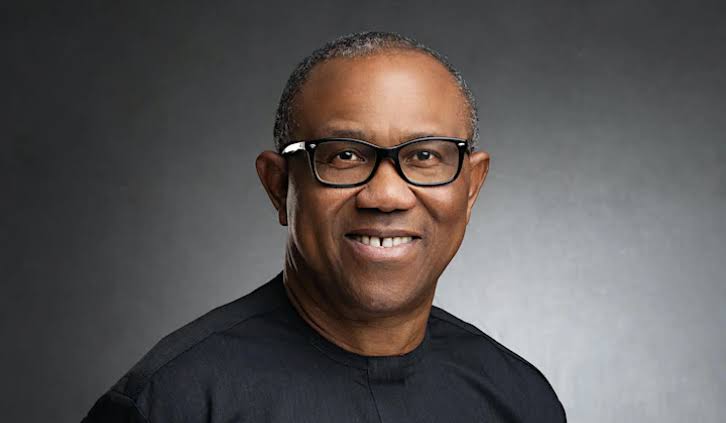
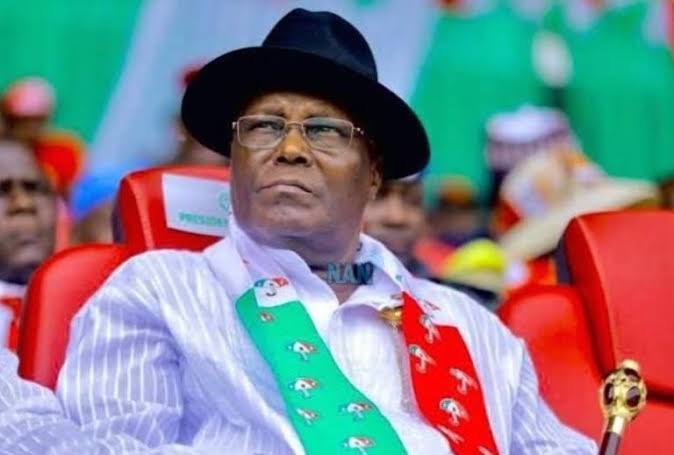
Deputy National Publicity Secretary of the Peoples Democratic Party (PDP), Ibrahim Abdullahi, has revealed that the party is working on strategies to bring Peter Obi back into its ranks. Abdullahi described the former Anambra State governor as a product of the PDP and a valuable political figure, noting that any party would benefit from having him. He highlighted that despite alleged electoral irregularities during the 2023 elections, Obi, the Labour Party’s presidential candidate, still secured over six million votes. Before the 2023 polls, Obi—who had previously contested as the PDP’s vice presidential candidate—left the party for the Labour Party, where he clinched the sole presidential ticket. He ran against Bola Tinubu of the All Progressives Congress (APC) and the PDP’s Atiku Abubakar. Obi won in 12 states, including the Federal Capital Territory (FCT), Abuja, but ultimately finished third behind Atiku and the declared winner, Tinubu, according to the Independent National Electoral Commission (INEC). Speaking on Arise News on Thursday night, Abdullahi confirmed that efforts are underway to bring Obi back to the PDP. “Peter Obi is our product, and the PDP indeed wants to get him back. He is a very great capital for any political party, and any political party that will have him will be to their advantage,” he said. “The truth of the matter is if he had not gone the way he did in the last dispensation and proved that mettle to generate over six million in spite of the rigging and frustration of his chances in many of the states. Peter Obi is truly a political capital no doubt about it,” he added. Peter Obi recently stated that he remains a member of the Labour Party but is willing to collaborate with the newly formed coalition spearheaded by the African Democratic Congress (ADC). Meanwhile, former Vice President Atiku Abubakar, who contested the last two presidential elections on the platform of the Peoples Democratic Party (PDP), has officially resigned from the party. Atiku is now among the prominent political figures aligning under the emerging coalition ahead of the 2027 presidential election, with the shared goal of unseating the current president through democratic means.
7/18/2025, 8:07:28 AM
views 13842
Why G5 Betrayed Atiku, PDP In 2023~ Ortom
Former Benue State Governor, Samuel Ortom, on Thursday explained why he and other members of the G5 Governors’ Forum opposed the Peoples Democratic Party (PDP) and its presidential candidate, Atiku Abubakar, during the 2023 elections. In response, Atiku fired back, describing the G5 members as "frustrated opportunists" desperate for political relevance. Similarly, the PDP accused Ortom of prioritising personal interests over any genuine commitment to fairness and equity during the election. Meanwhile, former presidential aspirant Dele Momodu also formally resigned from the PDP, alleging that the party had been hijacked by anti-democratic forces. Ortom, a prominent G5 member, said the group opposed the PDP because it disregarded the principles of equity, fairness, and justice. Speaking on Arise TV, he noted that after eight years of Northern leadership under President Muhammadu Buhari, the G5 had advocated for a Southern presidency. However, the PDP’s decision to nominate Atiku, another Northerner, contradicted that demand. “I acted as I did because we had expected the PDP to uphold equity, fairness, and justice, values I hold dear. “When the majority of PDP members supported a Northern candidate, we deemed it unjust. We’ve always stood for equity, fairness, and justice, and we felt the presidency should alternate between the North and South for eight years each,” he said. As chairman of the PDP’s zoning committee, Ortom noted that although the committee recommended an open contest, he personally pushed for a Southern candidate. He stressed that the party’s National Executive Committee, NEC, had the final say, which led to Atiku’s candidacy. “I presented the committee’s report as it was, and the NEC made the final call. I couldn’t override the collective decision,” Ortom explained. On the role of Nyesom Wike, now Minister of the Federal Capital Territory, in the crisis, Ortom revealed, “We fought for Wike to be the PDP’s presidential candidate, but unfortunately, he didn’t secure the nomination. We also believed he should have been the running mate. I was part of the 20-member committee tasked with selecting a running mate, and 16 of us supported Wike. However, the candidate and the party leadership decided otherwise.” Ortom defended supporting opposition candidates in 2023, saying politics was based on interests. “Politics revolves around interests. There’s no permanent enemy or friend in politics. It’s about protecting the interests of your community, your people, and yourself,” he stated. He also addressed criticism that he and Wike tried to “destroy” the PDP by supporting opposition candidates. Ortom compared their strategy to that of other PDP members who backed Peter Obi of the Labour Party or Bola Tinubu of the APC. “Peter Obi wasn’t in the PDP, but we agreed on a strategic partnership to demonstrate our influence. Some of us supported Peter Obi, others supported Tinubu, and we ended up with the current government. If God has given us President Bola Tinubu, why shouldn’t we support him?” Ortom added. Looking to the 2027 elections, Ortom reaffirmed his support for a Southern presidential candidate and stressed the importance of respecting power rotation. “My position is clear. I will support a Southern candidate. I see no reason to support a Northern candidate in 2027. By 2031, if someone from the South expresses interest in the presidency, I will still advocate for it to shift to the North. That’s based on my belief in equity and fairness.” Ortom on criticism over alleged bias in Benue State politics, where he is accused of favouring the Tiv ethnic group, said: “I’ve fought for fairness and have advised other ethnic groups on what they need to do. I agree it’s unfair for one group to dominate the governorship since the creation of Benue State. However, politics also involves the majority. The Tiv people occupy Zones A and B, while the Idoma and Igede are in Zone C. It’s a matter of political dynamics, and I’ve encouraged other groups to organise and assert themselves.” On crisis in the PDP, he said: “As politicians, we understand that politics revolves around interests. There’s no permanent enemy or friend in politics. It’s about protecting the interests of your community, your people, and yourself.”
7/18/2025, 7:30:50 AM
views 16519
2027: Tension In APC As Buhari's CPC Loyalists Drift Towards Coalition
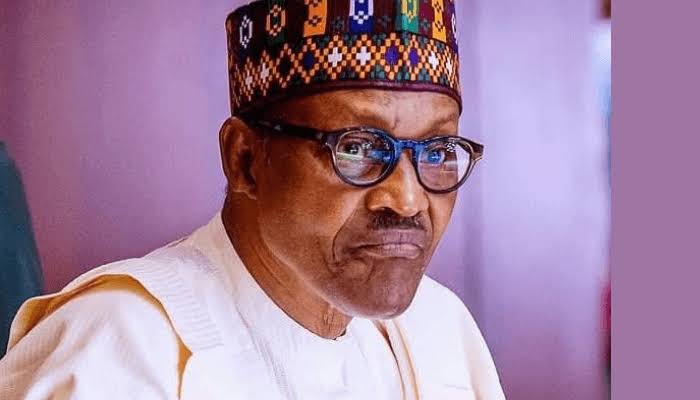
The internal divisions within the ruling All Progressives Congress (APC) have widened in the wake of former President Muhammadu Buhari’s death, with signs that loyalists of the now-defunct Congress for Progressive Change (CPC) may be preparing to break away from the party he co-founded. Buhari, who once commanded a loyal base of over 12 million voters, launched the CPC in 2009 before its merger into the APC in 2013. However, since President Bola Tinubu assumed office in 2023, many of Buhari’s close allies have complained of marginalisation, triggering a wave of political realignments and defections that could impact the 2027 general elections. Key former CPC figures like ex-Governor Nasir El-Rufai and former Secretary to the Government of the Federation Babachir Lawal have already distanced themselves from Tinubu’s leadership. The African Democratic Congress (ADC) now says it has become the new political refuge for many of Buhari’s ideological loyalists. According to Punch, ADC interim National Publicity Secretary, Bolaji Abdullahi, asserted that the coalition had absorbed a substantial portion of Buhari’s network. “Most of the Buhari loyalists are already with us. The majority of them, the entire North is already with our party,” he said. Abdullahi named Babachir Lawal, Abubakar Malami, Isah Pantami, Nasir El-Rufai, and Rotimi Amaechi among the high-profile Buhari loyalists now aligned with the ADC coalition. “That’s where Buhari stood,” he claimed, adding that the late president had encouraged such a movement before his passing. He further accused the Tinubu-led APC of vilifying Buhari during his lifetime. “Why would they remain part of the APC?” he asked. “President Tinubu’s government has blamed Buhari for almost every economic woe.”
7/17/2025, 9:06:22 AM
views 11580
JUST IN: Dele Momodu Dumps PDP For ADC, Blames ‘Anti Democratic Forces
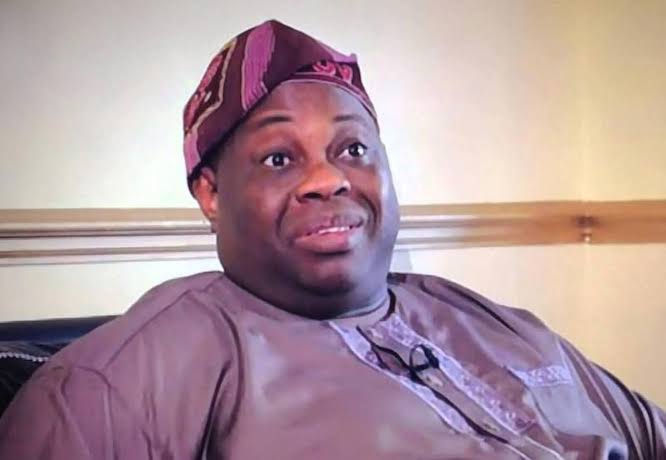
Veteran journalist and Ovation Magazine publisher, Dele Momodu, has officially resigned from the Peoples Democratic Party (PDP) and declared his defection to the African Democratic Congress (ADC). In a resignation letter dated July 17, 2025, and addressed to the Chairman of PDP Ward 4 in Ihievbe, Owan East Local Government Area of Edo State, Momodu expressed deep concerns over what he described as the takeover of the party by "anti-democratic forces." He also announced his decision to join the opposition coalition under the ADC platform, aimed at challenging and unseating President Bola Tinubu and the All Progressives Congress (APC) in the 2027 general election. Momodu said, “I wish to inform you of my decision to resign from our political party, PDP, with immediate effect. “My reason is simple and straightforward. Our party has been unarguably hijacked by antidemocratic forces, from within and outside, in broad daylight. “It is, therefore, honourable to abandon the carcass of the party to them while the majority of us earnestly sign up with the new coalition party known as the African Democratic Congress (ADC).” Earlier in July, Momodu accused the Minister of the Federal Capital Territory (FCT), Nyesom Wike, of being a mole in the PDP, having worked for the APC in the 2023 presidential election despite being in the PDP. “Without any doubt, people are leaving the carcass of PDP to Wike and his cronies, that’s all. It was a prophecy foretold,” Momodu said on Channels Television’s Sunrise Daily programme.
7/17/2025, 8:06:08 AM
views 15767
Install WAFFITV