Subscribe to our newsletter

FG Seeks World Bank’s Approval for Fresh $1bn Loan
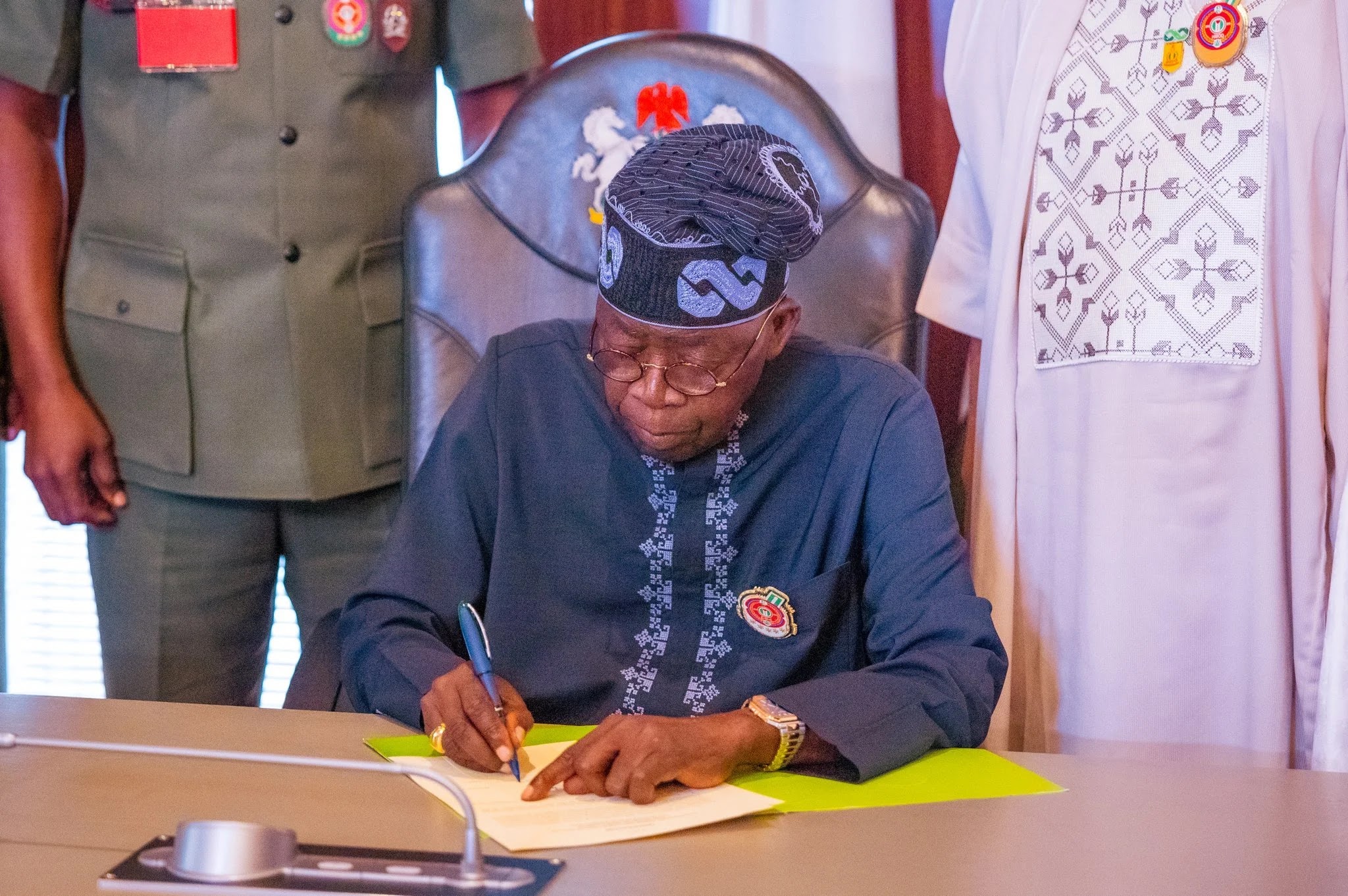
The World Bank has announced December 16 as the tentative approval date for a new $1 billion Development Policy Financing (DPF) loan to Nigeria under its latest initiative, **“Nigeria Actions for Investment and Jobs Acceleration (P512892).”** According to a project document released by the Bank on October 27, the proposed facility will include a **$500 million International Development Association (IDA) credit** and a **$500 million International Bank for Reconstruction and Development (IBRD) loan.** Falling under the Bank’s **Macroeconomics, Trade, and Investment practice** for the Western and Central Africa region, the programme aims to **reinforce ongoing economic reforms, boost job creation, and attract private investment.** As reported by *PUNCH*, the loan forms part of the World Bank’s broader support package designed to strengthen Nigeria’s post-reform stability and promote inclusive growth across strategic sectors. It will be executed through the **Federal Ministry of Finance**, with the World Bank confirming that preparation for the facility has already been authorised. The document noted that the DPF operation will support Nigeria’s transition from stabilisation to inclusive growth and job creation. Structured as a **two-tranche standalone loan**—comprising the $500 million IDA credit and $500 million IBRD loan—it seeks to **catalyse private sector–led investment by improving access to credit, deepening capital markets and digital services, easing inflationary pressures, and diversifying exports.** Since 2023, the administration of **President Bola Tinubu** has rolled out several reform measures, including the **removal of petrol subsidies**, **unification of exchange rates**, and **ending central bank deficit financing.** According to the government, these actions—anchored on the **Renewed Hope Agenda**—have helped stabilise the economy, reduce the fiscal deficit, and restore investor confidence. However, despite these gains, the World Bank observed that growth remains weak, with over **130 million Nigerians still living in poverty.** While macroeconomic stability has improved, the report stressed that **“Nigeria’s economy has yet to transition decisively into a higher and more inclusive growth trajectory,”** highlighting the need for fresh investments to drive productivity, diversification, and employment creation.
11/2/2025, 8:10:21 AM
views 8245
Tinubu Approves 15% Import Duty On Petrol, Diesel
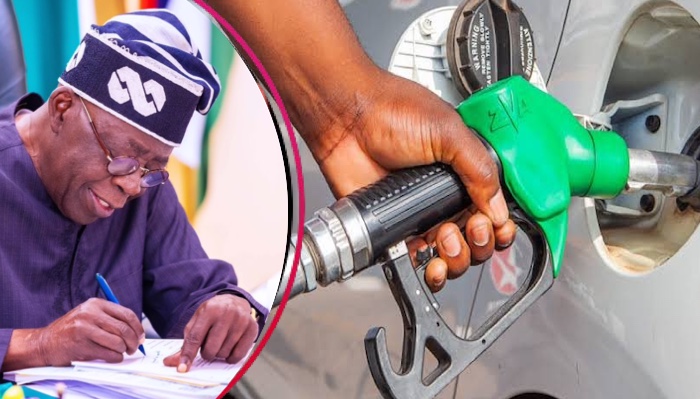
President Bola Tinubu has approved the imposition of a 15 per cent ad-valorem import duty on petrol and diesel imports into Nigeria. The move, aimed at safeguarding local refineries and stabilising the downstream oil market, is expected to trigger a rise in pump prices nationwide. According to a letter dated October 21, 2025 — made public on October 30, 2025 — and addressed to the Federal Inland Revenue Service (FIRS) and the Nigerian Midstream and Downstream Petroleum Regulatory Authority (NMDPRA), the President directed the immediate enforcement of the new tariff under what the government described as a “market-responsive import tariff framework.” The directive, conveyed through a letter signed by his Private Secretary, Damilotun Aderemi, followed a proposal submitted by the Executive Chairman of the FIRS, Zacch Adedeji. The proposal recommended a 15 per cent duty on the cost, insurance, and freight (CIF) value of imported petrol and diesel to reflect prevailing domestic market conditions. In his memo to the President, Adedeji noted that the initiative was part of the administration’s broader reforms to encourage local refining, promote price stability, and strengthen Nigeria’s naira-based oil economy in line with the Renewed Hope Agenda for energy security and fiscal sustainability. “The core objective of this initiative is to operationalise crude transactions in local currency, strengthen local refining capacity, and ensure a stable, affordable supply of petroleum products across Nigeria,” Adedeji stated. The FIRS boss also warned that the current misalignment between locally refined products and import parity pricing has created instability in the market. “While domestic refining of petrol has begun to increase and diesel sufficiency has been achieved, price instability persists, partly due to the misalignment between local refiners and marketers,” he wrote.
10/30/2025, 2:30:12 PM
views 11337
Experts Advise CBN to Introduce N10,000 and N20,000 Notes
Economic experts have called on the Central Bank of Nigeria (CBN) to introduce higher-denomination naira notes, ₦10,000 and ₦20,000, to restore the currency’s value, improve transaction efficiency, and reduce the cost of cash handling in the country. According to a recent economic review, the persistent depreciation of the naira has rendered the ₦1,000 note, Nigeria’s highest denomination, practically inadequate for everyday transactions. The report noted that while ₦1,000 was worth about $7 in 2005, it now trades for less than 60 cents, representing a staggering 94 percent decline in real value over the past 20 years. The analysts argued that introducing higher-value notes would not fuel inflation, explaining that price increases stem from production costs and market demand, not from the size of currency denominations. They pointed out that many countries with similar economic challenges have adopted higher denominations to preserve currency convenience without destabilising prices. They further observed that many Nigerians—especially traders and residents in rural areas—are forced to carry bulky cash for routine purchases due to the limited value of existing notes. Additionally, the cost of printing, transporting, and securing lower-denomination notes has become a significant financial burden for the CBN. The review recommended either introducing ₦10,000 and ₦20,000 notes or considering a currency redenomination to improve cash management, enhance transactional ease, and align Nigeria’s monetary system with international standards. Experts concluded that the move would not amount to printing excess money but rather to modernising the naira to reflect current economic realities and its severely weakened purchasing power.
10/30/2025, 10:17:45 AM
views 3968
Reps Approve Tinubu’s $2.35bn Loan, $500m Global Sukuk
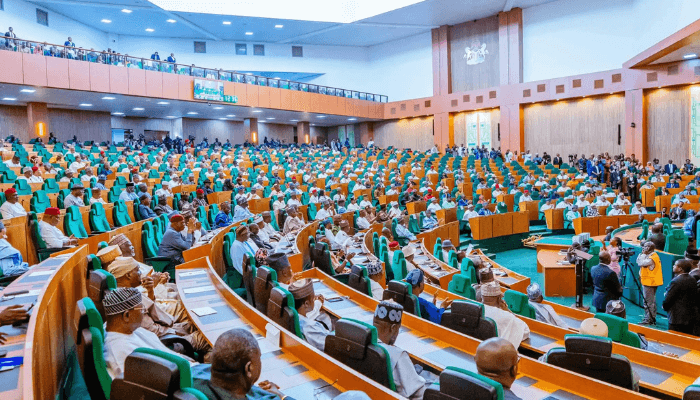
The House of Representatives has granted approval for President Bola Tinubu’s request to obtain $2.35 billion in foreign loans to help bridge Nigeria’s 2025 budget deficit. In addition, the lawmakers endorsed the issuance of a $500 million sovereign sukuk on the international market — an Islamic bond aimed at funding key infrastructure projects and diversifying Nigeria’s borrowing sources. These approvals came after the House adopted the report of its Committee on Aids, Loans, and Debt Management during Wednesday’s plenary session. According to the 2025 Appropriation Act, the approved borrowing includes ₦1.84 trillion (approximately $1.23 billion) in new external loans, based on an exchange rate of ₦1,500 per dollar, to help fund the projected ₦9.28 trillion fiscal deficit. In his earlier communication to the National Assembly, President Tinubu cited Sections 21(1) and 27(1) of the Debt Management Office (DMO) Act, which require legislative approval for external borrowing. He noted that the proposed loans may be raised through Eurobonds, syndicated loans, or bridge financing — depending on prevailing market conditions — and that interest rates would align with Nigeria’s existing international bonds, currently yielding between 6.8% and 9.3%. Explaining the rationale for the $500 million international sukuk, Tinubu said it would attract new investors, deepen Nigeria’s capital market, and fund vital infrastructure projects. He added that since 2017, domestic sukuk issuances have raised over ₦1.39 trillion for road and capital development, and the new international issuance would complement those efforts. Up to 25% of the sukuk proceeds may also be used to refinance existing high-interest debt. With the House’s approval, the Federal Government can now proceed with the implementation of its 2025 external financing strategy.
10/29/2025, 3:27:10 PM
views 4455
Aliko Dangote Plans To Sell 10% Stake In Refinery On NGX
Chairman of Dangote Petroleum Refinery, Aliko Dangote, has revealed plans to list between five and 10 per cent of the refinery’s shares on the Nigerian Exchange (NGX) within the next year. In an interview with S&P Global, Dangote explained that the move aligns with the approach taken by other Dangote Group companies already listed on the stock market, including Dangote Cement and Dangote Sugar Refinery. “We don’t want to keep more than 65%-70%,” Dangote said, adding that the refinery shares would be offered gradually, depending on investor demand and market conditions. Dangote also revealed that the group is exploring strategic partnerships with investors from the Middle East to fund the refinery’s expansion and support a new petrochemicals project in China. He stated: “Our business concept is going to change. Now, instead of being 100 percent Dangote-owned, we’ll have other partners.” Dangote also hinted at a possible increase in the Nigerian National Petroleum Company (NNPC) Limited’s stake in the refinery. The national oil company had earlier reduced its ownership to 7.2 percent, but Dangote said further discussions could take place once the refinery’s next growth phase begins. Refering to the NNPCL’s stake, he said, “I want to demonstrate what this refinery can do, then we can sit down and talk”. The refinery which began operations in 2024, plans to ramp up its capacity from 650,000 barrels per day (bpd) to 700,000 bpd by the end of this year.
10/23/2025, 8:50:44 AM
views 5023
Install WAFFITV