Subscribe to our newsletter

CBN Directs Banks To Refund Failed ATM Transactions Within 48hrs
The Central Bank of Nigeria (CBN) has issued a directive compelling Deposit Money Banks and other financial institutions to refund customers within 48 hours for failed Automated Teller Machine (ATM) transactions. The move forms part of a broad reform aimed at strengthening consumer protection and restoring public confidence in the nation’s banking system. The directive is contained in a draft guideline released by the apex bank on Saturday, titled *“Exposure of the Draft Guidelines on the Operations of Automated Teller Machines in Nigeria.”* The document, signed by Musa I. Jimoh, Director of the Payments System Policy Department, was circulated to banks, payment service providers, card schemes, and independent ATM operators. Stakeholders are expected to submit feedback by October 31, 2025. According to the draft, failed “on-us” transactions—those conducted on a customer’s own bank’s ATM—must be reversed immediately. If technical issues delay instant reversal, banks are required to process refunds manually within 24 hours. For “not-on-us” transactions—carried out on other banks’ ATMs—refunds must be completed within 48 hours. “Customers must not be made to suffer for failed transactions resulting from system errors or network disruptions,” the CBN emphasized. In a major policy shift, the apex bank also directed financial institutions and ATM acquirers to deploy systems that automatically reverse failed or partial transactions, eliminating the need for customers to lodge complaints. Funds trapped due to unsuccessful disbursements must be promptly reconciled and returned to customers. The CBN noted that the new measures respond to widespread complaints over delayed reversals and poor customer service, adding that the reforms are designed to improve reliability, enhance consumer protection, and modernize Nigeria’s payment ecosystem in line with international standards. The draft guideline also sets new operational benchmarks for ATM deployment. Banks and card issuers must provide at least one ATM per 5,000 active cards, with compliance targets of 30% by 2026, 60% by 2027, and 100% by 2028. Any deployment, relocation, or removal of ATMs will require prior CBN approval. For safety and efficiency, all ATMs must be equipped with anti-skimming devices, CCTV cameras, and installed in secure, well-lit locations. Machines must also comply with Payment Card Industry Data Security Standards (PCI-DSS), maintain audit trails, and display active helpdesk contact details. Additionally, at least 2% of ATMs must feature tactile symbols to aid visually impaired users. Other operational requirements include dispensing cash before card ejection, offering free PIN changes, issuing receipts for all transactions (except balance inquiries), displaying transparent transaction fees, dispensing only clean notes, and maintaining backup power to minimize downtime. The guideline limits ATM downtime to a maximum of 72 consecutive hours, after which operators must inform the public of the reason and expected restoration time. The CBN said it will monitor compliance through audits, on-site inspections, and monthly reports detailing ATM deployments and locations. Defaulting institutions will face sanctions, though the specific penalties were not disclosed. According to the apex bank, the reforms were necessitated by increasing complaints of failed transactions, cyber fraud, and deteriorating service quality. “Our goal is to build a payment system that functions efficiently for all Nigerians—both in urban and rural communities,” it stated. Nigeria’s electronic payment sector has expanded rapidly, boasting over 200 million cardholders and growing digital adoption. However, persistent network failures, poor infrastructure, and delayed reversals have continued to undermine user confidence—issues the CBN now seeks to decisively address.
10/11/2025, 8:26:51 PM
views 13091
We Didn’t Import Bad Fuel~ Dangote Refinery
The management of Dangote Petroleum Refinery has strongly refuted claims that it is importing dirty or high-sulfur petrol (PMS) into Nigeria, describing the reports as false, malicious, and misleading. In a statement, the management explained that the refinery processes various crude oils and intermediate feedstocks — a common global practice designed to optimise both production and quality. It clarified that the cargo in question is an intermediate feedstock, not finished petrol, and will undergo full refining at its facilities to meet both Nigerian and international quality standards. As a world-scale refinery complex, that is operating within a Free Trade Zone, the statement affirms that Dangote Refinery refines and sells only high-quality fuels that are compliant with all regulatory specifications. “…Our exports of petroleum products to the United States and Europe, among the world’s most regulated markets, underscore our adherence to global benchmarks.” The refinery further stated that all its imports are backed by quality certificates, which are transparently shared with regulatory authorities. It added that “Dangote Petroleum Refinery is prepared to make these documents publicly available in the spirit of transparency and accountability.” The management also reaffirmed its commitment to promoting Nigeria’s energy independence, maintaining the highest standards of quality and transparency, and providing cleaner fuels for both domestic and international markets.
10/10/2025, 9:30:00 PM
views 15539
JUST IN: Nigeria Loses $3.3bn To Oil Theft, Sabotage In One Year
The Federal Government lost an estimated 13.5 million barrels of crude oil, worth about $3.3 billion, to theft and pipeline vandalism between 2023 and 2024, according to the Nigeria Extractive Industries Transparency Initiative (NEITI). NEITI’s Executive Secretary, Dr. Ogbonnaya Orji, disclosed this in Lagos on Thursday during the 2025 conference of the Association of Energy Correspondents of Nigeria (NAEC). Speaking on the theme, *“Nigeria’s Energy Future: Exploring Opportunities and Addressing Risks for Sustainable Growth,”* Orji lamented the continued lack of transparency and accountability in the oil and gas industry, describing it as a major barrier to sustainable national development. He noted that the lost revenue could have funded the federal health budget for an entire year or provided electricity access to millions of households nationwide. He said: “The funds owed could have financed critical infrastructure, improved healthcare delivery, or supported the development of energy access projects. “Transparency and accountability are not optional—they are necessary conditions for a sustainable energy future.” Orji stressed that NEITI remains committed to ensuring that every barrel of crude produced in Nigeria is properly accounted for. He said the agency’s ongoing reforms have moved it beyond auditing to becoming a governance reform institution. “Over the past decade, NEITI has institutionalised regular audits of the oil, gas, and solid minerals sectors. “We are tracking production, payments, and remediation; developed the Beneficial Ownership Register that unmasked the real owners of over 4,800 extractive assets; and launched the NEITI Data Centre to provide real-time access to industry information,” he noted.
10/9/2025, 7:25:14 PM
views 15541
Benin, Togo Owe Nigeria $8.5m For Exported Electricity~ NERC
Neighbouring countries such as Benin and Togo have defaulted on more than half of their electricity payments to Nigeria for power supplied in the second quarter of 2025, according to the Nigerian Electricity Regulatory Commission (NERC). In its Second Quarter 2025 Report, NERC revealed that six international bilateral customers who receive electricity from Nigerian generation companies remitted only $9.01 million out of a total invoice of $17.54 million issued by the Market Operator for services rendered during the period. This resulted in an outstanding balance of about $8.53 million, reflecting a remittance performance of 51.33 per cent. The report identified Benin’s Société Béninoise d’Énergie Électrique (SBEE), Togo’s Compagnie Energie Electrique du Togo (CEET), and Niger’s NIGELEC as the major international buyers. Mainstream Energy Solutions, for instance, received $2.59 million out of a $3.71 million invoice issued to NIGELEC, representing a 69.8 per cent payment rate. However, CEET made no remittance for its $4.31 million power bill, while SBEE, which sources electricity from Transcorp and Paras Energy, also failed to settle its invoice in full. “The six international bilateral customers being supplied by GenCos in the NESI made a payment of $9.01m against the cumulative invoice of $17.54m issued by the MO for services rendered in 2025/Q2, translating to a remittance performance of 51.33 per cent,” NERC said. It added that the domestic bilateral customers made a cumulative payment of N1.4bn against the invoice of N2.8bn issued to them by the MO for services rendered in 2025/Q2, translating to 50.10 per cent remittance performance. In total, Transcorp (Ughelli)–SBEE was the only contract that achieved full remittance, paying its entire $5.47m invoice. Others, including Paras–SBEE, Paras–CEET and Odukpani–CEET, recorded zero payment for the period. NERC added that one of the domestic bilateral customers made partial settlements for older invoices outside the quarter under review. “It is noteworthy that one domestic bilateral customer made payments during 2025/Q2 for outstanding MO invoices from previous quarters. The MO received N10.53m from Trans-Amadi (OAU/FMPI) towards outstanding invoices from previous quarters,” the report stated.
10/9/2025, 9:08:54 AM
views 12954
Tinubu Seeks NASS Approval For $2.3bn External Borrowing, $500m Sovereign Sukuk
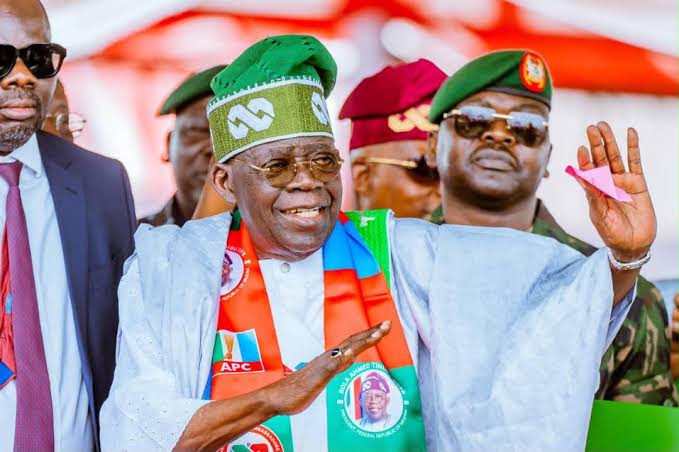
President Bola Ahmed Tinubu has asked the House of Representatives to approve fresh external borrowing and debt refinancing of $2.3 billion, alongside the issuance of a $500 million debut sovereign Sukuk in the international capital market. The request, contained in a letter read by Speaker Tajudeen Abbas, seeks the National Assembly’s approval in line with Sections 21(1) and 27(1) of the Debt Management Office (DMO) Establishment Act, 2003. Tinubu explained that the borrowing is intended to fund provisions of the 2025 Appropriation Act, refinance maturing Eurobonds, and diversify Nigeria’s financing sources through Islamic financial instruments. He noted that the 2025 budget makes provision for $9.27 billion in new borrowings to finance the fiscal deficit, with $1.84 billion (₦1.23 trillion at ₦1,500/$) allocated for external loans. The President also urged lawmakers to authorise the Federal Government to raise the funds through Eurobond issuance, loan syndication, bridge financing from bookrunners, or direct borrowing from international financial institutions. He added that Nigeria’s $1.118 billion Eurobond, issued in 2018 at 7.625 percent and maturing in November 2025, will be refinanced to prevent default. “This is a standard practice in debt capital markets,” the letter noted, adding that refinancing through Eurobonds or syndicated loans would ensure debt sustainability and investor confidence. In a significant move to expand Nigeria’s access to Islamic finance, President Tinubu also sought approval to issue a standalone sovereign Sukuk of up to $500 million in the international market — with or without a credit enhancement guarantee from the Islamic Corporation for the Insurance of Investment and Export Credit (ICIEC), a member of the Islamic Development Bank Group. He explained that the decision was inspired by the government’s “considerable success” in domestic Sukuk issuances, which have raised ₦1.39 trillion since 2017 for critical infrastructure, particularly road projects. According to the President, the proposed international Sukuk will help bridge the country’s infrastructure funding gap and deepen its investor base. “If the ICIEC credit guarantee is utilised, 25% of the proceeds will be used to repay relatively expensive debt obligations, while the balance will finance pre-identified infrastructure projects,” the letter stated. Tinubu assured the House that the Federal Ministry of Finance and the DMO would work closely with transaction advisers to secure the most favourable terms and pricing for all capital-raising efforts, subject to prevailing market conditions. “Nigeria remains a regular and reputable issuer in the international capital markets,” he said, expressing confidence that the country could successfully raise the proposed amounts. The President concluded his correspondence by urging the House of Representatives to pass a resolution authorising the Federal Government to: Raise $2.347 billion through Eurobonds, syndicated loans, or bridge financing; Refinance the maturing $1.118 billion Eurobond due November 2025; and Issue a $500 million sovereign Sukuk with potential ICIEC credit enhancement. “I look forward to the timely issuance of the House’s resolution,” the President stated, reaffirming his commitment to prudent fiscal management and sustainable debt practices.
10/7/2025, 4:12:33 PM
views 12208
CBN Introduces N1.2m Daily Transaction Limit For PoS Agents
The Central Bank of Nigeria (CBN) has rolled out updated regulations for agent banking, introducing a ₦1.2 million daily transaction ceiling for Point-of-Sale (POS) agents and restricting individual customers to ₦100,000 per day. The new framework, signed by Musa Jimoh, Director of Payments System Management, was issued on Monday with immediate effect. However, provisions on agent location and exclusivity will not be enforced until April 1, 2026. Under the fresh guidelines, all agent banking operations must run strictly through accounts or wallets designated by the sponsoring financial institution. Transactions carried out through non-designated accounts risk regulatory sanctions. Agents implicated in fraud or misconduct will face sanctions such as blacklisting or contract termination. Banks and other financial institutions, described as “principals,” are mandated to publish updated lists of their approved agents both online and in their branches. In addition, super agents are now required to manage at least 50 sub-agents spread across Nigeria’s six geopolitical zones to ensure nationwide coverage. Agents must also seek prior written approval before shutting down or relocating business premises and are obliged to display a 30-day relocation notice. All transactions are to be processed in real time using secure, interoperable payment platforms that allow instant settlements and reversals in cases of system failures. Transaction receipts must clearly display the agent’s name and location, while audit and settlement records are to be retained for a minimum of five years. The CBN explained that the new transaction limits are designed to strengthen oversight, promote transparency, and protect consumers from abuse within the agent banking framework. Furthermore, financial institutions are required to submit monthly reports to the apex bank—capturing transaction volumes, fraud incidents, agent performance, and customer complaints—no later than the 10th of every month.
10/7/2025, 7:55:51 AM
views 15232
Install WAFFITV