Subscribe to our newsletter

NLC Cannot Shut Down Economy Over Every N1 Fuel Hike – Ajaero
The President of the Nigeria Labour Congress (NLC), Joe Ajaero, has said it would be unreasonable to expect the labour union to organise protests over every N1 increase in petrol prices in Nigeria’s deregulated downstream petroleum sector. Ajaero made the statement on Wednesday during an interview on Channels Television, where he responded to questions about the union’s activities under his leadership. The NLC president, who appeared visibly angered by a question about his performance over the past three years, defended the union’s record, insisting that it had consistently spoken out against the economic hardship facing Nigerian workers. He maintained that the labour movement had played its role in challenging policies and conditions that had worsened the financial difficulties of workers across the country. “It will be unfair to expect NLC to protest or shut down the economy over every N1 per litre fuel price hike in Nigeria's deregulated downstream petroleum sector,” Ajaero said. WAFFI TV reports that petrol prices in Abuja and neighbouring areas ranged between N1,370 and N1,429 per litre. The NLC had earlier threatened to shut down economic activities over rising fuel prices and the review of the minimum wage, with October 27, 2026, set as the deadline for action. However, the administration of President Bola Ahmed Tinubu intervened by approving a N70,000 transport allowance for public sector workers, following discussions with organised labour.
10/29/2026, 12:26:02 PM
views 2213
FG Approves Procurement For East, West Super Grids To Boost Power Transmission To 19,000MW
The Federal Government has approved the commencement of procurement for the proposed East and West Super Grids, targeting an increase in Nigeria’s electricity transmission capacity from about 5,000 megawatts to 19,000MW within two years. The Minister of Power, Joseph Tegbe, disclosed this on Wednesday while briefing State House correspondents after the Federal Executive Council (FEC) meeting presided over by President Bola Tinubu at the Council Chamber of the Presidential Villa, Abuja. Tegbe explained that the projects would strengthen the national electricity grid, improve its resilience and enable the transmission network to deliver more electricity from generation companies to consumers across the country. He stressed that the proposed super grids were not designed to benefit any particular region but would establish stronger transmission connections across northern and southern Nigeria. “The East and West Super Grids are not projects for one part of the country,” Tegbe said. “They cut across the north and south of Nigeria, strengthening the backbone that must carry power from where it is generated to where it is needed.” The initiative is expected to address a major challenge in Nigeria’s electricity sector, where available generation capacity exceeds 13,000MW, but the transmission network can reliably transmit only about 5,000MW. According to the minister, the projects would reduce grid instability, improve system reliability and ensure that more electricity reaches homes, businesses and industries. “The target is simple,” he said. “We want a grid that can evacuate the power we already have, not one that leaves generation stranded while consumers remain in darkness.” He added that the transmission corridors would strengthen connections from Sokoto through Abuja and other locations into parts of southern Nigeria. Beyond the super grids, the FEC approved three immediate interventions aimed at improving electricity supply in Abuja and the Lagos axis, two of the country’s major electricity demand centres. The first involves the construction of a 33kV double-circuit underground and overhead transmission line connected to the Katampe Transmission Substation, a major electricity transmission hub serving the North-Central region. The second project covers the design, manufacture and supply of three 300MVA, 330/132/33kV transformers for the Ikeja West Transmission Substation, a critical facility supplying electricity to Lagos. The third intervention involves the reconstruction and upgrade of the 35.6-kilometre Itumola–Mapasin–Shagamu 132kV single-circuit transmission line into a double-circuit line to accommodate increasing electricity demand along the Lagos–Shagamu corridor. Describing the projects as essential to improving electricity delivery, Tegbe said the effectiveness of the power sector depended not only on generation but also on the strength of the infrastructure responsible for transmitting electricity to end users. “These are not glamorous projects, but they are the projects that determine whether power actually gets to the consumer,” he said. The minister disclosed that the high-capacity transformers would be manufactured abroad because Nigeria currently lacks the domestic industrial capacity required to produce equipment of that specification. He noted that although some companies had commenced local transformer assembly, the production of large-scale transmission equipment required specialised facilities and technical expertise. “Some companies have started assembling transformers locally, but these large units require specialised manufacturing,” he said. “They can take between three and six months to produce, and global demand is rising because of artificial intelligence and data centres.” Tegbe also announced that the Ministry of Power had commenced a nationwide technical audit of electricity infrastructure to identify weak, ageing and obsolete assets requiring replacement or rehabilitation. The exercise, which had been ongoing for four weeks as of Wednesday, divides the country into three major energy zones: Lagos and its industrial corridor; Abuja–Kaduna–Kano; and Enugu–Onitsha–Benin. According to the minister, the findings would guide government spending and ensure that investments were directed towards areas where they would have the greatest impact on electricity supply. “We will no longer spend money on the wrong projects,” he said. “The audit will show us exactly where the system is failing and where investment will deliver measurable impact.” He identified the Lagos–Ogun, Benin–Edo–Port Harcourt and Abuja–Kaduna–Kano corridors as priority areas for infrastructure improvements. Tegbe further disclosed that the Lagos–Ogun corridor alone accounted for about half of Nigeria’s national energy demand, making its upgrade particularly important to industrial activity and economic growth. On the financial challenges confronting the electricity sector, the minister said the Federal Government had paid N1.23 trillion out of the N3.3 trillion owed to gas suppliers and other stakeholders in the power industry. He explained that the outstanding liabilities had affected gas supply to electricity generation companies and weakened confidence across the sector’s value chain. “We have paid N1.23 trillion, and we intend to finish the job,” Tegbe said. “But we must also stop new debts from accumulating.” He said the payment was made through bonds under the Presidential Power Sector Debt Reduction Programme, an initiative designed to improve liquidity for generation companies, support gas supply and restore investor confidence. The minister added that the government was reviewing the electricity market structure to strengthen payment discipline, improve financial sustainability and prevent the accumulation of fresh debts.
10/29/2026, 9:11:54 AM
views 9844
TUC Rejects N70,000 Transport Allowance, Demands N300,000 Minimum Wage
The Trade Union Congress of Nigeria (TUC) has rejected the proposed ₦70,000 monthly transport allowance for federal workers, which was agreed upon by the Federal Government and the leadership of the Nigeria Labour Congress (NLC) during a meeting on Tuesday. Meanwhile, the Nigeria Union of Pensioners (NUP) has condemned its exclusion from the proposed transport allowance, accusing the Federal Government and the NLC leadership of neglecting retired workers who are equally grappling with the rising cost of living. Rejecting the proposed wage award, the TUC maintained that the Federal Government had the financial capacity to increase the salary of the lowest-paid worker to ₦300,000 monthly from the current minimum wage of ₦70,000, without waiting for another minimum wage review. In a statement jointly signed by its President-General, Festus Osifo, and Secretary, Nuhu Toro, the union said the prevailing economic hardship confronting workers and the general population required a substantial salary increase and the implementation of the agreement reached with the Joint Health Sector Unions (JOHESU). The TUC insisted that workers were not seeking government favours but demanding fair treatment, social protection and economic justice that would safeguard their dignity and livelihoods. “Our position is unequivocal, workers are not asking for favours, they are demanding social and economic justice that protects their dignity and livelihoods,” the union stated. The congress vowed to continue defending workers’ rights, exposing violations of agreements and pursuing all legitimate means to compel the government to fulfil its obligations. It stressed that workers’ welfare should not be treated as a privilege, insisting that agreements must be honoured, workers’ rights respected and the government held accountable for its commitments. The TUC also called for improved wages across all categories of workers, stronger social protection measures, a reduction in the cost of living for vulnerable Nigerians and full implementation of existing agreements. “The TUC rejects inadequate temporary relief and demands wage justice for all categories of workers, social protection, reduction of the cost of living for the vulnerable, and full compliance with agreements,” the statement added. The union said it would await the outcome of its scheduled meeting with the Federal Government before determining its next course of action. While describing temporary wage awards as unsustainable and inadequate in addressing workers’ economic challenges, the TUC recalled that the wage award agreed upon by the Federal Government and organised labour on October 2, 2023, was intended to remain in effect until a new minimum wage was negotiated in 2024. However, the union alleged that the previous wage award was never fully implemented, leaving some workers with one or two months of unpaid allowances, while others did not receive any payment. The TUC consequently questioned the rationale behind the government’s decision to propose another wage award similar to the previous arrangement, which it said failed to benefit all workers.
10/29/2026, 9:00:01 AM
views 5258
2027: Obi Vows To Jail Election Riggers If Elected President
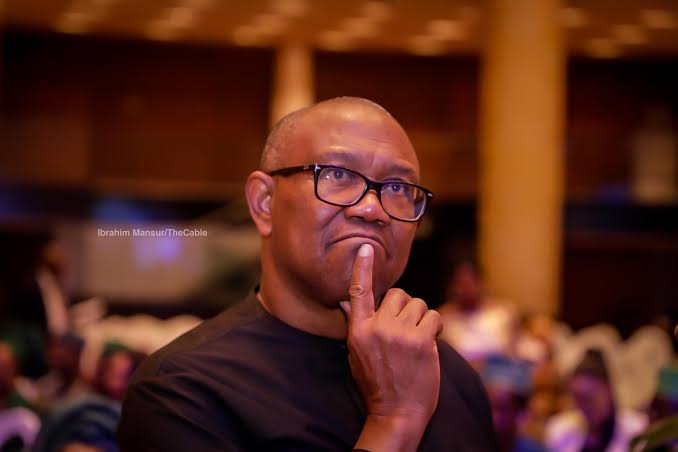
The presidential candidate of the Nigeria Democratic Congress (NDC), Peter Obi, has vowed to prosecute and jail anyone found guilty of electoral fraud if elected president in the 2027 general election. Obi made the declaration on Wednesday during an NDC town hall meeting in Nasarawa State, where he addressed party supporters on the need to protect electoral integrity and strengthen Nigeria’s democratic institutions. Responding to a question about election rigging, the former Anambra State governor said his party would not allow electoral manipulation to go unchallenged in the forthcoming general election. “You didn’t ask about what we are going to do if people rig election next year. Let me assure you, number one, this coming election, we will rig those who rig it,” Obi said. He further pledged that, if elected president, he would introduce measures to prevent election rigging by strengthening political parties and reforming the electoral process. “And let me assure you number two, if I’m elected the President of Nigeria, nobody will rig election in this country again because the first thing we need to do is to strengthen our parties, strengthen the process,” he said. Obi also advocated stricter requirements for individuals seeking elective positions, insisting that candidates should have attended both primary and secondary schools. “Our laws will be strict. For you to contest election, you must have attended a primary school, you must have attended a secondary school and it will be visible, it will be clear,” he stated. He warned that anyone who forged academic certificates or falsely claimed to possess the required educational qualifications would face imprisonment. “If you didn’t attend any of them or forge your certificate, you go to jail,” Obi declared. The NDC presidential candidate extended the warning to officials of the Independent National Electoral Commission (INEC) and other individuals involved in election administration, stressing that anyone found guilty of manipulating election results under his administration would be prosecuted. “Any INEC official, anybody who is involved with elections under my watch that rigs elections will go to jail,” he said. Obi maintained that his proposed reforms would be guided by the rule of law, emphasising that everyone, irrespective of status or position, must be held accountable for their actions. “Under my watch, Nigeria must be a country that has a law, and both from the number one person to the last person must obey the rule of law,” he said. “Nobody must be above the law; nobody will behave rascally.” He said his presidential ambition was driven by the desire to transform Nigeria and establish a system where electoral laws are respected and public institutions operate within the confines of the law. “That’s why we are doing what we are doing. We want to change Nigeria. A new Nigeria is possible, and that new Nigeria will be OK,” Obi added.
10/28/2026, 7:14:04 PM
views 3843
Otuaro Leads Prayers For Late Uduaghan, Says Former Governor Gave Him His First Political Platform
The immediate past Deputy Governor of Delta State, H.E. Deacon Kingsley Burutu Otuaro, Esq. on Wednesday paid a condolence visit to the family of the late former governor, H.E. Dr. Emmanuel Eweta Uduaghan, CON, describing his passing as a painful personal loss and a significant loss to Delta State. Otuaro, who is also a Deacon in Christ Embassy, began the condolence visit with a prayer session for the repose of the departed former governor. He invited everyone present to stand as he led prayers, committing the soul of the deceased to God and asking the Almighty to comfort the bereaved family and grant them the strength to bear the loss. After the prayers, Otuaro expressed his deep sadness over the passing of his former boss, whom he credited with playing a defining role in his political journey and opening the door to his career in public service. Recounting their relationship, the former deputy governor recalled that Uduaghan gave him his first political appointment when he served as Secretary to the Delta State Government under former Governor James Ibori. According to Otuaro, Uduaghan recommended him for appointment as Special Assistant on Community Affairs, an opportunity that marked a turning point in his public-service career. He further recalled that Uduaghan continued to provide him with opportunities to serve during his administration as governor, including his appointment to the Delta State Oil Producing Areas Development Commission (DESOPADEC), where he represented the Ijaw ethnic nationality. Otuaro described the late governor as a leader who recognised potential, encouraged service and gave people the opportunity to contribute to the development of their communities and the state at large. “Dr. Emmanuel Eweta Uduaghan was more than a former governor to me. He was a leader who gave me my first political platform and opened doors that helped shape my journey in public service. I will always be grateful for the confidence he reposed in me and the opportunities he gave me to serve. “His passing is deeply painful, not only because of the personal relationship we shared, but also because of the contributions he made to Delta State and the Niger Delta. His legacy will remain in the lives he touched and the people he empowered,” Otuaro said. He extended his heartfelt condolences to Uduaghan’s wife, Deaconess Roli Uduaghan, his children, the entire Uduaghan family and all those mourning the former governor. Otuaro prayed that God would grant the family the fortitude to bear the loss and give the departed former governor eternal rest. He concluded by expressing gratitude for the role Uduaghan played in his life, describing him as a former boss, mentor and elder statesman whose support and confidence he would always remember. “Thank you, Your Excellency, for giving me the opportunity to serve and for the role you played in my journey. Your contributions will not be forgotten. May God grant you eternal rest,” he added.
10/28/2026, 4:09:23 PM
views 2208
2027 Election: Kwankwaso Joins TikTok, Promises Daily Life Content
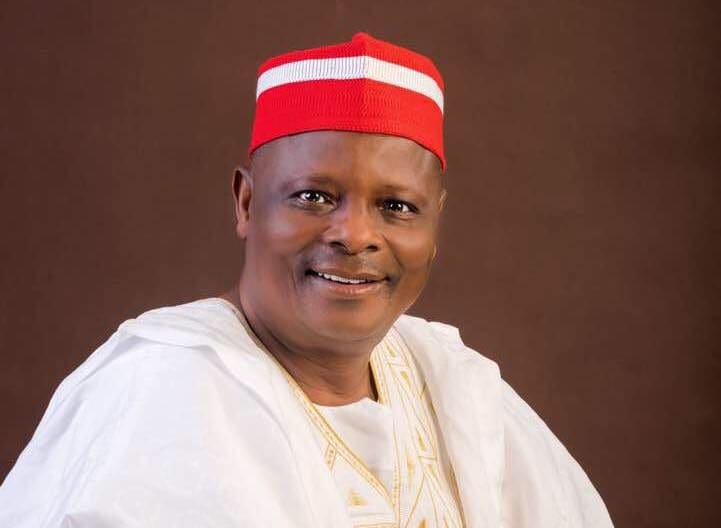
The vice-presidential candidate of the Nigeria Democratic Congress (NDC), Rabiu Musa Kwankwaso, has joined TikTok, promising followers authentic information, latest updates and exclusive content about his daily activities as he prepares for the 2027 general election alongside the party’s presidential candidate, Peter Obi. Kwankwaso announced his arrival on the platform in a post on his X handle on Wednesday, urging Nigerians to follow his account and engage with his videos. “I am on TikTok! I encourage you all to follow me there for authentic information, the latest updates, and exclusive contents directly related to my daily life. “Nigeria will be OK. — RMK,” he wrote. In a video accompanying the post, the former Kano State governor welcomed users to his TikTok account and encouraged them to follow, share his videos and activate notifications to receive updates. “Hello TikTokers, welcome to our TikTok account. Turn on your notifications, follow us, share our video, thank you, and God bless you,” he said. Kwankwaso’s move comes as the NDC intensifies preparations for the 2027 presidential election, with the former governor expected to run as Obi’s running mate on the party’s ticket. The two opposition politicians joined the NDC in May after leaving the African Democratic Congress (ADC), following consultations over their political future and the party’s zoning arrangement. Obi was subsequently ratified as the NDC’s presidential candidate at its national convention on May 30, while Kwankwaso was named as his running mate. The alliance brings together Obi’s political support base and Kwankwaso’s Kwankwasiyya movement, which enjoys considerable support in Kano State and other parts of northern Nigeria. The party recently unveiled its National Campaign Council ahead of the 2027 elections, naming its National Leader, Senator Henry Seriake Dickson, as chairman and Obi as co-chairman. Kwankwaso was appointed co-vice-chairman, while Ibrahim Hussain Abdulkarim was named Director-General of the campaign council. The council is expected to coordinate the party’s nationwide campaign activities and mobilisation efforts ahead of the 2027 general election.
10/28/2026, 3:19:21 PM
views 6727
Tinubu Seeks Senate Approval for Nigerians Jailed Abroad to Serve Sentences at Home
President Bola Tinubu has asked the Senate to amend Nigeria’s prisoner-transfer law to allow eligible Nigerians convicted in foreign countries to serve their prison sentences in Nigeria under agreements with the respective governments. The proposed Transfer of Convicted Offenders Enactment and Enforcement Amendment Bill, 2026, seeks to modify the existing law, Cap 216, Laws of the Federation of Nigeria, 2004. Tinubu’s request was conveyed in a letter read by Senate President Godswill Akpabio during plenary on Tuesday. The bill would empower Nigeria to enter into prisoner-transfer agreements with other countries, including nations outside the Commonwealth. Following the presentation, Akpabio referred the proposed legislation to the Senate Committee on Rules and Business for further consideration. The move comes amid notable cases involving Nigerians serving prison sentences abroad, including former Delta State Governor James Ibori, former Deputy Senate President Ike Ekweremadu, and Abidemi Rufai, a former aide to Ogun State Governor Dapo Abiodun. Nigeria already operates a prisoner-transfer arrangement with the United Kingdom. However, the proposed amendment would not automatically entitle every Nigerian convicted abroad to return home to serve a sentence. Any transfer would remain subject to eligibility criteria, applicable legal procedures and agreements between the Nigerian government and the country holding the convicted person.
10/28/2026, 3:01:53 PM
views 8854
NELFUND Moves To Stop Students Collecting Loans While Parents Pay Fees
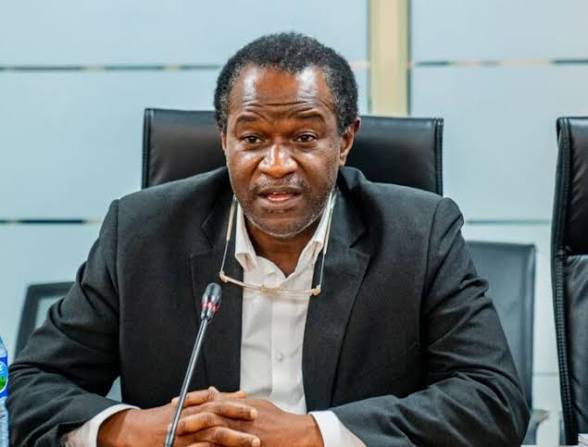
The Nigerian Education Loan Fund (NELFUND) has announced plans to prevent students from benefiting from its loan scheme while still relying on their parents to pay their school fees. The Managing Director of NELFUND, Akintunde Sawyerr, disclosed this during a press briefing on Wednesday, revealing that the fund had identified cases of students allegedly accessing the scheme while continuing to depend on their parents for tuition payments. Sawyerr said the development had prompted the fund to strengthen transparency in the administration of the student loan scheme and improve awareness among students, parents and tertiary institutions about changes to the payment process. He said some students were benefiting from the scheme while simultaneously placing financial demands on their parents. “This comment is based on our recognition that there are so many students out there who are double-dipping. They are taking from NELFUND and still stressing their parents,” he said. He added, “We are going to put an end to that.” The NELFUND managing director explained that the fund planned to introduce a system that would enable parents to verify whether their children's school fees had been paid without necessarily disclosing the exact amount involved. According to him, the proposed arrangement would help parents who continue to shoulder other educational expenses understand the status of their children's tuition payments while promoting greater accountability and transparency in the loan scheme. The arrangement will require collaboration among NELFUND, participating tertiary institutions and financial service providers to ensure that tuition fees are paid and eligible students receive their upkeep allowances. Sawyerr said the fund would conduct re-education workshops across Nigeria’s six geopolitical zones to explain the changes to stakeholders and clear up misconceptions about the operation of the student loan scheme. He explained that the exercise would go beyond the fund’s regular sensitisation campaigns, which primarily focus on informing students about the availability of the loan scheme. “We can easily do a press release and say, ‘Hey, this is what we’re doing.’ But if we don’t educate the institutions, if we don’t educate the students, everybody will still be running behind,” he said. “This is not sensitisation. This is re-education of the stakeholders and the students as to the changes that we have made in their favour,” Sawyerr added. He said the workshops would enable tertiary institutions and students to better understand the revised procedures, noting that journalists might also be invited to some of the sessions to observe the exercise. Sawyerr further called on the media to support the dissemination of information about the changes, stressing that the regional workshops might not reach all students who need to understand the new arrangements.
10/28/2026, 2:18:37 PM
views 6845
Install WAFFITV