Subscribe to our newsletter

Workers Demand N300,000 Minimum Wage
The Federal Workers Forum (FWF) has appealed to President Bola Tinubu and the National Assembly to urgently review the salaries of federal civil servants and increase the national minimum wage from N70,000 to N300,000. The demand was contained in a letter dated September 2, 2026, and signed by the FWF National Coordinator, Andrew Emelieze, and General Secretary, Ogundele Ayodele. The letter was addressed to the Senate President and Speaker of the House of Representatives through the Clerk of the National Assembly, with President Tinubu, the Chief Justice of Nigeria and the Head of the Civil Service of the Federation listed as recipients. The forum also proposed a new salary ceiling of N1.5 million for Level 17 officers, arguing that the existing wage structure no longer reflects the economic realities faced by federal workers. The workers said the minimum wage should be raised to N300,000, while the highest salary for Level 17 officers should be increased to N1.5 million. According to the FWF, its demand became necessary because of what it described as the incomplete implementation of the N70,000 minimum wage approved in 2024. The group claimed that federal workers had yet to receive the full consequential adjustment and other allowances associated with the wage increase. The forum said the Federal Government had not fully implemented the new minimum wage since July 2024, adding that workers had continued to push for the complete implementation of the consequential adjustment. The 2024 wage review increased the national minimum wage from N30,000 to N70,000. However, the FWF alleged that the implementation amounted to a uniform N40,000 increase in the salaries of federal workers across all levels. The latest demand comes amid continuing concerns and disagreements over the implementation of the 2024 minimum wage and related allowances. The N70,000 minimum wage replaced the previous N30,000 benchmark following negotiations between the Federal Government and organised labour. The new wage framework is expected to be reviewed after three years. However, the FWF argued that the statutory three-year review period should not stop the government from taking immediate action in response to the sharp decline in workers’ purchasing power. The group described the current situation as unsustainable, citing the rising cost of living and calling for an immediate review of federal workers’ salaries to reflect prevailing economic realities. According to the forum, soaring prices of food, transportation, accommodation, electricity, cooking gas and other basic necessities have rendered the N70,000 minimum wage inadequate. The workers said federal civil servants had endured the situation for too long and were increasingly struggling to meet their basic needs. The group further alleged that some workers had become heavily indebted to microfinance institutions and digital lending platforms, with some reportedly taking loans simply to cover transportation costs to work. The FWF also claimed that some federal workers had resorted to using firewood because they could no longer afford cooking gas. The forum warned that the worsening financial situation could undermine workers’ productivity and create an environment that could encourage corruption. It argued that while government revenues had increased, federal workers remained poorly paid and were bearing the brunt of the country’s economic hardship. The workers further linked their demand to the growth in government revenue and expenditure, maintaining that federal civil servants, whom they described as the “engine room of governance,” should benefit from increased national earnings. The salary structure proposed by the forum provides for a minimum salary of N300,000 for Level 1 Step 1 workers, with salaries rising progressively to N1.5 million for Level 17 Step 1 officers. Under the proposal, Level 2 workers would earn N330,000; Level 3, N360,000; Level 4, N390,000; Level 5, N420,000; Level 6, N450,000; and Level 7, N480,000. The proposed salary for Level 8 is N510,000; Level 9, N550,000; Level 10, N600,000; Level 12, N700,000; Level 13, N750,000; Level 14, N800,000; Level 15, N1 million; Level 16, N1.2 million; and Level 17, N1.5 million. The FWF said its N300,000 minimum wage proposal was based on estimated monthly expenses covering food, transportation, accommodation, family support, electricity, cooking gas, phone and data services, water and other household utilities. The forum maintained that the proposed structure could still be accommodated within the current budget, citing increased government earnings and revenue from crude oil sales. In addition to the salary review, the FWF called for the payment of all outstanding salaries, promotion arrears and other entitlements owed to federal workers.
9/3/2026, 7:16:35 AM
views 7422
2027: Hunger, Insecurity Won’t Stop Nigerians From Re~Electing Tinubu – Wike
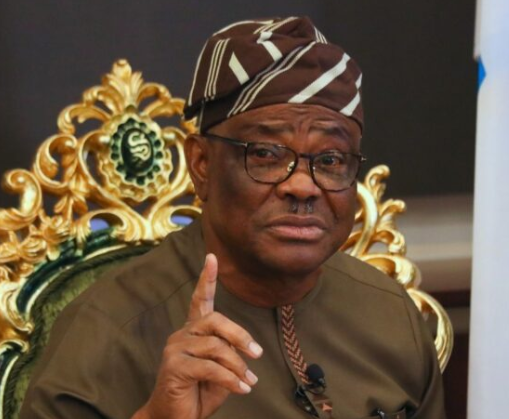
The Minister of the Federal Capital Territory (FCT), Nyesom Wike, has expressed confidence that the challenges of hunger and insecurity will not stop Nigerians from re-electing President Bola Tinubu in the 2027 presidential election. Wike made the assertion on Wednesday during a media parley with selected journalists in Abuja, where he argued that many Nigerians rely on political leaders and are therefore not completely independent in making their voting decisions. Responding to concerns over the hardship and insecurity confronting citizens, the minister acknowledged that hunger and insecurity would feature in any election in Nigeria. He, however, urged critics to adopt a practical rather than theoretical approach when assessing how Nigerians make political choices. The former Rivers State governor recalled that similar concerns over insecurity and hunger were raised during elections held under former President Muhammadu Buhari. “There is no election in Nigeria where the issue of hunger and insecurity won’t come up,” Wike said. According to him, political dependence at the family, community, local government and ward levels plays a significant role in influencing voters’ decisions. Wike added that many Nigerians depend on political leaders for food and other forms of assistance, making the average Nigerian voter different from voters in countries where individuals are more economically and politically independent.
9/3/2026, 7:05:06 AM
views 1766
Uber Exits Nigeria After 12 Years Of Operations
Ride-hailing company Uber is set to discontinue its operations in Nigeria effective Wednesday, September 2, 2026, ending its 12-year presence in the country. The company disclosed the decision in an email to its users, stating that it followed a “thorough review” of its business operations in Nigeria. Uber launched in Lagos in 2014 and quickly became one of the country’s major ride-hailing platforms, connecting passengers with independent drivers. In its message to customers, the company said, “After a thorough review of our business, we have made the tough decision to wind down our operations in Nigeria, effective 2 September 2026.” The company expressed appreciation to Nigerians for their trust and patronage over the years, noting that its platform had been used for daily commuting, visits to family and friends, and movement around cities. “Since we first launched in Lagos in 2014, it has been an absolute privilege to be a part of your daily life connecting you with independent transportation providers,” Uber said. It also apologised for any disruption its departure may cause, saying, “We know this may cause disruption to your routine, and we sincerely apologise for the inconvenience.” Uber’s exit represents a significant development in Nigeria’s ride-hailing sector, where it has competed with other major platforms for more than a decade. The company advised users with outstanding account-related enquiries to contact it before September 23, 2026, the deadline for submitting final enquiries as it winds down its Nigerian operations.
9/2/2026, 4:19:40 PM
views 2898
2027: I’ll Be Atiku, Obi’s First Casualty If Tinubu Loses — Wike
The Minister of the Federal Capital Territory (FCT), Nyesom Wike, has said he would be among the first politicians to face the consequences if former Vice President Atiku Abubakar of the African Democratic Congress (ADC) or the Labour Party’s Peter Obi defeats President Bola Tinubu in the 2027 presidential election, citing his strong and open support for the President. Wike made the remarks during a media chat in Port Harcourt, Rivers State, which was monitored in Abuja on Wednesday. He said his vocal backing for Tinubu’s re-election had made him a major target of the opposition, but insisted that he had no regrets about his political position. “I will be the first politician that I think they will come after. I will be the first politician. I know they will come for my head,” he said. The minister acknowledged the potential risks associated with his stance but maintained that he would not be intimidated from confronting those opposed to the President. According to him, his priority remained securing Tinubu’s victory in 2027, regardless of the political consequences he might face personally. “Each day I sleep, I am thinking about the president’s reelection. When I am eating, I think about the president’s reelection. Everything I am doing now is about the president’s reelection,” he stated. Wike also dismissed criticisms over his support for Tinubu, saying he had faced more personal attacks and name-calling than most politicians because of his loyalty to the President. “I don’t see where anybody in this country today has been called names the way my name has been. I am not bothered about people who say their [own] thing. My business is, like I said, I am going to support Mr President,” he declared.
9/2/2026, 2:45:44 PM
views 9526
US Lobbying Firm Takes Tinubu’s Heroin Trafficking Allegations to Congress
A Washington, D.C.-based Republican policy advisory and lobbying firm, Von Batten-Montague-York, L.C., has said allegations linking Nigerian President Bola Ahmed Tinubu to heroin trafficking in the 1980s and 1990s deserve the attention of U.S. policymakers. The firm disclosed this in a post on its verified X account on Wednesday, stating that it had held discussions with members of the U.S. Congress and senior congressional staff regarding a Freedom of Information Act (FOIA) case connected to the allegations. “Members of Congress and senior congressional staff returned to Washington today, and we wasted no time,” the firm said. It added that it had “immediately began reaching out to our friends on Capitol Hill” to brief them on the matter. According to the firm, the discussions focused on what it described as allegations of heroin trafficking involving Tinubu during the 1980s and 1990s. “Our message was clear: these allegations are not merely a Nigerian domestic political matter,” it said. The firm argued that the issue could raise questions for U.S. policymakers concerning national security, law enforcement cooperation, intelligence sharing and counter-narcotics efforts. It also questioned the implications of the allegations for Nigeria-U.S. relations, particularly as Washington reassesses its strategic partnerships across Africa. The firm said U.S. policymakers should consider “whether President Tinubu represents a strategic asset or an increasing national-security liability.”
9/2/2026, 11:58:22 AM
views 10002
NLC Rejects Petrol Price Hike, Demands More Crude For Refineries
The Nigeria Labour Congress (NLC) has criticised the latest increase in the pump price of Premium Motor Spirit (PMS), popularly known as petrol, describing the development as “avoidable and unacceptable” and questioning the Federal Government’s failure to ensure that the Dangote Petroleum Refinery receives sufficient supplies of locally produced crude oil. The NLC’s acting General Secretary, Benson Upah, made the position known in an interview with our correspondent on Tuesday while reacting to the latest petrol price hike. Upah warned that the increase would further worsen the economic hardship facing Nigerians, especially workers and low-income families already burdened by rising transportation, food and other living expenses. He said, “This adds to the increasing difficulties of the average Nigerian for whom life has been Hobbesian.” The labour leader maintained that the latest adjustment was difficult to defend, particularly given the decline in international crude oil prices and Nigeria’s expanding domestic refining capacity. According to him, “The latest increase is avoidable and unacceptable in light of falling prices in the international market and our local capacity to sell more crude oil to Dangote. Why are we not doing so?” The NLC’s criticism followed another increase in petrol prices by the Dangote Petroleum Refinery, sparking renewed concerns among motorists, transport operators and businesses already dealing with elevated operating costs. On Saturday, the refinery increased its petrol gantry price by N65 per litre, from N1,200 to N1,265. The adjustment came just three days after the company had raised the price from N1,185 to N1,200 per litre. The latest move marked the refinery’s third price increase within eight days. On August 21, the company had adjusted its gantry price from N1,165 to N1,185 per litre. Overall, the three increases have pushed the refinery’s petrol price up by N100 per litre, representing an 8.6 per cent rise in just eight days. The latest adjustment has also started affecting prices across the downstream petroleum market, with pump prices differing from one location to another as marketers account for transportation, logistics and other distribution expenses. In parts of Lagos and Ogun, petrol prices have reportedly reached around N1,310 per litre, while motorists in some northern states and locations farther from the refinery are paying N1,350 or more. In some areas, the price is nearing N1,400 per litre. The latest increase comes at a difficult period for Nigerians, many of whom are still dealing with the economic consequences of the petrol subsidy removal in 2023. The removal fundamentally changed Nigeria’s petrol pricing system, leaving consumers more exposed to fluctuations in international crude prices, foreign exchange rates and other market-related costs. Since then, petrol prices, which were previously heavily regulated by the government, have undergone several upward adjustments, with each increase contributing to higher transportation costs and rising prices of essential goods and services. The development has once again brought to the fore a longstanding question in Nigeria’s petroleum industry: why does a major crude oil-producing country with a new large-scale refinery continue to experience persistent pressure on petrol prices?
9/2/2026, 7:22:58 AM
views 8740
FBI Confirms Tinubu Investigated Over Alleged Drug Trafficking
The United States Federal Bureau of Investigation (FBI) has confirmed that President Bola Ahmed Tinubu was the subject of an investigation into alleged drug-trafficking activities in the early 1990s. The disclosure was contained in a sworn declaration filed by the FBI on August 28, 2026, before the US District Court for the District of Columbia. The declaration was submitted in connection with a Freedom of Information Act (FOIA) lawsuit seeking access to FBI records relating to Tinubu. In the filing, the FBI stated that “the responsive records herein were compiled in furtherance of the FBI’s investigation of multiple individuals for drug trafficking crimes.” The latest development follows an April 2025 ruling by US District Judge Beryl Howell, who held that the FBI and the Drug Enforcement Administration (DEA) could no longer rely on “Glomar” responses to refuse to confirm or deny the existence of records concerning Tinubu. Howell ruled that the agencies had failed to establish sufficient privacy grounds to conceal the fact that Tinubu had been investigated. She consequently directed the agencies to process the records requested under FOIA, except for materials covered by applicable legal exemptions. The ruling, however, did not establish that Tinubu committed a drug-trafficking offence or that he had been convicted of any crime. The FOIA requests were filed by American transparency activist Aaron Greenspan, who sought the “entire FBI file for Bola Ahmed Tinubu”, along with FBI Form 302 interview records involving Tinubu in FBI Case No. 245-IP-71386-UUUUUU between 1992 and 1993. The requests formed part of a broader effort to obtain records related to a Chicago heroin-trafficking operation investigated by US authorities during the early 1990s. The FBI has continued to withhold portions of the records, citing exemptions covering personal privacy, confidential sources, law-enforcement techniques and information whose disclosure could potentially endanger individuals. The agency also said it was unable to publicly disclose the full basis for some of the exemptions it invoked.
9/2/2026, 7:10:19 AM
views 6296
Install WAFFITV