Subscribe to our newsletter

IPF Inauguration: Agediga Demands Media~Driven Emancipation
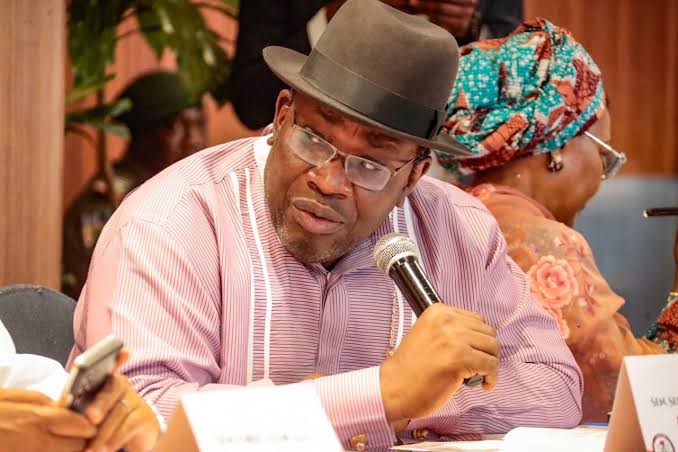
Ambassador Shedrack Agediga, Chairman of the Delta State Scholars and Bursary Board, has called on media professionals in the Niger Delta to take deliberate ownership of the region’s narrative, declaring that control of information is central to genuine emancipation. Agediga made the call while chairing the second inauguration ceremony of the Ijaw Publishers Forum (IPF) National Executive Council. Addressing members and guests at the event, he stressed that the media remains a powerful instrument in shaping identity, influencing policy, and advancing collective aspirations. According to him, “When others tell your story, they define your direction -Agediga Speaks at IPF's Inauguration,” underscoring his warning that allowing external interests to frame the Ijaw experience ultimately determines how the people are perceived and treated. Reflecting on his background in the Niger Delta struggle, Agediga noted that the quest for emancipation must go beyond rhetoric. He pointed to the paradox of oil-rich Ijaw communities still grappling with poverty, environmental pollution, and inadequate infrastructure, insisting that true liberation must address political inclusion, economic justice, environmental protection, and cultural preservation. He urged members of the IPF to see their platform not merely as a professional association, but as a strategic force for advocacy and transformation. By documenting realities accurately and amplifying indigenous voices, he said, the forum can play a decisive role in redefining the region’s future. The inauguration attracted prominent stakeholders, traditional rulers, media practitioners, and leaders from across the Niger Delta, all of whom gathered to witness the swearing-in of the new executives. The event reinforced a shared resolve that the Ijaw people must consciously shape their narrative to secure lasting progress.
2/28/2026, 11:54:16 PM
views 9530
One Dead as Blasts Hit Dubai, Doha, Abu Dhabi After US–Israel Offensive on Iran
The Middle East was plunged into fresh turmoil after coordinated military operations by the United States and Israel against Iran triggered retaliatory strikes that reverberated across several Gulf capitals. Explosions were reported in Abu Dhabi, Dubai, Doha and Riyadh within hours of the offensive, marking one of the most serious escalations in the region in recent years. According to Reuters, authorities in the United Arab Emirates confirmed that one person was killed in Abu Dhabi after air defence systems intercepted missiles launched from Iran. A resident near the Corniche in the capital described hearing a series of rapid explosions that rattled nearby buildings. In Saudi Arabia, correspondents of Agence France-Presse reported loud detonations across Riyadh, with witnesses recounting a powerful initial blast followed by additional explosions. The developments came shortly after Tehran vowed to retaliate against what Washington and Tel Aviv called “major combat operations.” In Qatar, explosions were also heard in Doha as Iranian forces carried out counterstrikes. An expatriate resident told the Hindustan Times that the sounds appeared distant and were likely the result of missiles being intercepted mid-air. Many residents have reportedly remained indoors amid uncertainty over when regional airspace restrictions will be lifted. Earlier, the UAE temporarily shut its airspace as tensions mounted. Its Ministry of Defence described the missile barrage as a “blatant attack,” stating that several incoming ballistic missiles were successfully neutralised. Officials in Abu Dhabi characterised the incident as a dangerous escalation and signalled that the country reserves the right to respond. Kuwait was also reported to have activated its air defences against approaching projectiles. The United States Embassy in the United Arab Emirates advised American citizens and staff to shelter in place and move to secure locations as a precaution. The flare-up followed fresh strikes by US and Israeli forces on Iranian targets, with early reports indicating impacts near offices associated with Iran’s Supreme Leader, Ali Khamenei. Residents in Tehran reported powerful blasts, raising fears that the confrontation could spiral into a wider regional conflict.
2/28/2026, 1:13:21 PM
views 3007
US Lawmaker Alleges Illegal Chinese Mining Financing Terror Groups In Nigeria
A member of the United States Congress, **Riley Moore**, has alleged that illegal rare earth mining operations linked to China are contributing to insecurity in Nigeria and exacerbating attacks on Christian communities in some parts of the country. Moore made the claim during a live appearance on **Fox News**, shortly after submitting a report earlier in the week to former U.S. President **Donald Trump**. In the document, he outlined concerns about Nigeria’s security situation, with particular reference to violence affecting Christian populations. According to the lawmaker, while international reporting has largely framed the crisis around religious tensions, a significant economic factor has not received adequate attention. “One key point that has been missing from much of the coverage is that the Chinese are running illegal rare earth mineral mining operations in Nigeria,” Moore said. He further alleged that revenue generated from the illicit mining activities is being channelled to extremist groups operating within the region. “They are paying protection money to radical Islamic terrorists who use that money to finance their operations to persecute and kill our brothers and sisters in Christ. This cannot continue,” he added. Rare earth minerals are critical materials used in the manufacture of advanced technologies, including defence systems, electronics and renewable energy infrastructure. Nigeria is believed to have commercially viable deposits of these minerals, drawing growing foreign interest in recent years. If substantiated, Moore’s allegations could carry significant geopolitical and security ramifications, particularly at a time of heightened global competition over strategic mineral resources and persistent concerns about insurgency and banditry in parts of northern Nigeria.
2/28/2026, 7:22:43 AM
views 6104
Report Centres Charging Above N8,700 UTME Fee — JAMB Tells Candidates
The Joint Admissions and Matriculation Board has called on candidates who were charged more than the officially approved fees for the 2026 Unified Tertiary Matriculation Examination (UTME) to promptly report such centres, providing verifiable evidence. The Board warned that any Computer-Based Test (CBT) centre found to be overcharging candidates or involved in other unethical practices would be sanctioned in line with its regulations. JAMB disclosed this in a statement released on Friday by its spokesperson, Fabian Benjamin, following reports suggesting that the Board had reviewed its registration fees upward. It clarified that the approved charges remain N7,200 for UTME only (without mock), N8,700 for UTME with mock, and N5,700 for Direct Entry applications. “The Board appeals to any candidate who has paid more than the officially approved fees to promptly report such centres with credible evidence. “Such reports will enable the Board to investigate and take immediate disciplinary action against any erring centre found to be overcharging or engaging in sharp practices. “For the avoidance of doubt, the approved registration fees remain as follows: Direct Entry (DE): ₦5,700; UTME Only (without Mock): ₦7,200; UTME with Mock: ₦8,700”, the statement partly read. The sale of e-PINs for the 2026 UTME ended on Thursday, while registration at accredited Computer-Based Test centres for candidates who had already purchased their e-PINs will end on Saturday, February 28. JAMB, in Friday’s statement, maintained that its fees had remained unchanged since 2019. While citing rising operational costs, JAMB said it had retained the same fee structure since 2018, when the Federal Executive Council approved a reduction in the UTME application fee from N5,000 to N3,500, effective from the 2019 registration exercise. The board gave a breakdown of the fees as follows: Application Fee – ₦3,500; Reading Text – ₦1,000; CBT Centre Registration Service Charge – ₦700; CBT Centre UTME Service Charge – ₦1,500; Bank Charges – ₦500; CBT Mock-UTME Centre Charge – ₦1,500. JAMB urged parents and candidates to be wary of individuals, agents, and centres out to mislead or exploit them into paying above its officially approved registration fees. The statement further read, “The attention of the Board has been drawn to a publication insinuating that the Board has increased its registration fees. The Board wishes to state categorically that this claim is false, misleading and entirely unfounded. “The Board therefore urges members of the public, particularly prospective candidates and their parents or guardians, to disregard the publication and rely only on official information released through the Board’s verified platforms and advertisements. “Candidates are strongly advised to carefully read the Board’s official advertisement. This will enable them to avoid being misled or exploited by dishonest individuals or centres.”
2/27/2026, 8:56:46 AM
views 3896
Small Promises, Big Oil, And The Widening Gap In Ogulagha Kingdom
In 2007, an agreement was signed between Britannia-U Nigeria Limited and the Ogulagha Kingdom in Burutu Local Government Area of Delta State. The Memorandum of Understanding, tied to operations at the Ajapa Marginal Field, was introduced as a pathway to peace, development, and shared prosperity. Nearly two decades later, many residents say the promise feels distant from their daily reality. This investigation examines what was pledged, what may have been generated, and why many in Ogulagha Kingdom believe the structure has left them behind. Reaching out to newsmen on behalf of the stakeholders of the Ogulagha Kingdom was Mr. Jude Iyalagha, who addressed the press on the developments and concerns surrounding the agreement and its implementation. WHAT THE 2007 MOU PROMISED On paper, the commitments appeared structured. In practice, they were modest even at the time. The agreement provided: N150,000 per community per year for drugs. With seven communities, this totaled N1.05 million annually. Scholarships for two secondary students per community at N30,000 each, and one tertiary student at N75,000. Across the kingdom, this amounted to N945,000 yearly. Two trainees per community at the Petroleum Training Institute in Effurun, plus a N50,000 allowance each. A 20 percent salary incentive for science teachers. N10,000 per sitting for kingdom committee meetings. In 2007, these figures were considered workable. In 2026 economic terms, their value has been sharply reduced by inflation. What could once stock a modest health center today barely covers basic medication procurement. The commitments were fixed sums. They were not indexed to oil prices, production volume, or inflation. That structural detail would later prove significant. ESTIMATING THE SCALE OF OIL REVENUE Marginal fields in the Niger Delta commonly produce between 3,000 and 10,000 barrels per day, depending on development phase. Using a conservative estimate of 5,000 barrels per day: 5,000 barrels x 365 days equals 1,825,000 barrels annually. At an average price of 70 US dollars per barrel, annual gross revenue would reach about 127.75 million dollars. At roughly N1,400 per dollar, that converts to approximately N178 billion per year in gross revenue. Even after deducting operating costs, royalties, and taxes, the revenue scale remains in tens of billions of naira annually. When compared to annual community commitments that may have totaled between N3 million and N5 million in 2007 value, the proportional gap becomes striking. It represents far below one percent of estimated gross revenue. For many in Ogulagha Kingdom, that disparity is the heart of the grievance. LIFE IN A RESOURCE RICH COMMUNITY Ogulagha Kingdom sits in one of Africa’s most resource endowed regions. Yet residents continue to report: Limited healthcare infrastructure Youth unemployment Weak road connectivity Environmental exposure risks Restricted access to higher education funding For families living near oil installations and flare stacks, development is expected to mean more than small scholarship slots. Community leaders argue it should translate into modern clinics, vocational hubs, shoreline protection, potable water systems, and structured employment pipelines. The frustration is not rooted in hostility toward investment. It is rooted in expectations of fairness. FIXED SUMS IN A FLUCTUATING INDUSTRY One of the most consequential features of the 2007 MOU is that benefits were not tied to production. Whether output increases or oil prices rise, the community allocation remains unchanged on paper. There is no revenue sharing formula, no indexed development fund, no escalation clause. Over time, inflation reduces value while oil revenue may grow. That is how inequality expands quietly, through static agreements in a dynamic industry. ENVIRONMENTAL RISK WITHOUT A PERMANENT FUND The agreement includes environmental cleanup obligations, yet it does not establish a pre funded restoration pool. In oil producing communities, a spill can instantly damage fishing and farming livelihoods. Without a standing compensation structure, affected families may face prolonged delays. For Ogulagha Kingdom, the concern is not simply what was promised, but whether the framework was strong enough to secure long term protection. PART II SHAREHOLDERS WITHOUT SIGHT, HOSTS WITHOUT PROPORTION Beyond the MOU lies a more complex claim. Leaders within Ogulagha Kingdom assert that Ogulagha Kingdom is not merely a host community but also a registered shareholder in the Ajapa Marginal Field structure, allegedly documented with Nigeria’s Corporate Affairs Commission. If verified, this changes the conversation entirely. Under Nigerian corporate law, shareholders are entitled to: Notice of Annual General Meetings Access to audited financial statements Voting rights Dividend entitlements where declared Inspection of certain corporate records Community representatives claim they have not consistently received audited accounts, production visibility, or clarity on dividend declarations. If shareholding exists in formal filings but governance participation does not occur in practice, the issue shifts from corporate social responsibility to corporate accountability. INFORMATION ASYMMETRY AND POWER Oil ventures often involve layered ownership structures and technical agreements. Without access to: Production data Lifting schedules Cost recovery details Royalty payments Dividend records A shareholder cannot independently verify profitability or entitlement. For Ogulagha Kingdom, the grievance is deeply emotional as well as financial. Ogulagha Kingdom hosts the asset. Ogulagha Kingdom bears environmental exposure. Ogulagha Kingdom claims equity. Yet leaders say the kingdom lacks voice in corporate decision making. To hold shares on paper but not visibility in practice creates a sense of exclusion that goes beyond money. THE PETROLEUM INDUSTRY ACT CONTEXT The introduction of the Petroleum Industry Act has reshaped host community structures in Nigeria, establishing more defined trust mechanisms and governance expectations. Agreements signed before this reform may now appear outdated when measured against current standards. What was acceptable in 2007 may not meet transparency and proportionality expectations in 2026. EDITOR’S NOTE As of the time of filing this report, repeated efforts to reach the management of Britannia-U Nigeria Limited for their official response were unsuccessful. The company’s perspective is important to a balanced account, and we remain open to engaging with its representatives. Should Britannia-U provide clarifications or counterpositions, they will be duly reflected in subsequent updates to this report. THE CORE QUESTION This is not a story of confrontation. It is a story of proportionality and dignity. If Ogulagha Kingdom is only a host community, then the fairness of its MOU must be assessed against production scale. If Ogulagha Kingdom is also a registered shareholder, then transparency is not optional. It is a statutory obligation. Oil is finite. Communities endure. When billions may flow annually from beneath a kingdom’s soil, yet visible development remains limited, sympathy naturally gravitates toward those who feel the imbalance. The final judgment will not rest on the size of the reservoir. It will rest on whether the structure was fair.
2/27/2026, 8:15:34 AM
views 9620
PAP Administrator Otuaro Applauds Oluremi Tinubu’s Warri Visit
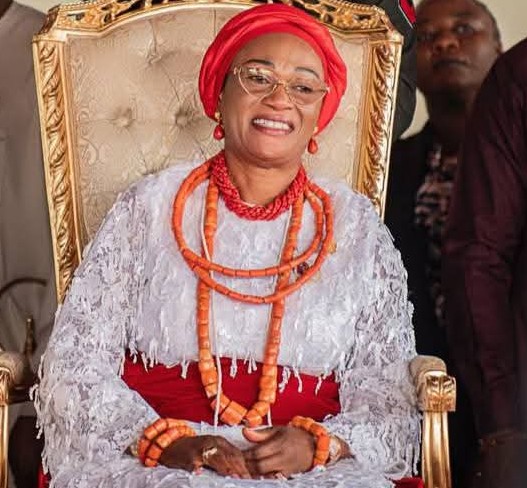
The Administrator of the Presidential Amnesty Programme (PAP), High Chief Dr. Dennis Burutu Otuaro, has commended Nigeria’s First Lady, **Oluremi Tinubu**, for her official visit to Warri, Delta State, on Thursday, February 26, 2026. In a statement issued by his Special Assistant on Media, Mr. Igoniko Oduma, Otuaro described the First Lady’s one-day engagement in Warri as timely and impactful, noting that it reflects the Federal Government’s continued commitment to the peace and progress of Delta State and the wider Niger Delta region. The PAP boss stated that stakeholders and beneficiaries of the Amnesty Programme received the visit with optimism, expressing confidence that it would further energise ongoing efforts to consolidate peace, enhance security and promote sustainable development across the region. Otuaro portrayed the First Lady as a strong advocate of national unity and harmony, ideals he said align with the Renewed Hope Agenda of President **Bola Tinubu**. He added that her humanitarian outreach through the Renewed Hope Initiative has continued to uplift vulnerable Nigerians and inspire hope among disadvantaged communities. According to him, the First Lady’s intervention programmes have provided empowerment and relief to countless citizens, reinforcing her reputation as a compassionate and people-focused leader. He further observed that the Renewed Hope Initiative complements the development blueprint of Delta State Governor, **Sheriff Oborevwori**, particularly the MORE Agenda aimed at advancing infrastructure and socio-economic growth in the state. Otuaro maintained that the visit would remain significant in the hearts of many Deltans, describing it as a milestone that underscores the enduring bond between the Federal Government and the people of the Niger Delta.
2/27/2026, 7:41:07 AM
views 4763
INEC Moves 2027 Presidential Poll To January 16
The Independent National Electoral Commission (INEC) has announced a sweeping revision of the timetable for the 2027 general elections, shifting the Presidential and National Assembly polls to January 16, 2027. The adjustment follows the repeal of the Electoral Act 2022 and the enactment of the Electoral Act 2026, which introduced significant changes to the statutory timelines guiding the conduct of elections in Nigeria. In a statement issued Thursday night in Abuja, the Commission said the new legal regime made it necessary to comprehensively review the previously released schedule. National Commissioner and Chairman of the Information and Voter Education Committee, Malam Mohammed Kudu Haruna, disclosed that the Commission had “reviewed and realigned the Schedule to ensure full compliance with the new legal framework” established by the 2026 Act. Under the updated timetable, Governorship and State Houses of Assembly elections will now hold on Saturday, February 6, 2027. The revised dates mark a clear departure from INEC’s earlier plan, which slated the presidential election for late February and the state-level polls for March. The changes also affect off-cycle elections. INEC confirmed that the Osun State Governorship Election, initially fixed for August 8, 2026, has been rescheduled to Saturday, August 15, 2026. On preparations for the Ekiti and Osun governorship polls, the Commission noted that while certain activities have already been completed, all outstanding processes will strictly comply with the provisions of the Electoral Act, 2026. In addition to rescheduling election days, the new timetable compresses the calendar for political parties. Party primaries, including the resolution of disputes arising from them, are to commence on April 23, 2026, and conclude on May 30, 2026. Campaign activities have also been clearly outlined. Campaigns for Presidential and National Assembly elections will begin on August 19, 2026, while those for Governorship and State Houses of Assembly contests will start on September 9, 2026. Haruna stressed the importance of strict adherence to the revised schedule, urging political parties to comply fully with the timelines. He affirmed that the Commission would enforce observance of the law and reminded stakeholders that all campaigns must end exactly 24 hours before their respective election dates, in line with statutory requirements. INEC maintained that the revised timetable aligns with the Constitution of the Federal Republic of Nigeria, 1999 (as amended) and the Electoral Act, 2026. The Commission further called on political actors, civil society groups, security agencies and the electorate to collaborate in delivering peaceful, credible and inclusive elections in 2027 that truly reflect the sovereign will of the Nigerian people.
2/27/2026, 7:33:29 AM
views 7786
FCCPC Uncovers Airline Price Fixing, Targets Foreign Carriers
The Federal Competition and Consumer Protection Commission (FCCPC) has revealed that it detected signs of price manipulation by certain domestic airlines during the December 2025 festive season. The Commission’s Chief Executive Officer, Mr. Tunji Bello, made this known in an interim report issued on Thursday by the agency’s Department of Surveillance and Investigations. The report was endorsed by Mr. Ondaje Ijagwu, Director of Corporate Affairs. Bello recalled that in January, the FCCPC announced a sector-wide probe into allegations of exploitative ticket pricing on domestic air routes. He explained that the review aligns with the Commission’s statutory responsibility to foster fair competition and safeguard consumer interests. According to him, the exercise was aimed at shedding light on pricing patterns during predictable peak travel periods. “The objective of this assessment is to provide clarity regarding pricing behaviour during high-demand seasons. The Commission does not seek to interfere with legitimate business operations, but to ensure that market practices comply with competition and consumer protection laws,” Bello stated. He further disclosed that the forensic review relied on data obtained from airlines operating within the country, comparing ticket prices during the December 2025 festive rush with fares recorded in the post-peak period of January 2026. Preliminary findings, he said, showed that ticket prices during the festive peak were significantly higher across multiple routes than those observed after the season. Bello pointed out that the fare increases occurred despite relative stability in major cost components, including aviation fuel prices, government-imposed charges, and foreign exchange rates. He added that the variations in ticket prices appeared to stem from discretionary pricing decisions, such as yield management and capacity allocation strategies, rather than adjustments in statutory fees or regulatory costs.
2/26/2026, 4:44:43 PM
views 10640
Start Amending Constitution To Create State Police – Tinubu Tells Senate
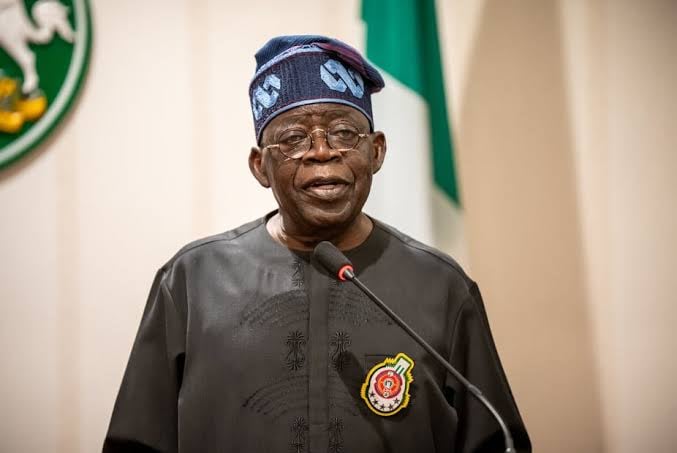
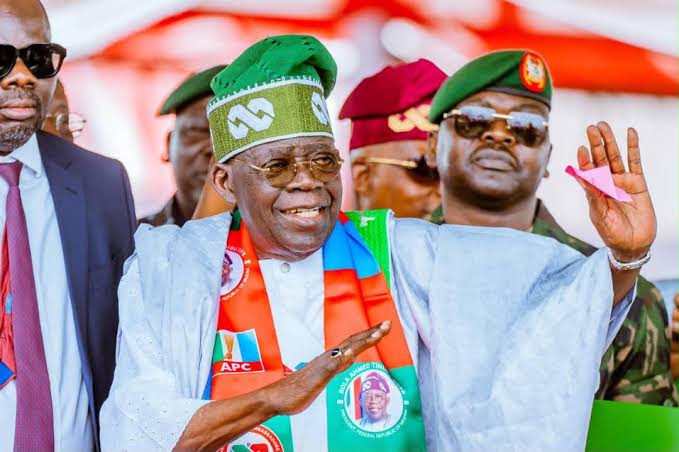
President **Bola Tinubu** on Wednesday urged the **National Assembly** to begin working out the framework for amending the Constitution to accommodate the establishment of state police. The President said the move had become necessary to strengthen efforts against insurgency and enhance security across the country. Tinubu made the appeal while addressing senators during an interfaith Iftar held at the Presidential Villa in Abuja. According to reports, the 36 state governors have already taken a position on the protracted debate over the creation of state police. In 2024, the governors formally backed the establishment of state police after presenting their recommendations to the **National Economic Council**. Speaking, Tinubu said, “Indivisible commitment to humanity is what we gather here to express to one another. Tonight, we are committed to the Nigeria entity succeeding, we are committed to make law for the welfare prosperity of the country. “I think we are committed together to govern together. We thank God for the real privilege of breaking the bread together. The season of reflection, sacrifice, compassion and national unity is reflected by you tonight, and I don’t take it lightly. “Nigeria is in an extremely bigger challenge. We are facing terrorism, banditry, insurgency, but you never fail to make a right response to this course. What I want to ask for tonight is for you to start thinking how best, to amend the Constitution to incorporate the state police. “This is for us to secure our country, take over our forest from marauders, free our children from fear.”
2/26/2026, 7:59:49 AM
views 3276
FULL LIST: Meet DIGs Likely To Retire After Tunji Disu’s Appointment
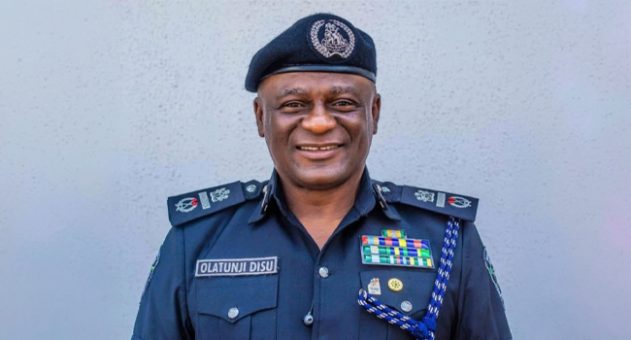
President **Bola Tinubu** on Tuesday appointed **Tunji Disu**, an Assistant Inspector-General of Police (AIG), as the Acting Inspector-General of Police. His appointment followed the resignation of **Kayode Egbetokun** as the nation’s police chief. Egbetokun stepped down from office citing pressing family considerations. Appointed in June 2023, he was serving a four-year tenure scheduled to end in June 2027, in line with the amended provisions of the Police Act. In a statement issued on Tuesday by his Special Adviser on Information and Strategy, **Bayo Onanuga**, the President confirmed receiving Egbetokun’s resignation letter earlier in the day and commended him for his service to the country. Until his elevation, Disu was the AIG in charge of the Force Criminal Investigation Department (FCID) Annex, Alagbon, Lagos. In the Nigeria Police Force, it is a long-standing tradition for senior officers to retire when a junior colleague is appointed Inspector-General. Although this practice is not legally binding, it underscores the institution’s deep respect for hierarchy, seniority, and organisational stability. In this report, WAFFI TV highlights the Deputy Inspectors-General (DIGs) who may be affected by Disu’s appointment. ### Frank Mba **Frank Mba** began his policing career as an Inspector and steadily rose through the ranks. He was promoted to Assistant Superintendent of Police in 1999, Deputy Superintendent in 2003, Superintendent in 2008, Chief Superintendent in 2012, Assistant Commissioner in 2014, Deputy Commissioner in 2018, and Commissioner of Police in December 2020. In March 2023, he was decorated as an Assistant Inspector-General of Police. Mba is a three-time National Spokesman of the Nigeria Police Force and received the UN Medal for his service with the Nigeria Police Contingent to the United Nations Mission in Liberia between 2006 and 2007. ### Mohammed Gumel **Mohammed Gumel** assumed office as the 4th Deputy Inspector-General of Police in charge of the Force Intelligence Department at the Force Headquarters, Abuja, in late December 2025/early January 2026. A seasoned officer known for his advocacy of community policing, Gumel previously served as Commissioner of Police and was recognised as the Best Community Policing Advocate of the Year in 2024. He holds the FIPMA and psc designations. The Force Intelligence Department remains the apex intelligence-gathering arm of the Nigeria Police Force. ### Adebola Hamzat **Adebola Hamzat** currently serves as the Deputy Inspector-General of Police in charge of the Department of Logistics and Supply. Appointed and decorated as DIG in March 2025, he oversees procurement, works, housing, and the Force Quarter-Master operations nationwide. Before his elevation, he served as AIG in charge of Zone 16, Yenagoa (covering Bayelsa and Rivers States), Commissioner of Police in Oyo State, and AIG in charge of the Counter Terrorism Unit. He hails from Ifelodun LGA of Kwara State. ### Yahaya Abubakar **Yahaya Abubakar** most recently headed the Department of Finance and Administration at the Force Headquarters, Abuja. He oversees financial management, budgeting, human resources, and administrative processes of the Force. Promoted by the Police Service Commission in 2024, he previously served in senior capacities, including Assistant Inspector-General and Zone Commander. ### Basil Idegwu **Basil Idegwu** was appointed in March 2025 to lead the Department of Research and Planning at the Force Headquarters. He is responsible for strategic planning, policy formulation, and enhancing operational efficiency within the Force. Idegwu holds a Ph.D. in Peace and Security Studies and heads a key department focused on modernising policing standards and ensuring institutional uniformity. ### Bzigu Kwazhi **Bzigu Kwazhi** serves as the Deputy Inspector-General of Police in charge of the Department of Operations. He leads and coordinates nationwide operational activities, crime prevention strategies, and joint security operations with the military. In 2025, he played a central role in security assessments and peace restoration efforts in Plateau and Adamawa states. He previously served as Commissioner of Police in Osun and Akwa Ibom states. ### Idris Abubakar **Idris Abubakar** joined the Nigeria Police Force as a Cadet ASP on May 18, 1992. He hails from Garko LGA of Kano State. He holds a B.Sc. in Education from Usmanu Danfodiyo University, Sokoto; an M.Sc. in Education (Psychology); and a Ph.D. in Psychology from the University of Abuja. ### Adebowale Williams **Adebowale Williams** is a Deputy Inspector-General of Police who heads the Department of Information and Communication Technology at the Force Headquarters, Abuja. He oversees the development and management of the Force’s technological infrastructure and digital systems to support modern policing initiatives.
2/25/2026, 3:49:23 PM
views 9757
Install WAFFITV