Subscribe to our newsletter

Buhari Govt’s Excess Money Printing Crippled Naira~ Oshiomhole
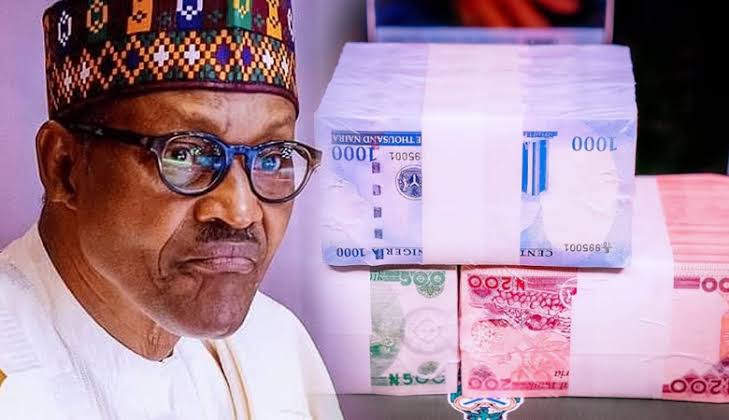
Edo North Senator, Adams Oshiomhole, has attributed the naira’s collapse to the “excessive printing of money” by the Central Bank of Nigeria during former President Muhammadu Buhari’s administration through its Ways and Means policy. The Ways and Means provision permits the Federal Government to obtain emergency loans from the CBN to cover delayed revenues or fiscal deficits. Speaking at a meeting and interactive session of the Progressives Governors Forum held in Benin City, Edo State, on Saturday, Oshiomhole said the policy was largely responsible for the naira’s sharp decline against the US dollar “We are coming from a country that was almost like Zimbabwe or Idi Amin’s Uganda where he asked the Central Bank governor ‘go and print more money for us to share to the people’. And the governor said, ‘if we print more money, Uganda currency will be like a sheet of paper’. “This is what the immediate past CBN governor was doing. In the Senate, we have the record that they printed over ₦31 trillion which they called Ways and Means. You know when the government wants to deceive people they use jargon. “They called it Ways and Means but I can tell you what it means: it means a situation in which the government prints banknotes, not based on what we have earned or any resources, just print banknotes to go and share to the people to meet their money illusion. It is the result of that excessive printing of banknotes that led to the collapse of the naira,” Oshiomhole said. The former Edo State governor further stated that “to understand the root cause of the present cost of living and the exchange rate regime, you must trace it and locate it in terms of the excessive amount of banknotes through so-called Ways and Means which the past government created and which this government has eliminated”. He added that Nigeria was “borrowing everyday the way fish drink water”, adding that it has become President Bola Tinubu’s burden to pay back those loans in order to guarantee the sovereignty of Nigeria.
6/28/2025, 5:21:08 PM
views 16382
Nigeria’s Public Debt Hits N149.39tn Amid Rising Borrowing, Naira Depreciation
Nigeria’s total public debt climbed to N149.39tn as of March 31, 2025, representing an increase of N27.72tn or 22.8 per cent compared to N121.67tn recorded in the same period of 2024. According to figures released by the Debt Management Office (DMO) on Friday, the debt stock also rose by N4.72tn or 3.3 per cent from N144.67tn as of December 31, 2024. The continued growth in public debt is largely driven by fresh borrowings from the Federal Government and the depreciation of the naira, which has inflated the local currency value of external obligations. This surge comes against a backdrop of ongoing fiscal pressures and the government’s continued dependence on both domestic and external financing to bridge budget deficits. At the end of the first quarter of 2025, Nigeria’s external debt stood at N70.63tn (\$45.98bn), up from N56.02tn (\$42.12bn) in Q1 2024. This reflects a year-on-year increase of N14.61tn or 26.1 per cent. On a quarterly basis, it inched up from N70.29tn in December 2024, marking a marginal rise of N344bn or 0.5 per cent. While the actual increase in dollar terms over the year was \$3.86bn, the significant depreciation of the naira amplified the growth when reported in local currency. For context, the Central Bank of Nigeria used an exchange rate of N1,330.26/\$1 to value external debt in Q1 2024. Although the DMO did not disclose the exact exchange rate used for Q1 2025, the higher naira value suggests that a weaker rate was applied, highlighting ongoing currency volatility. Nigeria’s external debt comprises loans from multilateral institutions like the World Bank and African Development Bank, bilateral lenders, and commercial instruments such as Eurobonds. The rising cost of debt servicing, fueled by naira depreciation, has sparked concern over its impact on government finances, especially as the country struggles to boost foreign exchange liquidity and stabilise the currency. Domestically, Nigeria’s debt stock rose to N78.76tn (\$51.26bn) in March 2025, up from N65.65tn (\$49.35bn) a year earlier — an increase of N13.11tn or 20 per cent. Compared to Q4 2024, domestic debt expanded by N4.38tn or 5.9 per cent from N74.38tn. Of the domestic debt total, the Federal Government held N74.89tn, while state governments and the Federal Capital Territory accounted for N3.87tn. This marks a slight decline in state-level domestic debt from N3.97tn in the previous quarter and N4.07tn in Q1 2024, suggesting either better debt servicing performance or a slowdown in new borrowings by subnational governments. Domestic debt largely consists of instruments such as Federal Government Bonds, Treasury Bills, Sukuk, and Green Bonds, which help finance budget deficits but carry interest costs and can reduce private sector credit availability. As of March 2025, domestic debt made up 52.7 per cent of the total debt portfolio, while external debt accounted for 47.3 per cent. This reflects a shift from March 2024, when domestic debt stood at 54 per cent and external debt at 46 per cent. The rise in the external share, particularly in naira terms, underscores Nigeria’s heightened exposure to exchange rate risk. Meanwhile, the steady growth in domestic borrowing highlights the government’s greater reliance on the local capital market, despite challenges such as rising interest rates and fluctuating investor demand.
6/28/2025, 2:04:30 PM
views 12532
Worst Of PDP Defections Yet To Come~ Saraki
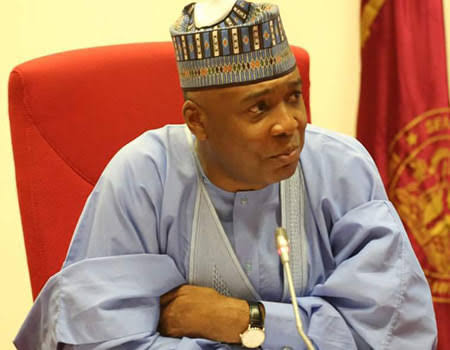
Chairman of the Peoples Democratic Party (PDP) Reconciliation Committee and former Senate President, Dr. Bukola Saraki, has cautioned that the party could witness further defections despite ongoing efforts to restructure and strengthen it ahead of the 2027 general elections. Saraki disclosed this in an interview on Arise TV on Friday. He said, “PDP would likely see one or two more defections, and we should prepare ourselves for that; there is a possibility. We haven’t seen the worst of the defections for PDP. We would probably see maybe one or two governors who will defect, and we might see some senators who will defect. He, however, described the timing of the crisis as an advantage, arguing that it gives the PDP time to recover and rebuild before the election cycle begins in full swing. “For some of us, this happening early in PDP is an advantage. We are lucky that this is not happening, let’s say, late 2026; we would not even have had time to recover and regroup,” he said. “We have just under two years to the election, and we are lucky to have that. I think, with a lot of commitment and understanding, it is not a lost cause. “A party with over 26 years of history that has been around, the largest party, we will definitely have low times like this.” Despite the turbulence at the national level, Saraki said the PDP remains strong at the grassroots and across state structures. “When you go round the country, the state chapters, the local government chapters, the party is still very strong in the grassroots. In some areas in the country, they are not even aware of what is happening at our level, in Abuja. “The reactions we are seeing at the grassroots give us a lot of encouragement. But what we need to do is to get to the bottom and start to build.” He added that the party is already laying the groundwork for the 2027 elections but warned that the stakes go beyond just party survival. “This is not just about resolving today’s issues. It’s about building for the future. The next convention must not be business as usual. We must bring in new, younger faces who represent the future of this party. “If PDP fails, Nigeria edges closer to a one-party state. And that would be a disaster for democracy.”
6/28/2025, 12:33:16 PM
views 16112
NDDC Vows Quick Completion Of Gbaregolor~Ogulagha Road
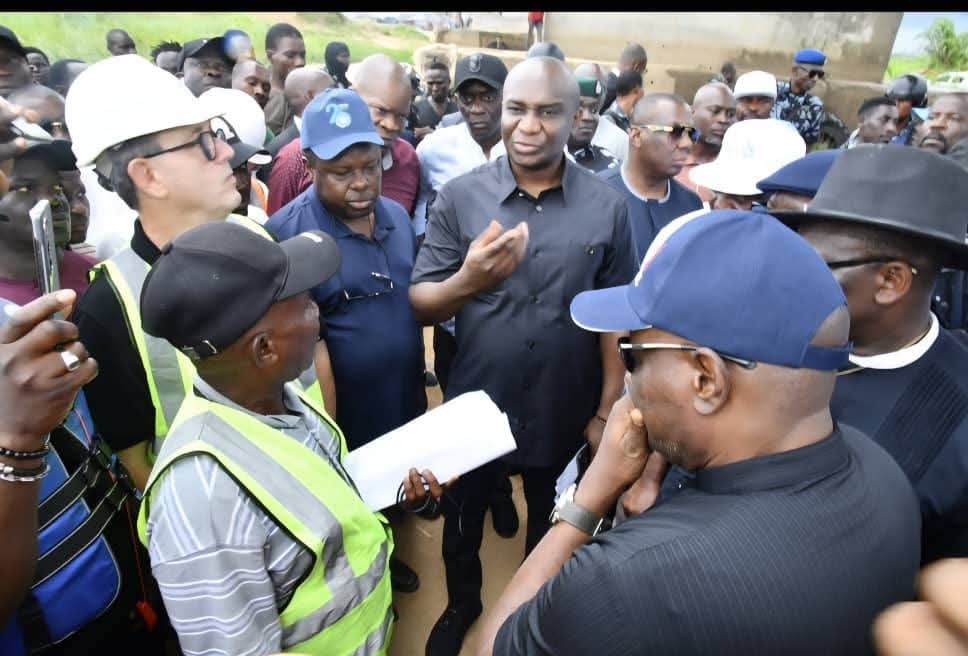
The Managing Director of the Niger Delta Development Commission (NDDC), Dr. Samuel Ogbuku, has reaffirmed the Commission’s commitment to ensuring the swift completion of Phase I of the Gbaregolor-Ogulagha Road project in Ughelli South Local Government Area, Delta State. Speaking during an inspection tour of the 24-kilometre project—accompanied by the Chairman of the NDDC Governing Board, Mr. Chiedu Ebie; Executive Director of Projects, Mr. Victor Antai; and members of the House of Representatives Committee on the NDDC—Dr. Ogbuku described the project as a major undertaking, highlighted by a 576-metre-long bridge, with billions of naira already invested. Dr. Ogbuku explained that the road, once completed, would significantly boost economic activities, thereby reducing poverty in the host and neighbouring communities. He added that the project is also expected to enhance security and accelerate infrastructural development, ultimately linking ten communities across Bomadi, Ughelli South, and Burutu Local Government Areas of Delta State. According to Ogbuku, “the project is one of the legacy projects which captured in the 2024 budget of the commission as part of the fund approved by President Bola Ahmed Tinubu, to facilitate completion of legacy projects across the region. The president’s approval also includes the Kaa-Ataba Bridge, the Bonny Ring Road and the Okrika-Borokiri Bridge in Rivers State, among others.” The NDDC Managing Director acknowledged that there had been concerns regarding the bridge design and the cost variation requested by the contractor. However, he explained that these issues were addressed and resolved during a meeting with the Chairman of the construction company. He reassured the residents—who came out in large numbers to welcome the delegation—that the Commission remains deeply committed to addressing their challenges. Providing further details on the project, Engineer Nicholas Masoliba, representing the contracting firm, revealed that about 70 percent of the work, which began in 2009, has been completed. He added that the original design had to be adjusted—including extending the bridge—to mitigate the effects of erosion on the project.
6/28/2025, 11:09:20 AM
views 15431
'Peace Has Returned To Rivers'~ Wike, Fubara Speak After Meeting Tinubu
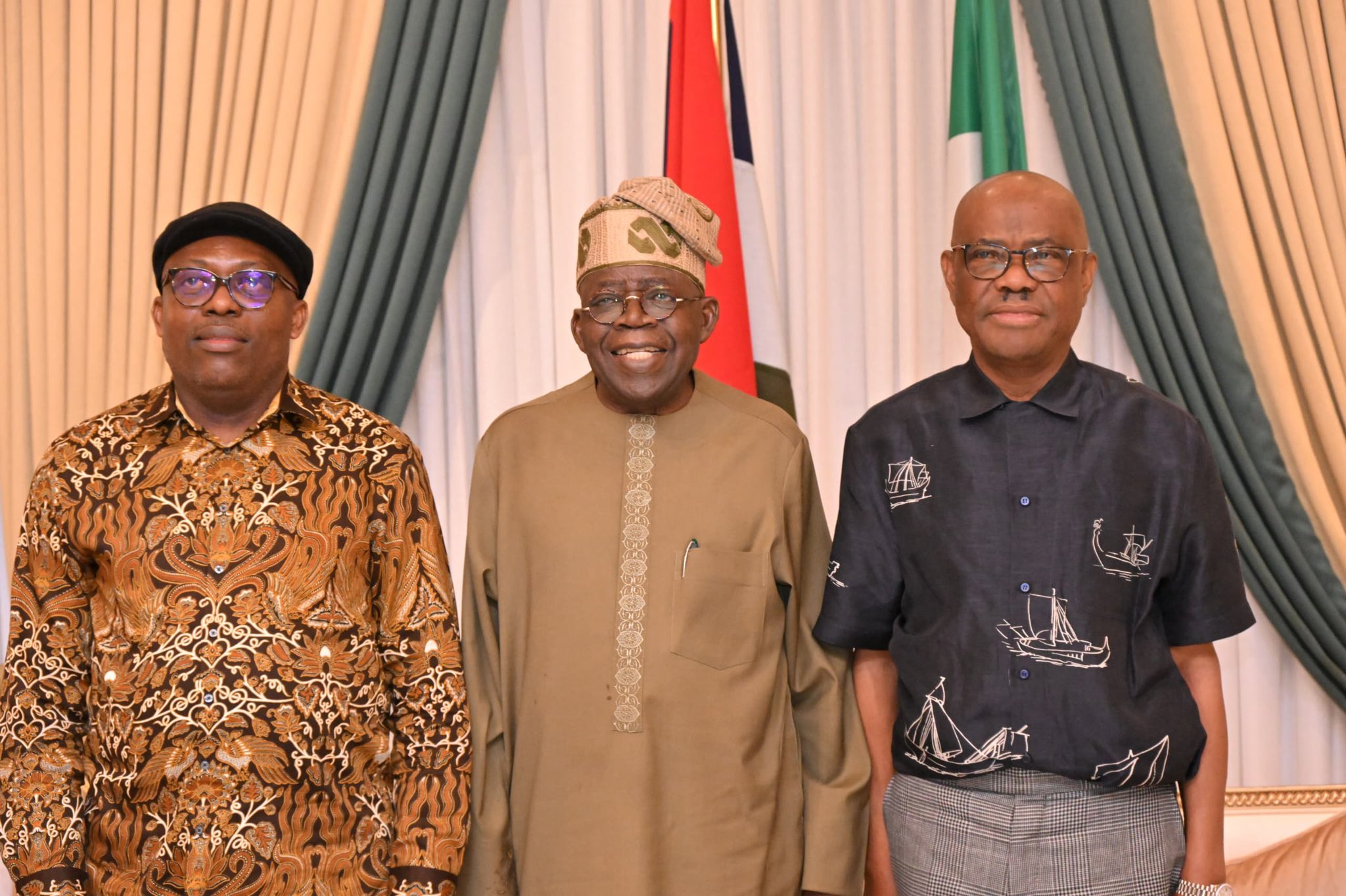
After months of political tension and division in Rivers State, Governor Siminalayi Fubara and his predecessor, Nyesom Wike, have officially reconciled, assuring residents that peace has been restored. The reconciliation came after a Thursday night meeting with President Bola Tinubu at the Presidential Villa, where both leaders and other key stakeholders agreed to collaborate for the state’s development. Speaking to journalists after the meeting, Wike, now Minister of the Federal Capital Territory, thanked God for the breakthrough. Wike said, “I want to give God the glory that today is the 26th of June 2025, that peace has finally returned to the state. We all agreed to work together with the governor, and the governor also agreed to work together with all of us. We are members of the same political family.” He acknowledged that disagreements are part of politics but emphasised that the resolution marked a fresh start for the state. He said, “Just like humans, you have disagreements, and then you also have a time to also settle your disagreements, and that has been finally concluded today, and we have come to report to Mr President that is what we have agreed. “So for me, everything is over, and I enjoin everybody to work together with everybody. There is no more acrimony; there is nothing to say. We have disagreed; we have all agreed on everything, so thank God. For me, it’s a day we have to thank almighty God.” Governor Fubara, who also spoke to journalists, said the return of peace is crucial to the state’s development. He said, “For me, it’s very important that this day has come to be. What we need for the progress of Rivers State is peace, and by the special grace of God this night, with the help of Mr President and the agreement of the leaders of the state, peace has returned to Rivers State.” Fubara pledged to do everything within his power to sustain the peace, describing it as a step toward lasting stability and governance in the oil-rich state.
6/27/2025, 10:22:47 AM
views 15826
Retired Police Officers Plan Nationwide Protests Over Contributory Pension Scheme
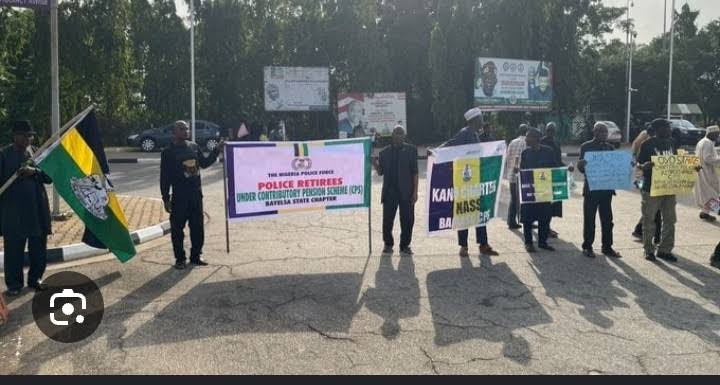
Amid growing frustration over unresolved pension challenges, retired police officers enrolled in the Contributory Pension Scheme (CPS) have announced plans to hold what they are calling the “Mother of All Peaceful Protests” across the country on July 21, 2025. This was revealed by the Kaduna State chapter of the Union of Retired Police Officers in a statement signed by its Chairman, Retired Chief Superintendent of Police (CSP) Mannir M. Lawal Zaria, and Vice Chairman, Retired Assistant Superintendent of Police (ASP) Danlami Maigamo, following their monthly meeting at the Police Officers’ Mess in Kaduna. The retirees are calling for the Nigeria Police Force to be removed from the CPS, which they say has caused severe economic hardship, financial distress, and a troubling increase in depression and deaths among retired officers. “We have no option but to embark on another peaceful protest tagged ‘Mother of All Peaceful Protests’ on July 21, 2025,” the union declared. The group emphasised that the demonstration would be peaceful and span all 36 states of the federation. “As law-abiding citizens, we shall continue to pursue our demand for the Nigeria Police to be exited from the CPS through peaceful means until our voices are heard,” the statement added. The union recalled an earlier protest held between February 24 and March 3, 2025, at the National Assembly by the Kaduna and Bauchi State chapters, during which petitions were submitted to five key offices, including the chairmen of the relevant Senate and House committees and the Director of the Department of State Services (DSS). However, the retirees expressed deep disappointment over the silence of the National Assembly, especially concerning the outcome of the public hearing on the Police Pension Board Bill held on November 19, 2024. They also dissociated themselves from any groups plotting violent protests, maintaining that their agitation is rooted in legitimate concerns over welfare and dignity. “The silence from the authorities is deafening, but we remain committed to lawful engagement,” the group stated. The union insists that the establishment of an independent Police Pension Board remains the only viable solution to what they described as systemic injustice in the current pension regime.
6/27/2025, 10:18:48 AM
views 16420
Households Earning N250,000 Or Less Monthly Won’t Pay Tax~ Oyedele
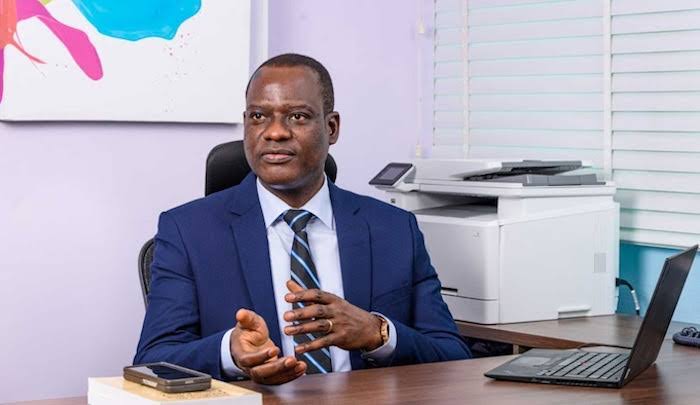
The Chairman of the Presidential Committee on Fiscal Policy and Tax Reforms, Taiwo Oyedele, has announced that under the newly signed tax laws, Nigerian households earning ₦250,000 or less per month will be classified as poor and exempted from paying taxes. Speaking on Channels Television’s *Politics Today* on Thursday—just hours after President Bola Tinubu signed four tax bills into law—Oyedele, a former tax lead at PriceWaterhouseCoopers (PwC), shared insights into the reforms. Appointed by President Tinubu in July 2023, Oyedele described his two-year leadership of the tax reform committee as both challenging and eventful. He explained that the new tax laws, which are set to take effect from January 2026, are not designed to raise tax rates but rather to boost economic activity, curb tax evasion, and safeguard low-income earners. According to him, the reforms aim to protect businesses, avoid taxing poverty, and promote an efficient, growth-oriented, and people-focused tax system. “This tax law will not give you cash in your pocket, but at least it won’t take your cash away if you are poor.” He said nobody earning below ₦250,000 would have to pay taxes because they don’t even have enough. “We have eliminated the tax component for people at the bottom, we have reduced for people at the middle, and we have increased slightly for people at the top. “That middle, we estimated it at about ₦1.8 to ₦2m a month. If you are earning that amount and below, your tax will not be zero but it will reduce from what you are paying today,” he stated, noting that those who earn this amount are about 5% of the total Nigerian population. The tax boss said to arrive at a decision, his committee debated the poverty line of an average Nigerian. Oyedele said, “We debated this question; we said: ‘Who is a poor person in Nigeria? “First, we started with data like the World Bank and the UN will tell you two dollars, fifteen cents a day per person means you are at the poverty line but there are people who do not earn two dollars a day but they are not poor because they produce the food that they eat and they do not pay for transportation. I lived and grew up in the village. “So, we had to factor that in. We drew our own (poverty) line for Nigeria on the basis of an average of five people per family: two people working if they are lucky, taking care of the five. “When we did the maths, it gave us an amount, and that was what we used in determining the income below which nobody should pay taxes. “We came up with a ₦120,000 or ₦130,000 per two people working in a household of five. If the earnings are about ₦250,000, they can take care of themselves. Of course, they are not going to have luxury, but at least they can take care of themselves. They are poor, and they shouldn’t pay taxes.” Oyedele stated that Nigeria currently collects only about 30% of what the country should be receiving in taxes, noting that the objective of the new tax laws is to close the 70% gap.
6/27/2025, 7:33:40 AM
views 16429
Install WAFFITV