Subscribe to our newsletter

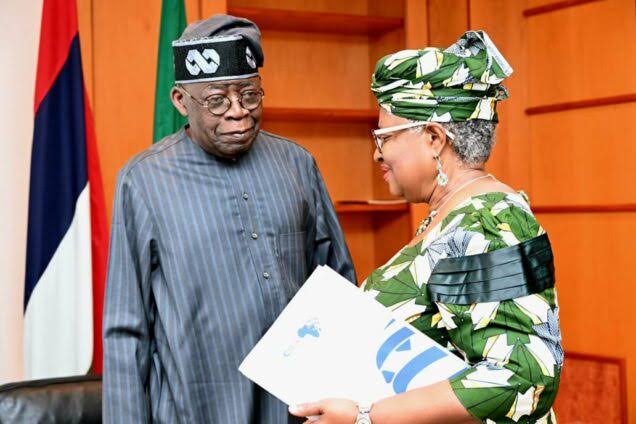
Economy Now Stable Under Tinubu~ Okonjo Iweala
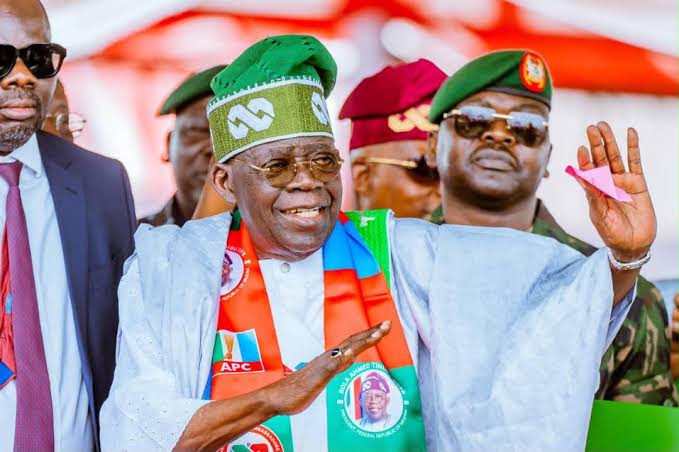
The Director-General of the World Trade Organisation (WTO), Dr. Ngozi Okonjo-Iweala, on Thursday held a closed-door meeting with President Bola Tinubu at the Presidential Villa. She praised President Tinubu’s administration for implementing reforms that are bringing stability to Nigeria’s economy. Okonjo-Iweala, who described the engagement as “very good,” noted that the President was “gracious” to receive her shortly after she joined First Lady, Senator Oluremi Tinubu, to launch a Women Exporters Fund earlier in the day. The fund, jointly administered by the WTO and the International Trade Centre (ITC) in Geneva, is designed to support Nigerian women entrepreneurs in expanding their businesses, generating employment, and increasing household incomes within the digital economy. “Nigeria competed and emerged as one of only four countries globally selected for this new programme,” she said. “Out of 67,000 Nigerian women who applied, 146 were chosen as beneficiaries.” Of these beneficiaries, sixteen under the “Booster Track” already manage established businesses that will be scaled up through 18 months of technical and business support from the WTO, ITC, the Federal Ministry of Industry, Trade and Investment, and the Nigerian Export Promotion Council. Another 100 will each receive \$5,000 in direct funding plus a year of business development assistance, while the rest will get customised support to strengthen their enterprises. “This is just the beginning,” Okonjo-Iweala emphasised, highlighting the programme’s potential to diversify Nigeria’s economic base and empower women. Speaking on the economy, the WTO chief—who previously served as Minister of Finance and Coordinating Minister of the Economy under President Goodluck Jonathan—credited the Tinubu government with establishing economic stability, which she described as an essential platform for growth.
8/14/2025, 4:50:53 PM
views 16377
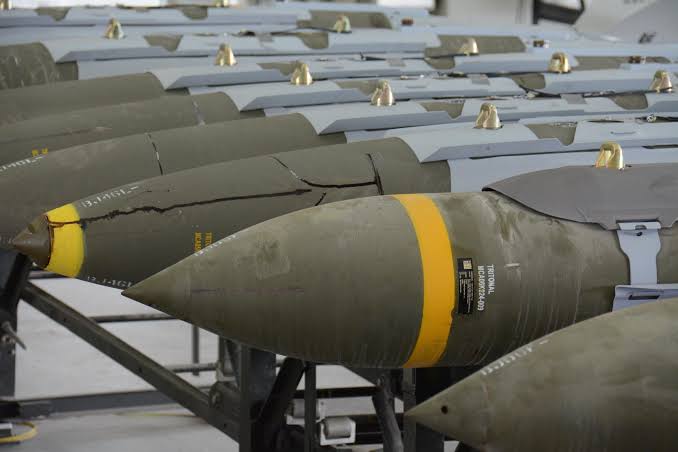
US Approves Sale Of Bombs, Others Worth $346m To Nigeria
The United States Government has approved a potential Foreign Military Sale to Nigeria involving munitions, precision bombs, precision rockets, and related equipment worth an estimated $346 million. This was disclosed in a statement from the Defence Security Cooperation Agency (DSCA), dated August 13 but received via email on Thursday. The agency confirmed that it has notified the US Congress of the planned transaction. “The State Department has made a determination approving a possible Foreign Military Sale to the Government of Nigeria of Munitions, Precision Bombs, and Precision Rockets and related equipment for an estimated cost of \$346 million. The Defence Security Cooperation Agency delivered the required certification notifying Congress of this possible sale today,” the statement partly read. Under the request, Nigeria seeks to acquire 1,002 MK-82 general-purpose 500-pound bombs; 1,002 MXU-650 Air Foil Groups for Paveway II GBU-12; 515 MXU-1006 Air Foil Groups for Paveway II GBU-58; 1,517 MAU-169 or MAU-209 computer control groups for Paveway II GBU-12/GBU-58; 1,002 FMU-152 joint programmable fuzes; and 5,000 Advanced Precision Kill Weapon System II all-up-rounds. “The Government of Nigeria has requested to buy one thousand two (1,002) MK-82 general purpose 500 lb bombs; one thousand two (1,002) MXU-650 Air Foil Groups (AFGs) for 500 lb Paveway II GBU-12; five hundred fifteen (515) MXU-1006 AFGs for 250 lb Paveway II GBU-58; one thousand five hundred seventeen (1,517) MAU-169 or MAU-209 computer control group (CCG) for Paveway II GBU-12/GBU-58; one thousand two (1,002) FMU-152 joint programmable fuzes; and five thousand (5,000) Advanced Precision Kill Weapon System II (APKWS II) all-up-rounds (AURs) (consisting of one each WGU-59/B guidance section (GS); high-explosive warhead; and MK66-4 rocket motor),” it stated. The package also includes non-major defence equipment such as FMU-139 joint programmable fuzes, bomb components, impulse cartridges, high-explosive and practice rockets, integration support, test equipment, and logistical and programme support services. “The following non-MDE items will also be included: FMU-139 joint programmable fuzes; bomb components, impulse cartridges, and high-explosive and practice rockets; integration support and test equipment; U.S. Government and contractor technical, engineering, and logistics personnel services; and other related elements of logistical and program support. The total estimated program cost is \$346 million. “This proposed sale will support the foreign policy goals and national security objectives of the United States by improving the security of a strategic partner in Sub-Saharan Africa. “The proposed sale will improve Nigeria’s capability to meet current and future threats through operations against terrorist organisations and to counter illicit trafficking in Nigeria and the Gulf of Guinea. Nigeria will have no difficulty absorbing these munitions into its armed forces. “The proposed sale of this equipment will not alter the basic military balance in the region,” the statement added. The main contractors for the deal are RTX Missiles and Defence, Lockheed Martin Corporation, and BAE Systems. “At this time, the U.S. Government is not aware of any offset agreement proposed in connection with this potential sale. Any offset agreement will be defined in negotiations between the purchaser and the contractor. Implementation of this proposed sale will not require the assignment of any additional U.S. Government or contractor representatives to Nigeria. “There will be no adverse impact on U.S. defence readiness as a result of this proposed sale. “The description and dollar value are for the highest estimated quantity and dollar value based on initial requirements. Actual dollar value will be lower depending on final requirements, budget authority, and signed sales agreement(s), if and when concluded,” the statement concluded.
8/14/2025, 12:38:52 PM
views 13420
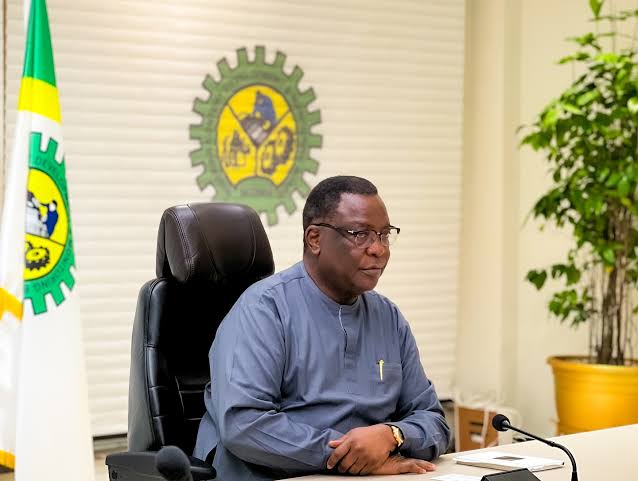
IYC Demands Sack Of NCDMB Boss Ogbe Over Alleged Bias, Inefficiency
The Ijaw Youth Council (IYC) Western Zone has called on President Bola Ahmed Tinubu to immediately sack the Executive Secretary of the Nigerian Content Development and Monitoring Board (NCDMB), Engr. Felix Omatsola Ogbe, over alleged gross inefficiency and ethnic bias in the discharge of his duties. In a strongly worded statement issued on Wednesday, August 14, and jointly signed by Comrade Nicholas Igarama (Chairman), Ebi Joshua Olowolayemo (Secretary), and Comrade Tare Magbei (Information Officer), the group accused Ogbe of failing to advance the core mandate of the NCDMB since assuming office. According to the IYC, Ogbe has consistently sidelined other ethnic nationalities in the Niger Delta region, allegedly focusing government-sponsored human capacity development initiatives on members of his Itsekiri ethnic group, to the exclusion of others. Read the full statement below: August 14 NCDMB: IYC Demands Sack of Unproductive Ogbe as Executive Secretary Leadership in its most rudimentary form defines the essence of absolute responsibility on assigned tasks as bestowed by higher authorities. This very phenomenon has been found to be lacking in the leadership of Nigeria Content Development and Monitoring Board (NCDMB) headed by Engr. Felix Omatsola Ogbe. As Executive Secretary of the NCDMB, Ogbe has consistently failed to input his supposed industry track record in the advancement of the mandate upon which the agency was founded. He has continually had a sectional engagement with his fellow Itsekiri Kits and Kin, thereby shutting all other ethnic nationalites in the Niger Delta region out. Repeatedly has he avoided critical youth engagement in the region while sponsoring that of his Itsekiri ethnicity through different human capacity development initiatives, while other ethnic nationalites are left unattended. As Ijaws, mostly from the western flank where Engr. Ogbe also hails from, we will not sit and watch others benefit from the resources that we produce without our practical involvement to better the lives of our people as well. It is on record that the leadership of Ijaw Youth Council (IYC) Western Zone has tried to establish communication with Engr. Ogbe, for the last ten months, but every medium of communication to get his attention has fundamentally proven to be abortive. As youths, we can no longer have leaders in office who have now equated themes to demi-god and have refused to attend to most significantly youthful issues in the Niger Delta Region. To this end, we therefore call on President Bola Ahmed Tinibu to immediately sack Engr. Felix Omatsola Ogbe, who has consistently displayed disregard for critical actors in the Niger Delta and has also exhibited the highest level of gross inefficiency by not keeping up to the fundamental mandate upon which NCDMB was founded. Hence, this call is made for the presidency to probe into Engr. Ogbe's activities at the NCDMB relieve him of his duties as Executive Secretary of the Board. Signed: Comrade Nicholas Igarama - Chairman Ebi Joshua Olowolayemo - Secretary Comrade Tare Magbei - Information Officer
8/14/2025, 10:28:10 AM
views 16204
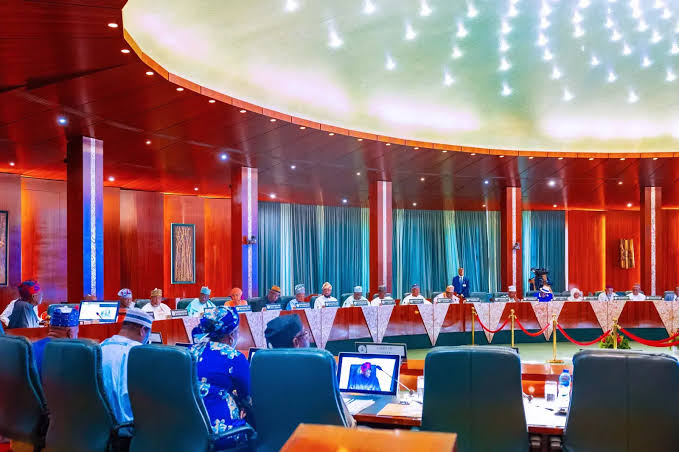
FG Approves N142bn For Construction Of Bus Terminals In Six Zones
The Federal Government has approved the construction of modern bus terminals in each of Nigeria’s six geo-political zones at a total cost of ₦142,028,576,008.17. Minister of Transportation, Senator Sa’idu Ahmed Alkali, announced this while briefing State House correspondents after Wednesday’s Federal Executive Council (FEC) meeting, presided over by President Bola Tinubu at the Presidential Villa, Abuja. He said the contract was awarded to Messrs Planet Project Limited. According to Alkali, the terminals will be located in Abeokuta (South-West), Gombe (North-East), Kano (North-West), Lokoja (North-Central), Onitsha (South-East), and Ewu in Edo State (South-South). He described the project as the Federal Government’s first direct intervention in road transport infrastructure beyond road construction, noting that the chosen locations were selected for their economic potential. Alkali stressed that the absence of purpose-built bus terminals has contributed to rising crime, traffic accidents, and the proliferation of arms along Nigeria’s highways. “In spite of the importance of road transportation in Nigeria, there are no terminals that meet the needs of millions of commuters. This has led to increased crime, road traffic accidents, and the spread of arms on our highways,” he said. The minister explained that the initiative, developed by the Ministry of Transportation, aims to improve road safety, enhance passenger comfort, and boost economic activities. He added that the proposal received FEC approval after a thorough assessment of its potential impact on national transportation and security.
8/14/2025, 7:15:02 AM
views 13979
FG Bans Establishment Of Tertiary Institutions For Seven Years
The Federal Government has announced a seven-year suspension on the creation of new federal universities, polytechnics, and colleges of education, citing the increasing number of under-utilised institutions, overstretched resources, and declining academic standards. The decision, endorsed at Wednesday’s Federal Executive Council (FEC) meeting presided over by President Bola Tinubu at the Presidential Villa, Abuja, followed a presentation by the Minister of Education, Dr. Tunji Alausa. Despite the moratorium, the council approved the establishment of nine new universities. Addressing State House correspondents after the meeting, Alausa explained that Nigeria’s tertiary education challenge was no longer about access but about inefficiency, inadequate infrastructure, insufficient staffing, and low enrolment across many institutions. “Several federal universities operate far below capacity, with some having fewer than 2,000 students. In one northern university, there are 1,200 staff serving fewer than 800 students. This is a waste of government resources,” he stated. According to him, 199 universities received fewer than 100 applications through the Joint Admissions and Matriculation Board last year, with 34 recording no applications at all. Of the 295 polytechnics in the country, many had fewer than 99 applicants, while 219 colleges of education posted similarly poor figures — including 64 that attracted zero applications. Alausa warned that the unchecked establishment of poorly subscribed institutions could result in ill-prepared graduates, damage the global reputation of Nigerian degrees, and worsen unemployment levels. He explained that the suspension would allow the government to focus resources on improving facilities, employing qualified personnel, and increasing the capacity of existing institutions. “If we want to improve quality and not be a laughing stock globally, the pragmatic step is to pause the establishment of new federal institutions,” he said. Currently, Nigeria has 72 federal universities, 42 federal polytechnics, and 28 federal colleges of education, in addition to numerous state-owned and private institutions, as well as specialised schools such as colleges of agriculture, health sciences, and nursing. The minister clarified that the newly approved universities were private institutions whose applications had been pending for as long as six years and had successfully undergone a full evaluation by the National Universities Commission (NUC). “When we assumed office, there were 551 applications for private universities. Many had been stuck due to inefficiencies at the NUC. We deactivated over 350 dormant applications and set new, stricter guidelines. Of the 79 active cases, nine met the criteria and were approved,” Alausa said. He revealed that billions of naira had already been invested in infrastructure for the approved institutions and stressed that the moratorium also covers new private polytechnics and colleges of education to avoid further under-enrolment. Alausa praised President Tinubu for backing the reform, describing it as a reset button for Nigeria’s higher education system. “Mr President believes fervently in education and has given us the mandate to ensure every Nigerian has access to the highest quality of education comparable to anywhere in the world,” he added.
8/14/2025, 6:52:44 AM
views 13455
Reps Pushing To Make Appeal Court Final Judge In Gov Election Disputes
A member of the House of Representatives, Bayo Balogun, on Tuesday, revealed that the green chamber is pushing a bill to amend the 1999 Constitution, proposing that the Court of Appeal serve as the final authority on governorship election petitions in Nigeria. Balogun, who chairs the House Committee on the Independent National Electoral Commission (INEC), made this known during an appearance on Channels Television’s *Politics Today* programme. “One advantage of that provision is that while the state and National Assembly are in the Tribunal, then the presidential and governorship will be at the Appeal Court. So, by the time they are moving from the Appeal to the Supreme Court, the one of the state and National Assembly will now be going to the Appeal Court. So we will now have a spread,” he stated. “What we are trying to do now is to reduce the tribunal period to 90 days and the appeal to 50 days,” he added. “Then we have the 21 days for filing of the petition and 14 days for filing of the appeal. By the time we put all these number together, we are looking at 185. “What we are putting down in the Act is that the election will not be held later than 185 days to the swearing in. Once we remove it from the constitution, we wil now put the provisions in the Electoral Act.” The lawmaker explained that the proposed law would require INEC to conduct elections earlier than February, allowing enough time to conclude all post-election litigations before the expiration of a governor’s tenure. He noted that, once enacted, there would no longer be three stages of appeal after a governorship election, as the bill seeks to exclude the Supreme Court from the appeal process in such disputes. Currently, governorship election petitions can progress from the Tribunal to the Court of Appeal and finally to the Supreme Court, which serves as the ultimate authority on such matters. By contrast, the Court of Appeal is already the final court for National and State House of Assembly election cases. The bill, titled *‘A Bill for an Act to Alter the Constitution of the Federal Republic of Nigeria, 1999 to Make the Court of Appeal the Final Appeal Court in Governorship, National and State Houses of Assembly Election’*, was sponsored by Nnamdi Ezechi, who represents Ndokwa East/Ndokwa West/Ukwuani Constituency.
8/13/2025, 12:32:11 PM
views 16272
Nigerian Prisons Spend Over N4m Monthly On Sanitary Pads For Female Inmates~ Official
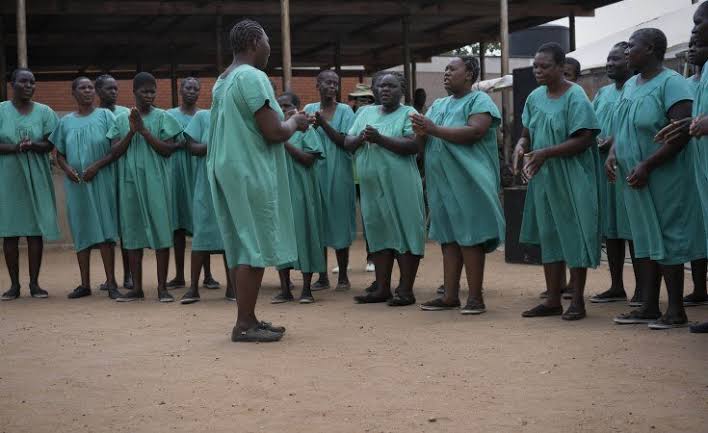
The Nigerian Correctional Service (NCoS) has sounded the alarm over a worsening mental health crisis in the nation’s prisons, revealing that 8,246 inmates are currently suffering from various mental illnesses. The revelation came on Tuesday at the third public hearing of the Independent Investigative Panel on Alleged Corruption, Abuse of Power, Torture, and Other Inhumane Treatment by the NCoS, in Abuja. Officials further disclosed that the service spends over N4 million monthly on sanitary pads for inmates. Testifying before the panel, Dr. Glory Essien, Assistant Controller General of Corrections in charge of Medical Services, described the dire impact of prison conditions on the psychological well-being of inmates. “We have 8,246 inmates with mental health conditions in our custodial centres,” The PUNCH quoted her as saying. She continued: “From the moment someone is brought in—those who have seen a custodial centre know what I mean—the police escort them to the gate, it’s opened, they’re admitted, and then that gate locks behind them.” “That instant loss of freedom can trigger something. Some begin to show signs of disturbed behaviour almost immediately, as if something in their mind has shifted,” she said. Essien added that the prison system depends on a network of specially trained inmate-leaders who help officials spot prisoners exhibiting signs of psychological distress. “These leaders are trained to alert the staff when they notice concerning behaviour. “They might say, ‘This inmate seems dazed, hasn’t eaten, hasn’t spoken to anyone.’ That helps us intervene early,” she said. Despite these efforts, the scale of mental health issues far exceeds the available resources. “If you’re in a facility housing 500 to 1,000 inmates, and you’re the only attending doctor, nurse, or psychologist, it’s simply not possible to monitor everyone individually. “That’s why we rely on these trained inmates to help us identify those in need, so we can provide care as best we can,” the ACG noted. She also underscored the logistical challenges of delivering mental healthcare in correctional facilities. “Mental illness is chronic—it’s not like malaria where you give a dose and it clears up,” she said, pointing to transportation issues, limited drug supplies, and staff shortages as ongoing obstacles. “We’re not operating in a five-star environment. “But with the little we have, we are committed to upholding the highest standards of our work,” she said. Contributing to the discussion, the Assistant Controller General of Corrections in charge of Pharmaceutical Services, Mohammed Bashir, spoke on issues relating to drug supply and the treatment of mental health conditions. “The Federal Government has actually been doing its enormous best to see that it caters to the health needs of the inmates. Money has been appropriated, but is the money enough? No. “Out of 81,122 inmates in 256 correctional facilities nationwide, about 2.3 percent are female,” he said. Bashir revealed that a single item, such as sanitary pads for menstruating inmates, costs over “four million naira monthly.” On mental healthcare, Bashir confirmed that a psychological services unit has been created within the service to focus on treatment. “We have a partnership with this psychiatric and psychological association. We have the consultants that usually go to about 12 designated custodial centres that have a large number of these cases,” he said.
8/13/2025, 6:51:32 AM
views 12501
Why Airlines Insist Passengers Switch Off Phones
The recent Ibom Air incident, in which a passenger was arrested and remanded after a heated altercation with airline staff, has reignited discussions about aviation safety protocols, particularly the insistence that passengers switch off or place mobile phones in flight mode during take-off and landing. While many travellers see the rule as a mere formality, aviation experts stress that it is rooted in safety and operational considerations. Below are three key reasons behind the regulation, and why disregarding it can escalate into serious consequences — as seen in the Ibom Air case. 1. Preventing Radio Frequency Interference Airplanes rely on highly sensitive navigation and communication systems. Even small amounts of radio frequency interference from active mobile devices can disrupt cockpit instruments, especially during the critical phases of flight such as take-off and landing. While modern aircraft are better shielded, the risk — however minimal — is significant enough for aviation regulators to maintain the precautionary rule. 2. Ensuring Passenger Attention During Safety Instructions Flight attendants give crucial safety demonstrations before take-off, and passengers are expected to be alert in case of sudden instructions. An active phone call, text exchange, or social media scroll can distract travellers from noticing emergency briefings or hearing urgent crew announcements. The Ibom Air altercation reportedly began after a passenger failed to comply with crew instructions, underscoring how non-compliance can quickly lead to operational and legal issues. 3. Compliance with International Aviation Laws Most global aviation authorities — including the International Civil Aviation Organization (ICAO) and Nigeria Civil Aviation Authority (NCAA) — mandate that airlines enforce the rule on phone use. Disobeying a crew member’s lawful instruction is a punishable offence under aviation law, regardless of whether the phone’s signal actually interferes with the aircraft. In the Ibom Air case, the refusal to follow this simple safety protocol contributed to the passenger’s arrest and eventual remand in prison custody. Airlines stress that these rules are not about inconvenience but about ensuring the safety of all on board. As the Ibom Air incident shows, ignoring them can carry not just safety risks but also legal consequences that extend well beyond the flight itself.
8/12/2025, 4:50:57 PM
views 14079
Install WAFFITV