Subscribe to our newsletter

IPF, IPDI, Others Back Otuaro, Hail Two Years of Reforms at PAP
The Ijaw Publishers Forum (IPF), Ijaw People’s Development Initiative (IPDI), alongside other critical stakeholders in the Niger Delta, have expressed strong confidence in Dr. Dennis Otuaro, Administrator of the Presidential Amnesty Programme (PAP), as he marks two years in office. The groups said Dr. Otuaro’s leadership within the past two years has ushered in sweeping reforms and institutional strengthening across the amnesty programme. They cited improvements in administrative structures, expansion of foreign scholarship opportunities, renewed focus on youth empowerment, and sustained peacebuilding efforts across the region as hallmarks of his tenure. According to the stakeholders, the revival of key initiatives such as overseas scholarship schemes, marine training, and vocational programmes has provided fresh opportunities for more than 2,000 students and ex-agitators. They noted that his inclusive and consultative leadership style has enhanced collaboration among communities, traditional institutions, and other partners, thereby strengthening support for the programme’s objectives. In a related show of solidarity, the South-South Traditional Council and the Ijaw Youth Council (Western Zone) also commended Dr. Otuaro for what they described as prudent management, transparency, and unwavering commitment to human capital development. They portrayed him as a “game-changer” and a “bridge-builder” whose leadership has repositioned the programme for greater impact. The stakeholders further called on leaders and residents of the Niger Delta to rally behind him, stressing that his two years of dedicated service have distinguished him among previous administrators and set a new benchmark for performance within the Presidential Amnesty Programme.
2/18/2026, 6:04:27 PM
views 3134
Nigeria Has Capacity For Real~time e~transmission – Telcos
Telecommunications operators, including **MTN Nigeria**, **Airtel Nigeria**, **Globacom**, and T2 Mobile, have described the claims as misleading and only partially true. They urged the Senate to obtain verified data from the industry regulator, the **Nigerian Communications Commission**, rather than circulate information that does not align with current realities in the telecom sector. Speaking to Vanguard, the Chairman of the **Association of Licensed Telecom Operators of Nigeria** (ALTON), Engr. Gbenga Adebayo, stressed that any details regarding telecom infrastructure and national coverage not sourced from the NCC should not be considered credible. His words: “Upon which survey or statistics is the Senate coming up with its position of inadequate telecom infrastructure? As we speak today, over 70% of the country is covered with 3G and 4G, and 5G have about 11% coverage and the rest is 2G. “Even in reality, 2G is strong enough to transmit results electronically. I do not know where the Senate is getting its information but we can’t take that blanket ban on electronic transmission based on a half-truth about our infrastructure and investments. “We agree that there are just maybe about two states that, due to insurgency, that our members cannot risk going to maintain facilities. But that is what all stakeholders can sit together and decide how to cover those places. It’s not enough to say the country is not ready for electronic transmission.’’ Adebayo‘s position tallies with that INEC, which in 2022 dismissed the fears, saying where there were network challenges, results uploaded to iREV would transmit once the machines were within areas with network coverage.
2/18/2026, 7:25:03 AM
views 8175
Police Crackdown On Traffic Violations In Delta With Mobile Courts
The Delta State Police Command has announced an immediate crackdown on traffic violations across the state, cautioning that offenders will be promptly prosecuted through newly activated mobile courts. According to the command, the action “follows official confirmation from the Delta State Judiciary that designated Mobile Courts are operational across various jurisdictions in the State.” In a statement issued on Tuesday and signed by the Police Public Relations Officer, SP Bright Edafe, the courts have been authorised to summarily try traffic offenders and other violators in line with existing laws. “Consequently, the Command will strengthen surveillance, patrol, and enforcement operations across major roads and urban centres, including Asaba, Warri, Effurun, Sapele, Ughelli, Agbor, and other locations within the State. “Offences such as reckless driving, driving against traffic, use of unauthorised number plates, driving without registration numbers, unauthorised use of sirens and revolving lights, obstruction, and other traffic violations will attract immediate arrest and prosecution before the Mobile Courts,” the statement read in part. SP Edafe cautioned residents to comply strictly with traffic regulations, stressing that the command would not condone any form of lawlessness. “There will be zero tolerance for traffic indiscipline, obstruction of law enforcement officers, or attempts to evade lawful arrest,” the statement said. The command explained that the renewed enforcement drive is designed to restore sanity on the roads, enhance safety, safeguard lives and property, and promote adherence to the law. While law-abiding citizens have no cause for concern, violators will face the full consequences of their actions. SP Edafe further noted that under the leadership of the Commissioner of Police, Aina Adesola, the command remains resolute in its commitment to public safety and the enforcement of the rule of law.
2/17/2026, 6:52:14 PM
views 8706
Senate Passes Electoral Act Amendment Bill After Row Over e~transmission
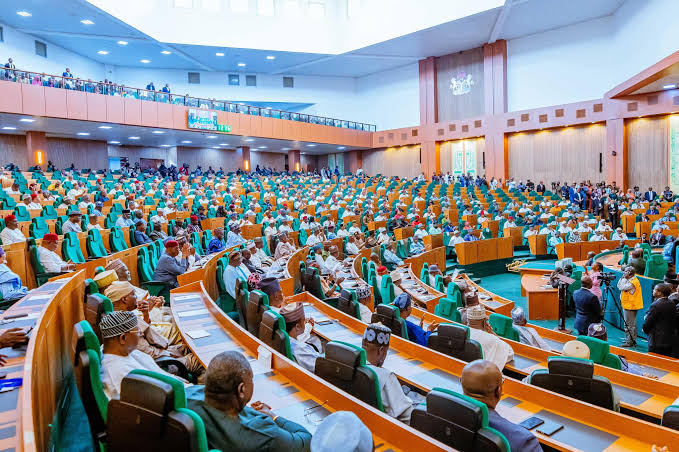
The Senate on Tuesday passed the Electoral Act, 2022 (Repeal and Re-Enactment) Bill 2026 after a heated plenary marked by sharp disagreements over Clause 60. The session resumed with a demand for division on Clause 60 by Senator Enyinnaya Abaribe (ADC, Abia South), a move that triggered a rowdy exchange in the chamber. According to Channels Television, Senate President Godswill Akpabio said he was under the impression that the request had earlier been withdrawn, but opposition lawmakers quickly objected. Deputy Senate President Barau Jibrin, citing Order 52(6) of the Senate Standing Orders, maintained that it would be procedurally improper to revisit a matter already ruled upon by the presiding officer. His intervention provoked further uproar, during which Senator Sunday Karimi briefly confronted Abaribe. Senate Leader Opeyemi Bamidele reminded colleagues that he had sponsored the motion for rescission, stressing that previous resolutions of the Senate had effectively been nullified. He argued that Abaribe’s call for division aligned with the rescission motion. Akpabio suggested that Abaribe’s insistence on a division was intended to publicly register his position before Nigerians. He subsequently upheld the point of order, prompting Abaribe to rise in protest and request permission to formally move his motion. Invoking Order 72(1), Abaribe sought a division on Clause 60(3), particularly the provision stipulating that where electronic transmission of results fails, Form EC8A should not be the sole basis for collating results. He proposed deleting the clause permitting manual transmission in the event of network failure. During the vote, Akpabio directed senators supporting the proviso to stand, followed by those opposed. Fifteen opposition senators rose against it. At the end of the count, 55 senators voted in favour of retaining the proviso, while 15 voted against it. Earlier in the sitting, proceedings were briefly stalled as lawmakers commenced clause-by-clause consideration of the bill after adopting a motion to rescind its earlier passage. The motion was seconded, enabling the Senate to resolve into the Committee of the Whole for detailed reconsideration and re-enactment of the legislation. As Akpabio read out the clauses, Abaribe raised a point of order at Clause 60, drawing murmurs across the chamber and prompting consultations at the Senate President’s desk before lawmakers moved into a closed-door session. Before rescinding the bill, several senators expressed concerns over the timing of the 2027 general elections and technical inconsistencies in the proposed law. Rising again under Order 52(6), Bamidele moved that the earlier passage of the bill be reversed and recommitted to the Committee of the Whole. He explained that the motion followed the announcement by the Independent National Electoral Commission fixing the 2027 general elections for February 2027 after consultations with National Assembly leadership. Bamidele said stakeholders had flagged concerns that the proposed date conflicted with Clause 28 of the bill, which requires elections to be held at least 360 days before the expiration of tenure. He also noted that conducting elections during Ramadan could affect voter turnout, logistics, stakeholder engagement, and the overall credibility and inclusiveness of the process. The rescission motion further identified discrepancies in the bill’s Long Title and several provisions, including Clauses 6, 9, 10, 22, 23, 28, 29, 32, 42, 47, 51, 60, 62, 64, 65, 73, 77, 86, 87, 89, 93 and 143. According to lawmakers, the errors affected cross-referencing, serial numbering and internal consistency within the legislation, necessitating a comprehensive review before its final passage.
2/17/2026, 5:10:30 PM
views 9280
Reps Retain Manual, Real~time Transmission In Electoral Act
The House of Representatives on Tuesday erupted into a heated session after spending nearly two hours in a closed-door meeting, as lawmakers resumed deliberations on the Electoral Act Amendment Bill 2025 and demanded a clause-by-clause review of the controversial proposal ahead of the 2027 general elections. Earlier, the House had voted to rescind its December 2025 approval of the amendment bill to correct inconsistencies and unintended consequences identified by a harmonisation panel made up of leaders from both chambers, members of the conference committee, clerks of the Senate and House of Representatives, and legal drafters from the National Assembly’s Directorate of Legal Services. Presenting the motion for rescission in line with Order Nine, Rule 6 of the Standing Orders, Hon. Francis E. Waiwe (Delta) said the move was aimed at protecting the credibility of Nigeria’s electoral system by promoting fairness, inclusiveness, administrative efficiency and public trust. With the motion adopted, the House dissolved into the Committee of the Whole, chaired by the Deputy Speaker, for detailed scrutiny of the bill. Tension, however, escalated when the Deputy Speaker initially sought to consider the report collectively rather than on a clause-by-clause basis. Lawmakers strongly opposed the approach, shouting in protest and maintaining that, given the sweeping implications of the amendments for the 2027 elections, each provision must be debated and decided separately. Amid the uproar, the Deputy Speaker suspended proceedings and recommenced deliberations, agreeing to subject the bill to a clause-by-clause examination. In the course of deliberations, the House approved Clause 60(3), which provides for both real-time electronic transmission and manual transmission of election results. The decision followed intense debate. Rep. Bamidele Salam moved an amendment to expunge the manual transmission provision, warning that its retention could weaken the integrity and technological progress of the electoral process. The proposal was seconded by Rep. Kingsley Chinda. However, when subjected to a voice vote, the “nays” carried the day, thereby defeating the bid to remove manual transmission from the clause.
2/17/2026, 3:02:57 PM
views 11192
US Sanctions Eight Nigerians Over Links To Boko Haram, Cybercrime
The United States has placed asset freezes on eight Nigerians accused of having links to the Islamist sect Boko Haram and the Islamic State of Iraq and the Levant (ISIL). This was disclosed in a 3,000-page document dated February 10 and issued by the United States Department of the Treasury’s Office of Foreign Assets Control (OFAC), which was sighted by the correspondent on Monday. The document also named individuals sanctioned over cybercrime offences and other security-related threats. The development follows recent recommendations by the United States Congress calling for visa restrictions and asset freezes against persons and groups accused of violating religious freedom and persecuting Christians in Nigeria. Among those reportedly recommended for sanctions by US lawmakers are former Kano State Governor Rabiu Kwankwaso, the Miyetti Allah Cattle Breeders Association of Nigeria, and Miyetti Allah Kautal. The OFAC publication, titled the “Specially Designated Nationals and Blocked Persons List,” outlines individuals and entities across different nationalities whose assets have been frozen, serving as a compliance reference for the public. It also provides formal notice of actions taken against Specially Designated Nationals whose property and financial interests have been blocked under counter-terrorism measures. According to OFAC, the publication is intended to notify the public of sanctions actions and assist in complying with the various programmes it administers. Among the Nigerians listed is Salih Yusuf Adamu, also known as Salihu Yusuf, born August 23, 1990. He was identified as having ties to Boko Haram and holding a Nigerian passport. Yusuf was one of six Nigerians convicted in 2022 for establishing a Boko Haram cell in the United Arab Emirates to generate funds for insurgents in Nigeria. The group was found guilty in the UAE of attempting to transfer $782,000 from Dubai to Nigeria. Babestan Oluwole Ademulero, born March 4, 1953, was designated under SDNTK sanctions. He was listed under multiple aliases, including Wole A. Babestan and Olatunde Irewole Shofeso. Also named was Abu Abdullah ibn Umar Al-Barnawi, also known as Ba Idrisa, reportedly born between 1989 and 1994 in Maiduguri, Borno State. He was flagged under terrorism-related sanctions. Abu Musab Al-Barnawi, also referred to as Habib Yusuf, was listed with birth years ranging between 1990 and 1995. He was identified as a Boko Haram leader and sanctioned under terrorism provisions. Khaled, also spelled Khalid, Al-Barnawi, born in 1976 in Maiduguri, appeared twice in the publication. He was linked to Boko Haram and listed under aliases including Abu Hafsat and Mohammed Usman. Ibrahim Ali Alhassan, born January 31, 1981, was identified as holding a Nigerian passport and reportedly residing in Abu Dhabi, United Arab Emirates. He was also linked to Boko Haram. Abu Bakr ibn Muhammad ibn Ali Al-Mainuki, also known as Abu-Bilal Al-Minuki, born in 1982 in Mainok, Borno State, was identified as having ties to ISIL. Nnamdi Orson Benson, born March 21, 1987, was listed under CYBER2 sanctions and reported to hold a Nigerian passport. Their inclusion on the OFAC list underscores Washington’s ongoing efforts to disrupt terrorism financing and combat cyber threats. Under the sanctions, all property and interests belonging to the named individuals within US jurisdiction are blocked, and US persons are generally prohibited from conducting transactions with them. The Nigerians affected by the Treasury action face asset freezes under Executive Order 13224. The United States designated Boko Haram as a foreign terrorist organisation in 2013. According to the US State Department, the group has carried out numerous attacks in northern and northeastern Nigeria, as well as across the Lake Chad Basin region of Cameroon, Chad, and Niger, resulting in thousands of deaths since 2009. The US Secretary of State is responsible for determining countries that have repeatedly provided support for acts of international terrorism.
2/16/2026, 12:08:07 PM
views 3338
Install WAFFITV