Oborevwori Presents N1.664trn 2026 Budget, Allocates 70% To Infrastructure
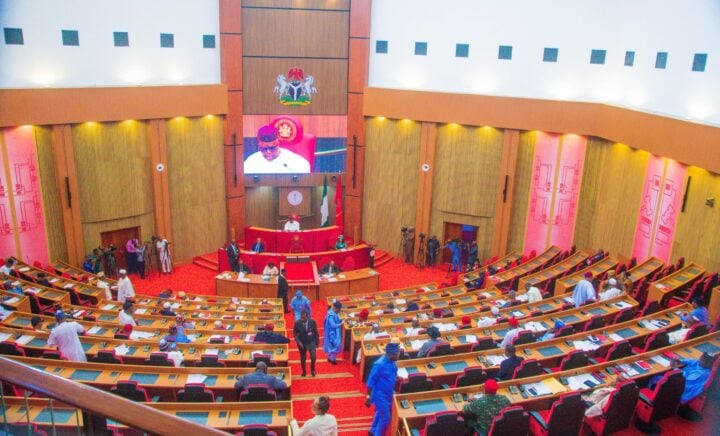
Delta State Governor Sheriff Oborevwori on Wednesday presented a ₦1.664 trillion budget for the 2026 fiscal year to the State House of Assembly, dedicating 70 per cent of the proposal to capital expenditure.
Presenting the appropriation bill—tagged the “Budget of Accelerating the MORE Agenda”—at the Assembly Complex in Asaba, Oborevwori said the plan was crafted amid signs of a gradually recovering national economy, with Nigeria’s GDP projected to grow by 3.9 per cent in 2026.
He noted that rising oil earnings, more stable fiscal and monetary policies, ongoing tax reforms and renewed federal action against insecurity had renewed optimism for economic growth and better living conditions.
According to him, the 2026 budget is aimed at driving inclusive and sustainable development, strengthening human capital, fast-tracking infrastructure renewal, enhancing social cohesion, reducing debt exposure and ensuring prudent resource management.
Giving a breakdown, the governor explained that ₦499 billion (30%) is proposed for recurrent spending, while ₦1.165 trillion (70%) is set aside for capital projects—representing a 70 per cent rise over the 2025 estimate.
On revenue expectations, he expressed confidence that federal allocations would improve following the removal of fuel subsidy. Statutory allocations, including mineral derivation, are projected at ₦720 billion, or 43.28 per cent of total revenue—a 23.75 per cent increase from the previous year.
He added that ongoing reforms in Internally Generated Revenue are expected to deliver ₦250 billion in 2026, an 86.5 per cent leap from 2025, supported by professionalised revenue administration and an expanded tax base. VAT remittances are projected at ₦120 billion, driven by strengthened national VAT processes.
Oborevwori also disclosed that capital receipts have been deliberately reduced to ₦25 billion to sustain the state’s zero-borrowing stance, while about ₦489 billion is expected from savings and oil-revenue recoveries—reflecting what he described as the administration’s fiscal discipline.
Under the expenditure framework, personnel costs are pegged at ₦185 billion, overheads at ₦204 billion, and another ₦110 billion is proposed for social contributions, benefits and grants—allocations he said reflect inflationary pressures and the government’s commitment to workers’ welfare.
He listed priority sectors for 2026, including the Works Ministries, which will jointly receive ₦450 billion to accelerate major highway, rural and riverine road projects across the state.
Education is to receive ₦105.086 billion to strengthen functional learning, while ₦50.067 billion is earmarked for the health sector to upgrade 441 primary health centres, 65 general hospitals and three tertiary institutions.
The Delta State Capital Territory Development Agency is allocated ₦20 billion for flood-control and infrastructure expansion in Asaba, while another ₦20 billion goes to the Warri, Uvwie and Environs Development Agency to support ongoing road and flyover construction transforming the oil city.
Other allocations include ₦10 billion for agriculture to bolster food security, ₦16 billion for energy to advance the state’s multi-grid power initiative, and ₦20 billion for social protection programmes designed to lift more residents out of poverty.
In addition, ₦100 billion is set aside for direct interventions across all 25 local government areas, averaging about ₦4 billion per council.
On security, the governor reaffirmed his administration’s commitment to deploying modern technology—such as drones and advanced surveillance systems—while sustaining logistical and financial support for security agencies to improve public safety statewide.
11/26/2025, 4:25:00 PM
views 8928
5246