Subscribe to our newsletter

Arex Akemotubo Hails Chief Dan Yingi On Birthday, Lauds His Impactful Legacy
The Managing Director and Chief Executive Officer of WAFFI TV, Pastor Arex Akemotubo, has extended warm birthday greetings to a respected elder statesman and political figure in Delta State, Chief Hon. Dan Yingi. In a message released on Thursday, Pastor Akemotubo, speaking on behalf of his family and the entire WAFFI TV team, described Chief Yingi as a "distinguished leader, elder statesman, and man of unwavering integrity." He praised Chief Yingi’s sterling record in public service, noting that his years of selfless dedication had left an indelible imprint on the political landscape of Delta State. According to him, the celebrant's humility, passion, and steadfast commitment to the welfare of his people continue to serve as a model for emerging leaders. Arex said, "On behalf of my family, the entire WAFFI TV team, and myself, I extend my heartfelt birthday wishes to a distinguished leader, elder statesman, and man of unwavering integrity—Chief Hon. Dan Yingi. "Today, we thank the Almighty God for preserving you and for the grace He has continually bestowed upon your life. Your years in public service have left an indelible mark on the political landscape of Delta State. Your passion, humility, and firm dedication to the welfare of your people remain exemplary. "As you celebrate another year of life, may the Lord continue to strengthen you with divine health, renewed wisdom, and greater peace. May this new chapter bring with it more moments of joy, increased impact, and fulfillment in all you do. "Thank you, Sir, for your fatherly guidance, your consistent leadership, and for being a light to this generation.
7/25/2025, 11:55:51 AM
views 12862
FG Sets 12 as Minimum Age for JSS1 Admission
The Federal Government has issued a new directive setting **12 years** as the minimum age for admission into Junior Secondary School 1 (JSS1), following the mandatory completion of six years of primary education. This new guideline is outlined in a recently launched policy document on **Non-State Schools**, released by the **Federal Ministry of Education** last week. Non-state schools—also referred to as **private, independent, or non-government schools**—operate outside of government control and are primarily funded through **tuition fees, donations, and support from individuals, communities, religious bodies, businesses, and philanthropic organizations**. The policy emphasizes the increasing role of these schools in providing education nationwide, despite noticeable disparities in **quality and standards** across institutions. Detailing the recommended age-based educational progression, the Ministry stated: > “Nursery education shall span three years. Children shall be admitted into Nursery One at age three, Nursery Two at age four, and a one-year compulsory Kindergarten (pre-primary) at age five, in line with Section 2(17) of the 2013 edition of the National Policy on Education (NPE).” On the transition into formal schooling, the policy further specifies: > “Basic education shall last nine years—comprising six years of primary and three years of junior secondary education. Children shall begin Primary One at age six and must complete all six years before proceeding to JSS1 at approximately age twelve.” This structure implies that students would typically finish secondary education by age 18, in line with earlier recommendations for university admission age. While former Education Minister, **Prof. Tahir Mamman**, had declared 18 years as the minimum university entry age, the current Minister, **Dr. Tunji Alausa**, has since adjusted the age requirement back to **16 years**. Meanwhile, data from the **Nigeria Education Digest 2022** reveals the expanding footprint of non-state schools, particularly at the junior secondary level. According to the report: > “Non-state schools outnumber state-owned schools in at least **26 states** at the junior secondary level. However, at the primary level, government schools are more dominant in **19 states** of the federation.” It also notes significant growth in the private education sector over the past five years: “The growth in the number of non-state schools between 2017 and 2022 (the last five years reported) has been faster than that of state schools. Non-state primary schools grew in number by 31.56 per cent between 2017 and 2022, while state schools grew in number by 3.3 per cent within the same period. At the Junior Secondary level, non-state schools grew in number by 35.06 per cent between 2017 and 2022, while state schools grew in number by 6.8 per cent only within the same period.”
7/25/2025, 11:19:25 AM
views 13214
Reps Move To Establish Independent Body For Tracking Federal Projects
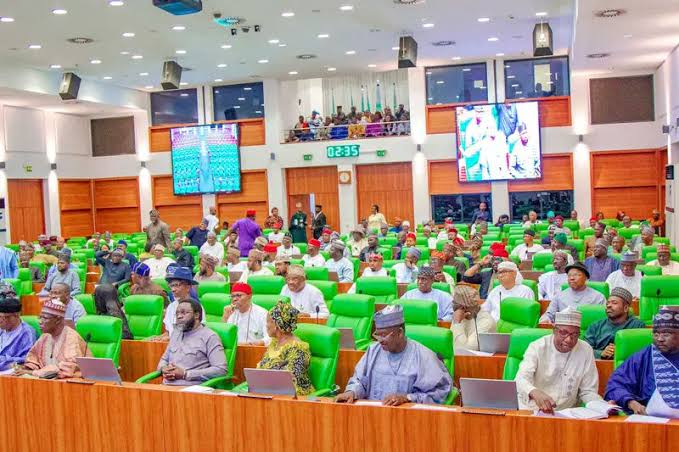
The House of Representatives is set to hold a public hearing to gather stakeholders’ input on a bill seeking to establish the National Independent Project and Monitoring Agency, aimed at promoting transparency, accountability, and effective monitoring and evaluation of projects nationwide. The bill, sponsored by Chinedu Martins, who represents the Ahiazu/Mbaise/Ezinihitte Federal Constituency in Imo State, is designed to ensure that federal projects meet quality standards and are completed within specified timeframes and budgets. Once established, the agency will serve as an independent oversight body to curb collusion, enhance accountability, and significantly reduce the incidence of abandoned projects across the country. The legislation also aims to detect inflated project costs early and ensure value for money—an initiative intended to safeguard public funds. Speaking in Abuja on Thursday on the general principles of the proposed legislation, Martins said, “You will agree with me that, year after year, the President of the Federal Republic of Nigeria presents an Appropriation Bill to this honourable House, detailing capital expenditures running into trillions of naira for the execution of developmental projects across the country. “These projects are domiciled in various Ministries, Departments, and Agencies and implemented by contractors who are issued letters of award in accordance with the procedures outlined in the Public Procurement Act of 2007. “However, the reality paints a distressing picture. Across the country, we encounter the scars of abandoned, substandard, or poorly executed projects by MDAs. This is not only wasteful, it is unacceptable. “One of the major contributors to this failure is the absence of an independent, transparent, and credible monitoring system in the execution of projects by MDAs. “The same MDAs that award these contracts are also the same MDAs responsible for monitoring the execution of the same projects. “This arrangement is inherently defective. As the saying goes, you cannot be a judge in your case. This model of self-supervision breeds inefficiency, fosters compromise, and enables contractors to cut corners, which is a major reason for the numerous abandoned projects, while billions of naira remain unaccounted for.” Given this governance challenge, the legislator said he came up with the bill for the establishment of NIPMA to serve as a statutory institution mandated to monitor, track and report on the implementation status of all federally funded projects across the country. He added, “The advantages of this bill are far-reaching: With NIPMA in place, we can ensure that projects are executed to standard, within budget, and within stipulated timeframes. “Independent oversight will eliminate collusion, reinforce accountability, and significantly reduce the trend of abandoned projects. “The establishment of the agency will generate employment opportunities for engineers, auditors, quantity surveyors, data analysts, and other professionals. It will also stimulate local economies in project-hosting communities. “Effective monitoring will detect inflated project costs early and ensure value for money, saving the nation billions of naira annually. Citizens will regain trust in government when they see that public funds are being utilised transparently and judiciously. “When infrastructure projects are properly implemented, they catalyse commerce, attract investment, and promote national development, thereby expanding the economy and reducing poverty.” He noted that when established, the agency “Will not conflict with existing institutions such as the Bureau of Public Procurement or the Office of the Auditor-General. Rather, it will complement them by addressing the urgent need for real-time, on-the-ground monitoring of capital projects.”
7/24/2025, 8:10:40 PM
views 14534
NYSC Urges Employers To Fund Corps Members’ Transport, Accommodation
The National Youth Service Corps (NYSC) has urged employers of corps members to support the scheme by either picking up corps members from orientation camps or reimbursing their transport fares when unable to do so. NYSC Director General, Brigadier General Olakunle Nafiu, made the appeal on Thursday in Bauchi during the 2025 NYSC/Corps Employers’ Workshop organized by the scheme in the state. He emphasized that providing suitable accommodation or offering monetary compensation in its place would significantly motivate corps members to deliver quality and effective service. Represented by Agatha Banki, Director of the Northeast Area Office 1, Bauchi, the DG noted that the workshop is a yearly event that fosters strategic interaction between NYSC officials and corps employers, providing a platform for exchanging ideas to improve their collaboration. “From addressing grey areas to enhancing healthy relationships between our various organisations, the workshops always produce ideas and recommendations that are factored into the operations of the Scheme. “I am convinced that the 2025 workshop would not be any different,” said the DG He further highlighted the roles of corps employers to include the provision of accommodation, payment of transportation allowance, Healthcare provision as is available to regular staff, and provision of a healthy working environment. Nafiu added that at the end of the workshop, participants must recommend steps to help build a proactive and enduring partnership between the NYSC Scheme and corps employers. “You must hammer out more effective formats of communication among our organisations and come up with implementable solutions to the numerous problems that challenge corps administration and proffer solutions. “I call on you to make individual and collective contributions in shaping the nation-building efforts of the corps members,” he said.
7/24/2025, 5:36:12 PM
views 14342
Okpoye Hosts Voice Of The Ijaw Girl Child, Backs NADIS Student Summit Initiative
The Commissioner representing the Ijaw Ethnic Nationality on the Board of the Delta State Oil Producing Areas Development Commission (DESOPADEC), Hon. Amb. Sencer Okubo Okpoye, has pledged his full support to the Voice of the Ijaw Girl Child, an advocacy group dedicated to championing the rights and welfare of the Ijaw girl child. Hon. Okpoye made this commitment on Tuesday, July 22, 2025, while receiving members of the group in his Warri office. He commended their advocacy efforts, particularly their campaigns against gender-based violence and empowerment initiatives, and assured them of DESOPADEC’s collaboration in skill acquisition programmes, bursary support, and other empowerment schemes. Reaffirming the importance of gender equity, the Commissioner expressed concern over the continued violence against the girl child, stressing that such acts must no longer be tolerated in society. Speaking on behalf of the team, the Programme Officer, Nwamenim Blessing Ewere—who represented the Executive Director, Timipre Tobi Ebiringa—appreciated the Commissioner for granting audience. She noted that the visit was to introduce the group to the Commission through him, and to seek areas of partnership and support, especially in ongoing skill acquisition and sensitization campaigns against gender-based violence in Ijaw communities. Members of the Voice of the Ijaw Girl Child delegation included: 1. Nwamenim Blessing Ewere – Programme Officer 2. Betty Ekpokeme Fianka – Member 3. Victory Tamaradenyefa Karewei – Member 4. Joan Tamaraukarebi Oyibo – Member 5. Cynthia Perekebina Gbamowei – Member 6. Martha Ezebri – Member 7. Osuo Tamarau-Ebi Deborah – Member In a related development, Hon. Amb. Okpoye also received executive members of the National Association of Delta Ijaw Students (NADIS), who visited to seek DESOPADEC’s endorsement and support for their upcoming entrepreneurial summit. Endorsing the summit on behalf of the Commission’s Board, Hon. Okpoye pledged to present the proposal to the Executive Director of Social Services, Chief Favour Izoukumor, for possible sponsorship. He also encouraged the student leaders to reach out to local government chairmen and other stakeholders for broader support. NADIS President, Comr. Aweh Johnson, who led the delegation, expressed gratitude to the Commissioner and explained that the proposed one-day summit aims to train students from oil-producing communities in entrepreneurship and digital skills, thereby preparing them for post-graduation self-sufficiency. He disclosed that the initiative would target about 20 students each from Bomadi, Burutu, Patani, Warri North, Warri South, and Warri South-West LGAs. Other members of the NADIS delegation included: 1. Comr. Aweh Johnson – President 2. Ogori Blessing Perekemepam-ere – Vice President 3. Ama-Ebi Tarifagha – Assistant Secretary 4. Goroh K. Mathias – President, National Association of Egbema Students 5. Moi Smart – President, National Association of Ogbe-Ijoh Warri Students 6. Karewei Tamara-Denyefa – Vice President, National Association of Ogulagha Students 7. Ajama Precious – Member 8. Ikpidi John – Former Secretary, National Association of Delta State Students
7/24/2025, 6:49:50 AM
views 13807
Delta Assembly Passes State Community Security Corps Agency Bill
The Delta State House of Assembly on Wednesday passed the State Community Security Corps Agency Bill, 2025. According to the News Agency of Nigeria (NAN), the bill is aimed at strengthening community-based security, fostering collaboration with existing security agencies, and addressing issues such as training, funding, and other related concerns. The bill, sponsored by Dr. Isaac Anwuzi (APC – Aniocha South) along with 27 other lawmakers, scaled through its second and third readings during a plenary session presided over by Speaker Dennis Guwor. To fast-track the legislative process, the Majority Leader, Dr. Emeka Nwaobi, moved a motion to suspend House Rule 12, as well as Orders 80, 82, and 83, to allow the Assembly take the third reading and final passage of the bill. The motion was seconded by Deputy Speaker Arthur Akpowowo (APC – Ethiope East) and adopted unanimously through a voice vote. Speaker Guwor noted that once signed into law, the legislation would provide a legal framework for the establishment of the State Security Corps Agency. He explained that the agency would work in support of the police and other security bodies to carry out lawful duties aimed at maintaining peace and order across the state. ”Dear colleagues, Section 14, sub-section (2), paragraph (b) of the Constitution of the Federal Republic of Nigeria, 1999 (as altered) provides that: “the security and welfare of the people shall be the primary purpose of government ”With the successful passage of the Delta State Community Security Corps Agency Bill, 2025 we have once again demonstrated our unwavering commitment to the safety and well-being of our people. ”There cannot be meaningful development without secure and safe environment, ” he said. He added, ”This bill that has been sufficiently debated and passed is a critical step towards strengthening our community security architecture. ”It reflects our collective understanding of the evolving security challenges and our proactive response to ensure that every Deltan can live and work in peace. ”To the sponsors of this bill and indeed every single member of this House, I extend my profound appreciation. ”Your diligence, your incisive contributions during the debates and your dedication to the consideration of the Bill are truly commendable. ”I am optimistic that this bill once signed into law will significantly enhance peace, order and security across all nooks and crannies of our beloved State.”
7/23/2025, 4:29:22 PM
views 13183
Otuaro Hails Senate for Approving Federal Oil and Gas Hospital In Benikrukru
Immediate past Deputy Governor of Delta State, His Excellency Deacon Kingsley Burutu Otuaro, has lauded the Nigerian Senate for passing the bill to establish the Federal Oil and Gas Hospital in Benikrukru, Gbaramatu Kingdom, Warri South-West Local Government Area of Delta State. In a letter of appreciation addressed to the President of the Senate, His Excellency Senator (Dr.) Godswill Obot Akpabio, on Wednesday, Otuaro described the passage of the bill as a historic legislative achievement that marks a turning point for healthcare delivery in oil-bearing communities of the Niger Delta. He highlighted the strategic importance of Benikrukru as a host to numerous oil and gas facilities, stressing the need for a specialized medical institution to cater to the unique health and environmental challenges facing the region. Read the full letter below: To: His Excellency, Senator (Dr.) Godswill Obot Akpabio, CON, President of the Senate , Federal Republic of Nigeria , National Assembly Complex Abuja, Nigeria Your Excellency, LETTER OF APPRECIATION FOR THE BILL'S PASSAGE TO ESTABLISH THE FEDERAL OIL AND GAS HOSPITAL, BENIKRUKRU. With a deep sense of gratitude and fulfillment, I write to extend my heartfelt appreciation to you, Your Excellency, and the entire distinguished members of the Nigerian Senate for the successful passage—at the third reading—of the bill for the establishment of the Federal Oil and Gas Hospital, Benikrukru, in Gbaramatu Kingdom, Warri South-West local government area of Delta State, which happens to be my kingdom. This historic milestone is not just a legislative victory—it is a major step toward correcting years of healthcare neglect in one of the most critical regions to our national economy. The Benikrukruu axis, located in the heart of the Niger Delta, is home to a dense concentration of oil facilities, installations, and multinational oil and gas companies whose operations power the economic engine of Nigeria. It is, therefore, only just and necessary that a specialized medical institution be situated within this hub to provide swift, professional, and industry-specific healthcare services. The Federal Oil and Gas Hospital, when fully established, will serve as a critical response center for oil-related occupational hazards, emergencies, and environmental health challenges that are unique to oil-producing communities. It will also cater to the general wellbeing of the hardworking people of the region who, for decades, have sacrificed their environment and livelihoods in the service of national prosperity. Your Excellency, under your visionary and progressive leadership, the Nigerian Senate has again demonstrated its unwavering commitment to equity, development, and national balance. We are deeply encouraged by your support and the unity shown by the Senate in this legislative process. Furthermore, we express our confidence in the leadership of the President of the Federal Republic of Nigeria, His Excellency, Asiwaju Bola Ahmed Tinubu, GCFR, a man renowned for his unwavering commitment to justice, inclusiveness, and development. We are optimistic that he will promptly assent to this bill, knowing fully well the strategic importance of this hospital to the wellbeing of our people and the sustainability of Nigeria’s oil and gas industry. Once again, I thank Your Excellency and the entire Senate for your statesmanship, compassion, and dedication to the progress of the Niger Delta and the nation at large. Yours sincerely, H.E. Dcn. Kingsley Burutu Otuaro, Esq. FSPSP. Immediate Past, Deputy Governor, Delta State.
7/23/2025, 9:54:41 AM
views 13759
Structural Issues Delaying Direct Transfers To LGAs~ Edun
The Federal Government is committed to fully implementing the Supreme Court's ruling on local government autonomy, but structural challenges continue to hinder direct fund transfers, according to Minister of Finance and Coordinating Minister of the Economy, Wale Edun. Speaking on Tuesday in Abuja at the Agora Policy Conversation, Edun emphasized that although the government acknowledges and supports the Supreme Court's decision affirming financial independence for Nigeria’s 774 local government areas, putting the ruling into effect requires major institutional reforms. He noted that the Court made two key declarations: first, that only democratically elected local governments are entitled to allocations from the Federation Account; and second, that these funds must be paid directly to the councils. While the first directive has already been implemented — with non-elected councils barred from receiving funds — the second directive is still in the process of being operationalized. “Direct transfers to local governments are a work in progress,” Edun said. “It is not as simple as flicking a switch. There are embedded structures, such as those for primary healthcare and basic education, that currently operate under state supervision, and these require reconfiguration before direct funding can happen effectively.” He said the ongoing challenge lies in modifying these legacy arrangements without disrupting vital services. “You need a serious tinkering of the existing funding architecture to allow local governments to receive and manage allocations directly.” The minister emphasised that the Federal Government was committed to upholding the rule of law and would fully implement the Supreme Court ruling. “In a democracy, the rule of law is paramount. The Supreme Court has ruled. It is the duty and obligation of the Federal Government to implement it.” He emphasised the strategic role of local governments in driving President Bola Tinubu’s Renewed Hope Agenda, adding that meaningful grassroots development could only occur if councils were empowered to manage their own resources. “To lift millions of Nigerians out of poverty, we must start from the grassroots. Local governments must be engines of development,” Edun said. He explained that Tinubu’s reform agenda had already laid the foundation for macroeconomic stability through difficult but necessary adjustments. “The first phase removed major distortions, such as the petrol subsidy and the managed exchange rate system. Now we are entering the second phase — stabilising inflation, increasing reserves, reducing the fiscal deficit, and boosting revenue.” Referencing recent data from the National Bureau of Statistics, Edun said Nigeria’s economy grew by 3.4 per cent in the first quarter of 2025. However, he noted that this was just half of the administration’s target. “For real impact, particularly on the poor and vulnerable, the economy needs to grow at around 7 per cent annually,” he said, stressing that increased productivity and job creation were central to achieving that goal.
7/23/2025, 7:43:50 AM
views 14575
Reps Move To Ban Public Servants From Patronising Private Hospitals, Schools
The House of Representatives on Tuesday passed for first reading a bill aimed at banning public and civil servants, along with their immediate family members, from using private schools and healthcare facilities within Nigeria. Titled the *Private Institutions and Health Care Service Providers (Prohibition) Bill, 2025*, the proposed legislation was sponsored by Hon. Amobi Godwin Ogah, who represents the Isuikwuato/Umunneochi Federal Constituency in Abia State. Addressing journalists after the bill’s introduction, Ogah described it as a landmark proposal designed to rebuild trust in Nigeria’s public institutions and prevent conflicts of interest in service delivery. He stressed that the bill would compel public officials to utilize the same services as the citizens they serve, thereby promoting integrity and accountability in governance. “This bill seeks to restrict all public and civil servants—and their immediate families—from accessing private schools and healthcare facilities to prevent conflicts of interest, rebuild public confidence, and uphold high standards in public institutions,” Ogah stated. He invoked the legacy of Nigeria’s founding leaders—Sir Ahmadu Bello, Dr. Nnamdi Azikiwe, Chief Obafemi Awolowo, and Alhaji Tafawa Balewa—who were all educated in public or mission schools, contrasting their era with today’s reality where government officials often bypass local systems in favor of private or foreign services. Ogah decried the current preference among public servants for private education and medical care, calling it a dangerous shift that undermines public institutions. Highlighting key statistics, he noted that despite a N1.336 trillion allocation to health in the 2024 budget, Nigerians still spend over \$1 billion annually on medical treatment abroad. During the administration of the late President Muhammadu Buhari, medical tourism cost the country about \$29.29 billion in eight years. Additionally, Nigerians spent \$38.17 million on foreign education between January and March 2024 alone, and \$218.87 million in 2023. “If we have started the removal of petroleum subsidy, we must also enforce this Bill to prohibit the patronizing of private schools and health care services by public and civil servants,” he asserted. According to Ogah, the continuous neglect of public institutions due to elite preference for private alternatives has led to “a shadow of their former selves, with little or no infrastructural development and fallen standards of services.” “It does not speak well of our country that our Presidents and notable government functionaries are seen to be going abroad for medical treatment—and even dying in the process,” he said. The proposed legislation, he argued, is aimed at putting an end to what he termed “medical and educational tourism” among public sector workers, adding that promoting local institutions would enhance national pride and institutional accountability. “I therefore call on Nigerians and indeed the Fourth Estate of the Realm to join me in supporting this Bill and begin a new consciousness of promoting our health care and educational institutions,” Ogah urged. “Let the campaign begin with hashtag #PromoteOurSchoolsAndHealthcareServices;PrivateInstitutionsAndHealthcareServicesProvidersProhibitionBill2025.”
7/22/2025, 7:43:20 PM
views 12791
Install WAFFITV